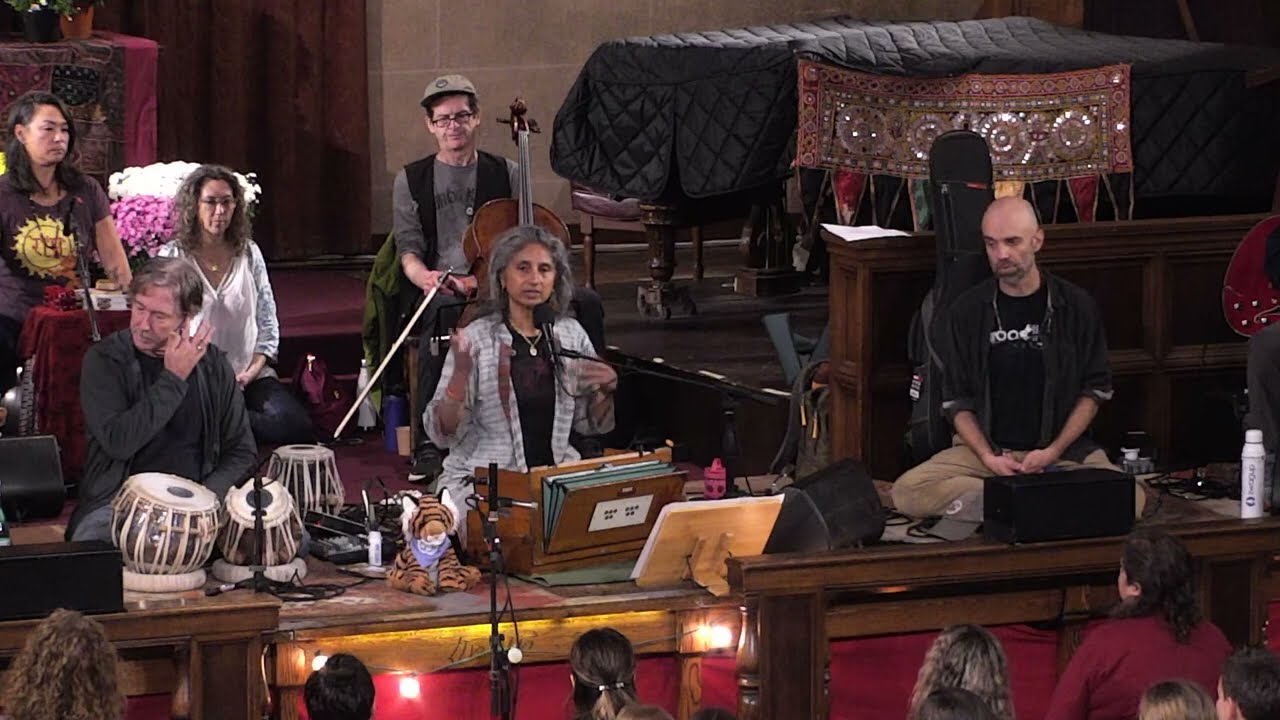
"The Waters" is a kirtan composition that uses layered vocals, rhythmic patterns, and instrumental elements to create a sonic environment for meditation and spiritual reflection. The piece, produced by Siobhán Moore and released on the album Indigo Sea in 2018, draws listeners into states of flow through repetition, tonal depth, and the archetypal symbolism of water—suggesting purification, movement, and the fluidity of consciousness itself.
What Makes "The Waters" a Tool for Inner Exploration?
Kirtan—the call-and-response devotional singing tradition from Indian spiritual practice—uses rhythm, melody, and repetition to create altered states of consciousness. "The Waters," as part of the album Indigo Sea, operates within this lineage but expands into contemporary instrumental and production contexts. The title itself is significant: water is a universal metaphor across spiritual traditions for consciousness, the unconscious mind, purification, and the flow of energy through both the body and the subtle nervous system. By calling the piece "The Waters," the artist invites listeners to consider sound not as static information but as a flowing medium—something that moves through you rather than sits before you.
The piece uses kirtan's fundamental mechanism: the human voice as a vehicle for meditation. Unlike songs designed primarily for entertainment, kirtan compositions anchor the mind by giving it something to follow while still allowing consciousness to move freely. The repetition of phrases, the call-and-response structure, and the rhythmic foundation all work together to quiet the thinking mind and move awareness into what musicians and meditators call "flow state"—a condition where the boundary between listener and sound dissolves.
How Does Water Function as a Spiritual Metaphor in Sound?
Water has been central to spiritual symbolism across cultures: it represents the flow of time, the dissolution of boundaries, purification through immersion, and the depths of the unconscious. In yogic traditions, water is associated with the emotional body (the astral dimension) and the second chakra, which governs creativity, sensuality, and emotional expression. By titling this piece "The Waters," the composition suggests a descent or entry into these dimensions of experience.
When experienced through sound, water becomes a guide. The fluidity of voice in kirtan—the way it bends, sustains, and releases notes—mimics the properties of water itself. There is no hard edge to the sound; instead, there is gradual transition, wave-like motion, and a sense of containment within a larger whole. Listeners who engage with this piece for meditation may find that their mental movements become less rigid, that their emotional states flow more freely, and that the boundaries of the individual self become more permeable.
Why Repetition and Rhythm Are Essential to Kirtan's Effect
Kirtan is not random vocalization. It is highly structured around rhythm (tala), melodic patterns (raga), and intentional repetition. This structure is not restrictive—rather, it is liberating. When the mind knows what is coming next, it can release its tension around anticipation and prediction. This is why mantras and kirtan are so effective for meditation: the predictability of the structure allows the thinking mind to relax while keeping consciousness engaged and present.
"The Waters" likely employs this principle through its compositional structure. By repeating phrases, returning to recognizable melodic motifs, and anchoring the listener in a consistent rhythmic foundation, the piece creates a container for inner experience. Listeners are not required to "follow" in the analytical sense; instead, they can surrender into the unfolding sound and allow it to guide their awareness inward.
What Is the Role of the Producer in Contemporary Kirtan?
Siobhán Moore's production work on Indigo Sea bridges traditional kirtan with contemporary sonic possibilities. Modern production allows for layering, spatial effects, harmonic enhancement, and instrumental integration that can deepen the immersive quality of kirtan without compromising its meditative function. A producer working in this space must balance fidelity to the tradition with accessibility and sonic beauty for contemporary listeners.
In "The Waters," production choices likely include the mixing of vocals with instruments, the use of reverb and space to suggest expansiveness, and possibly the layering of multiple vocal tracks to create harmonic richness. These choices make the piece more sonically engaging without introducing distraction—the goal remains inward journey, not external entertainment.
How Does the Indigo Sea Album Context Enhance This Piece?
An album titled Indigo Sea signals a particular aesthetic and thematic direction: indigo is a deep blue, associated in chakra systems with the third eye and higher perception; the sea is vast, unknowable, and contains life in abundance. The album's title suggests a collection focused on depth perception, inner sight, and the mysteries of consciousness. Within this context, "The Waters" is not an isolated piece but part of a larger journey. Listeners who engage with the full album may experience a progression or a deepening as "The Waters" appears within the arc of the whole.
Where to Go from Here
To deepen your experience with "The Waters," consider approaching it as a meditation rather than background music. Set aside 8-10 minutes in a quiet space, close your eyes, and allow your awareness to follow the movement of the voice. Notice where your attention naturally goes—to the melody, to the rhythm, to the spaces between sounds. Over multiple listens, you may find that the piece becomes a familiar refuge, a sonic home you can return to when you need to access states of relaxation, clarity, or spiritual connection.
Explore other works in the Indigo Sea album to experience the full arc of the project. Consider learning more about kirtan as a practice—both through listening and, if drawn to it, through singing or chanting along with recordings. Investigate how water and ocean metaphors appear in your own spiritual or contemplative practice, and notice whether engaging with "The Waters" shifts your relationship to flow, emotion, and the movement of consciousness through your being.