EveryEvent ATL

Ver todos os Events

Find every event in Atlanta

events

Concerts & Live Music
Festivals
Sports & Recreation
Food & Drink
Arts & Culture
Community
Family & Kids
Nightlife
Comedy
Theater
Destinos populares
BaliSedonaLos AngelesCosta RicaNew YorkSan FranciscoAustinMiamiJoshua TreeTulum
Ver todas as categoriasVer todos os destinos

Explorar todos os recursos

Ferramentas poderosas para expandir seus eventos

Recursos da plataforma

Precificação dinâmica inteligente
Categorias de ingressos
Lugares marcados
Recuperação de carrinho abandonado
Recuperação de visitantes
Doações e preço variável
Sistema de afiliados
Scanner de ingressos
Códigos de desconto
Perguntas personalizadas
Compartilhamento de ingressos
Upsells e adicionais
Análises e relatórios
Sequências de e-mail
Lista de espera / Notificar / Lembrar
Explorar
Discovery HubArtists & PerformersVenuesKnowledge Base
Ver todos os recursosSobre nós
PreçosBlog
Language
Saved events
Ver todos os eventos

events

Concerts & Live MusicFestivalsSports & RecreationFood & DrinkArts & CultureCommunityFamily & KidsNightlife

Destinos populares

BaliSedonaLos AngelesCosta RicaNew YorkSan Francisco

Explorar

Discovery HubArtists & PerformersVenuesKnowledge Base

Recursos da plataforma

Precificação dinâmica inteligenteCategorias de ingressosLugares marcadosRecuperação de carrinho abandonadoRecuperação de visitantesDoações e preço variávelSistema de afiliadosScanner de ingressosCódigos de descontoPerguntas personalizadasCompartilhamento de ingressosUpsells e adicionaisAnálises e relatóriosSequências de e-mailLista de espera / Notificar / Lembrar
Ver todos os recursosSobre nós
PreçosBlog
EntrarCadastrarOrganizadores de eventos
  • Browse All Events
  • Concerts & Live Music
  • Festivals
  • Sports & Recreation
  • Food & Drink
  • Arts & Culture
  • Community
  • Family & Kids
  • Nightlife
  • Todas as categorias →
  • Savannah
  • Athens
  • Blue Ridge
  • Chattanooga
  • Charleston
  • All Destinations →
  • For Promoters
  • For Artists
  • For Venues
  • For Festivals
  • For Event Spaces
  • For Nonprofits
  • For Bloggers
  • For Speakers
  • Brand Ambassador
  • Case Studies
  • Rede de 350K+ compradores
  • Recuperação de carrinho abandonado
  • Precificação dinâmica inteligente
  • Categorias de ingressos
  • Eventos recorrentes
  • Lugares marcados
  • Sistema de afiliados
  • Lista de espera / Notificar
  • Scanner de ingressos
  • Widget incorporável
  • Distribuição de eventos
  • Central de mensagens
  • Integrações
  • Relatórios
  • Todos os recursos →
  • Sobre
  • O ecossistema
  • Blog
  • Glossário
  • Inspiração
  • Central de ajuda
  • Contato
  • Documentação da API
  • Recursos da marca
  • Carreiras
  • Imprensa
  • Termos de Serviço
  • Política de Privacidade

Events

  • Browse All Events
  • Concerts & Live Music
  • Festivals
  • Sports & Recreation
  • Food & Drink
  • Arts & Culture
  • Community
  • Family & Kids
  • Nightlife
  • Todas as categorias →

Getaways

  • Savannah
  • Athens
  • Blue Ridge
  • Chattanooga
  • Charleston
  • All Destinations →

For Organizers

  • For Promoters
  • For Artists
  • For Venues
  • For Festivals
  • For Event Spaces
  • For Nonprofits
  • For Bloggers
  • For Speakers
  • Brand Ambassador
  • Case Studies

Recursos

  • Rede de 350K+ compradores
  • Recuperação de carrinho abandonado
  • Precificação dinâmica inteligente
  • Categorias de ingressos
  • Eventos recorrentes
  • Lugares marcados
  • Sistema de afiliados
  • Lista de espera / Notificar
  • Scanner de ingressos
  • Widget incorporável
  • Distribuição de eventos
  • Central de mensagens
  • Integrações
  • Relatórios
  • Todos os recursos →

Empresa

  • Sobre
  • O ecossistema
  • Blog
  • Glossário
  • Inspiração
  • Central de ajuda
  • Contato
  • Documentação da API
  • Recursos da marca
  • Carreiras
  • Imprensa
  • Termos de Serviço
  • Política de Privacidade
EveryEvent
© 2026 EveryEvent Atlanta. Todos os direitos reservados.
Inspiration

God's Name as Spiritual Practice:Japa and Divine Repetition

Jai Uttal
Jai Uttal
Oct 3, 2011
9 min de leitura

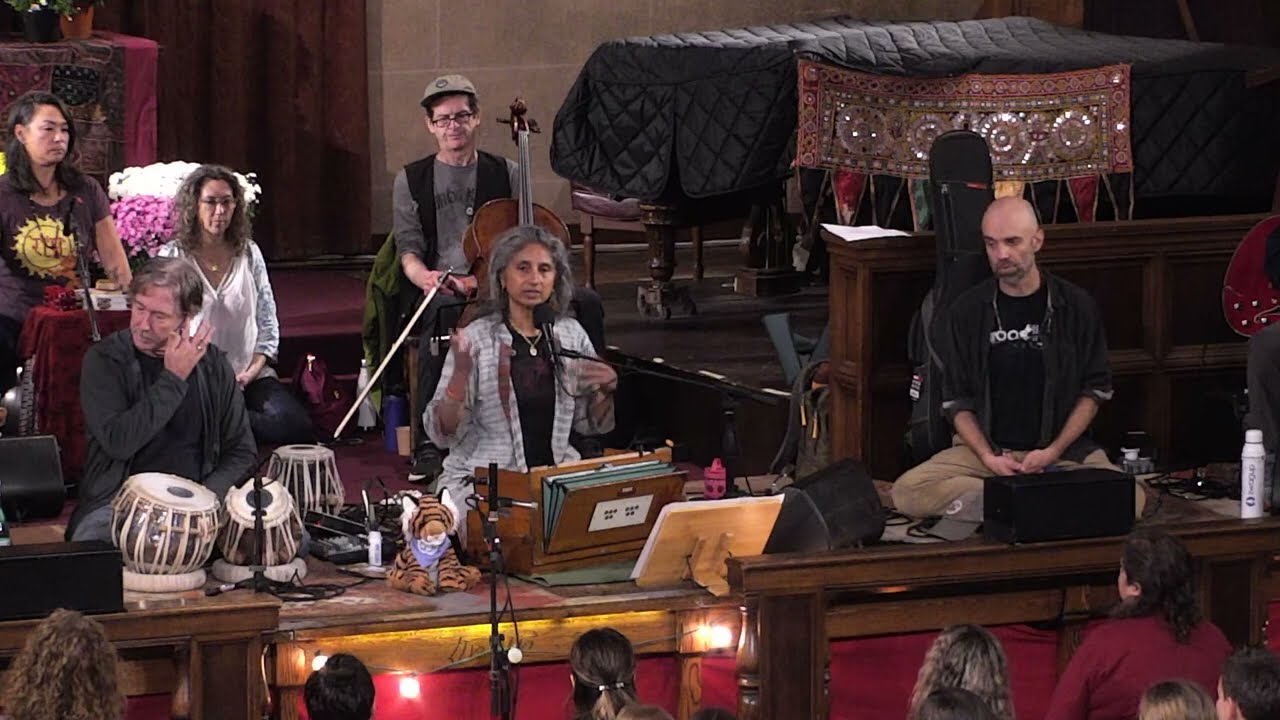
A spiritual seeker practiced complex tantric meditation involving breathing, visualizations, and mantras until meeting his guru Neem Karoli Baba in India. During meditation at a Buddhist stupa, he experienced an inner vision of his guru's voice repeating "Ram"—God's name—which erased all prior practices from his memory. From that moment, his practice became simple: japa, the repetition of God's name using mala beads. He argues that in this age of difficulty, divine name repetition is the most accessible and intimate spiritual path, combining singing in kirtan with quiet, private repetition that deepens the heart's conversation with the Divine.

Leitura · 8 seções

What drew you to complex spiritual practices before meeting your guru?

Before traveling to India in 1971, the speaker was deeply immersed in tantric meditation—a sophisticated system that required intensive study and discipline. He was nineteen years old and felt considerable pride in learning such an intricate practice. The tantric path he followed involved multiple layers: breathing exercises (pranayama), visualizations of the chakra system, specific mantras for each energy center, corresponding colors, and geometric shapes. Each chakra had its own prescribed sound, visualization, and energetic quality.

He describes his approach with characteristic honesty: he worked hard at the meditation, putting in tremendous effort and willpower. The complexity itself seemed valuable—a sign of his commitment to the spiritual path. Like many young practitioners, he equated difficulty with depth. The structure and intellectual rigor of the system appealed to him; there was always something more to learn, more to master, more to perfect.

What happened during the meditation at the Buddhist stupa?

After arriving in India and settling in a village house with friends, the speaker had a transformative experience at Saroth, a stupa (Buddhist temple) located between Sarnath—where Buddha gave his first teachings—and Benares, the sacred city of Lord Shiva. One early morning at 4 a.m., a friend invited him to meditate while eating hashish candy and climbing the stupa to watch the sunrise. Despite his commitment to clarity at that time, he accepted.

During the meditation, he experienced what he describes as an internal "sonic explosion" like an atomic bomb, followed by an amplified voice—as if heard through a hundred Marshall amplifiers at maximum volume. The voice was his guru Neem Karoli Baba's, repeating one word over and over: "Ram, ram, ram, ram, ram." With each repetition, he felt something extraordinary occurring: the complexity of all his prior practices—the mantras, colors, visualizations, breathing techniques—was being erased, as if chalk being wiped from a blackboard.

"From that moment on I couldn't even remember any of the other stuff," he recalls. The detailed tantric system that had occupied years of study simply vanished from his consciousness. He was left with one thing: the name Ram, divine repetition in its simplest form. This wasn't intellectual forgetting; it was a complete dissolution of his previous practice architecture, replaced by something utterly plain.

Why is God's name repetition the heart of the practice?

The speaker's guru Neem Karoli Baba taught that "with the name of Ram, the Impossible becomes possible. Everything is possible with God's name." This teaching became the foundation for what followed. Since that morning at the stupa, the speaker has built his entire spiritual life around japa—the repetition of God's name. He sings it during kirtan (congregational chanting), uses mala beads to count repetitions, and maintains the practice through daily life.

He has been using mala beads for over forty years, carrying them everywhere: while watching movies, watching television, sitting with family, throughout all moments. The beads have become inseparable from his being. The practice itself is deceptively simple: taking a name of God—Ram, Krishna, Durga, or any divine name—and repeating it with focused attention.

He acknowledges that different spiritual traditions emphasize different divine names. The Hare Krishna movement repeats "Hare Krishna, Hare Krishna, Krishna Krishna, Hare Hare / Hare Rama, Hare Rama, Rama Rama, Hare Hare." Shaiva traditions might focus on Shiva. Islamic devotion centers on "La ilaha illallah." Yet he points to a shared teaching among many contemplative traditions: "Whatever name you choose, God's name is God itself. God's name contains the complete, complete completeness of the Divine."

Why is this practice suited to the current age?

Many teachers, he notes, describe the present era as "Kali Yuga"—the age of darkness and difficulty. This is not a pessimistic label but a diagnostic one. One need only observe the world to recognize challenges: personal struggles, global hardship, collective suffering. Even those whose individual lives are relatively sweet find themselves living in a world full of difficulties. Into this context, many spiritual teachers recommend divine name repetition as the most accessible practice for this age.

The speaker is careful not to prescribe his own path to others. "I would never ever, not for a minute, suggest to anyone else that I know what is the best spiritual practice for them," he states clearly. Yet he acknowledges that many teachers across traditions point to name repetition as the simplest, most direct way to access the Divine in times of collective turbulence.

For himself, he admits frankly: "I don't have very good concentration. I don't have very good commitment. I don't have very good consistency." Yet japa works for him precisely because it does not require perfection or heroic discipline. It meets him where he is. The practice doesn't demand that he become someone other than who he is; it offers presence with what is.

What is the difference between kirtan and japa?

The speaker practices the divine name in two distinct modes, each with its own power. Kirtan is congregational singing of God's names—"an amazing expansion of our hearts," he calls it. When voices join together in singing divine names, something opens in the group consciousness. There is joy, resonance, mutual uplift. Kirtan is public, communal, exuberant.

Japa, by contrast, is quiet repetition, most often done alone with mala beads. He describes japa as "like the whisper conversation with our beloved." When the head is bowed and one is speaking the name quietly, again and again, it becomes "the most intimate moment." Japa is private, interior, tender. It is the conversation between the individual consciousness and the Divine that no one else needs to witness.

Together, these two practices cover the full spectrum of devotion: the expansive communal heart and the secret, whispered intimacy with the Beloved. Both are expressions of the same impulse—reaching toward the Divine through repetition of the sacred name.

What does japa mean?

Japa simply means "repetition"—specifically, the repetition of a divine name or mantra. In the speaker's practice, it means sitting quietly, holding mala beads (a string of 108 beads used for counting), and repeating a chosen name of God, often Ram, with each bead representing one full repetition. The practice spans from formal meditation to informal repetition woven throughout the day—while moving through the world, in moments of difficulty, in moments of ease.

The power of japa lies in its utter simplicity. There is nothing to achieve, nothing to visualize perfectly, no complex system to master. There is only sound, intention, and repetition. The mind, which is naturally restless and prone to distraction, is given something simple to return to, again and again. Over time, the name becomes not something we say but something we are, a frequency to which we naturally attune.

Why does he advocate so strongly for this practice?

The speaker declares himself "a big advocate of japa"—and his advocacy is rooted not in ideology but in lived experience. When complexity fell away at the stupa that morning, something essential remained: the efficacy of the name itself. Decades of daily practice have only deepened his conviction that divine name repetition is not a stepping stone to something else, but itself the complete path.

Moreover, his teaching reflects a shift from spiritual striving to spiritual surrender. The complex tantric path required him to be the actor, the one doing the practice with full willpower and concentration. Japa invites a different posture: opening to what the name itself does, trusting that "with God's name, the Impossible becomes possible." The work is not to achieve some state but to yield to the presence already contained in the sacred sound.

Finally, he advocates for japa because it honors the real conditions of human life. Being a father, a husband, moving through the ordinary challenges of family and work—these are not distractions from spiritual practice but the practice itself. Japa fits seamlessly into life as it actually is, needing no special conditions, no retreat, no perfect circumstances. A person on a bus, in a hospital, at a desk can repeat the name. A person watching a movie or sitting with friends can move beads through their fingers. The practice does not require that one become extraordinary; it works through ordinariness.

Where to go from here?

For those drawn to deepen their own connection with divine name repetition, the first step is simply to choose a name that resonates—Ram, Krishna, Durga, Allah, Jesus, or any sacred name that calls to your heart. If mala beads appeal to you, obtain a string of 108 beads and begin counting repetitions, aiming for a consistent daily practice even if it is brief. If sitting quietly feels foreign, begin with kirtan—seek out congregational singing in your tradition or online. The kirtan will open the heart, and from that opening, quieter forms of repetition may naturally emerge.

For those already practicing complex spiritual disciplines, the speaker's experience offers a gentle question: What if simplicity itself is the point? Not simplicity as a lack, but simplicity as a distillation to the essential. The guru's gift was not to add more layers but to strip away all layers and leave only the name. That may be the deepest teaching here: that sometimes the practice becomes clearer not when we add more, but when we have the courage to release what does not serve.


Transcript

[0:10] well I was in India in 1971 that was the

[0:12] first time I went to India and prior to

[0:15] going to India I was very very involved

[0:18] in this um what you call it tantric

[0:21] meditation practice you know Tantra is

[0:23] one of those words that gets thrown

[0:25] around quite a lot but uh it was a

[0:27] meditation practice that involved with

[0:29] that was involved with breathing

[0:31] exercises visualizations of all the

[0:33] chakras mantras for each of the chakras

[0:35] colors for each of of the chakras shapes

[0:38] for each of the chakras and a whole

[0:40] progression of different different

[0:41] practices and and you know I was 19 and

[0:45] it was very complicated and I and I was

[0:49] so proud that I was learning it you know

[0:52] I was like I would

[0:54] meditate work so hard at it so anyway

[0:58] got to India met maharaji and was still

[1:00] at the beginning of my well the

[1:03] beginning this life of my relationship

[1:05] to my

[1:06] Guru and so one day I was I was in I had

[1:10] this little house with some friends in

[1:12] oiur a village that that was between

[1:15] sth which was where gotama Buddha gave

[1:18] his first lectures and benaras the the

[1:21] Lord Shiva city in in India so one

[1:25] morning my friend came came over at 4:00

[1:27] a.m. he was my friend from high school

[1:28] he said look I got bomb and Bong is is

[1:31] an edible form of marijuana and I I was

[1:33] not smoking or taking drugs or anything

[1:35] or drinking at the time I was in my real

[1:38] Yogi kind of face CU I had to do that I

[1:41] had to be really clear to do that super

[1:43] intense meditation but he says come on

[1:45] let's do it so we at we ate these

[1:48] candies and clim walked to saroth and

[1:50] climbed up a stupa Buddha stupa to

[1:52] meditate while the sun was rising and so

[1:56] I started doing this practice and you

[1:57] know sweating cuz it's this took a lot

[2:00] took a lot of energy to do it and it

[2:02] took a lot of concentration and you know

[2:05] oh a lot of willpower which I thought at

[2:08] the time was was really valuable and

[2:10] amazing and great

[2:12] so somewhere in the course of this

[2:15] meditation I heard

[2:17] this like this Sonic explosion like like

[2:20] you know the atomic bomb exploding but

[2:24] it was all just inside my head and then

[2:27] I heard this voice it was a little voice

[2:31] but it was Amplified by you know 100

[2:35] Marshall Stacks turned to 11 like in

[2:38] spinal tap you know and the and the

[2:40] voice was saying ram ram ram ram ram r r

[2:48] it was maharaji's voice and with each

[2:52] time that I heard it I felt

[2:55] like I was being drained of of all the

[2:59] other practices that I had been doing

[3:01] and like the chalk bark was being

[3:03] erased and from that moment on I

[3:06] couldn't even remember any of the other

[3:08] stuff I couldn't remember any of the

[3:09] mantras the colors the visualizations

[3:11] the breathing practices it was all gone

[3:14] and I was sitting there it you know

[3:17] resting in this

[3:19] name now maharaji used to say that with

[3:23] the name of ram The Impossible becomes

[3:26] possible everything is possible with

[3:28] God's name

[3:31] um so since that time I've been just

[3:34] saying wrong you know the heart of my

[3:36] spiritual practice you of course I sing

[3:38] and and and that's really big part and

[3:41] and and then life is the biggest part is

[3:44] life you know being a daddy being a

[3:47] husband life is my spiritual practice

[3:49] but on the internal level it's just

[3:52] saying R ra

[3:54] r i I sing it I I use beads to say it

[4:01] you know I've been using beads for over

[4:02] 40 years I love them I love them I love

[4:05] them I love them I love them I use them

[4:07] when I'm watching movies when I'm

[4:08] watching TV um and different Traditions

[4:12] you know say different names like the

[4:14] you know the har Krishna tradition says

[4:16] of course repeat H har Krishna H har

[4:18] Krishna Krishna Krishna H har H har H

[4:19] Haram H Haram ram ram H har Hur but I

[4:23] think so many of the teachers say that

[4:26] whatever name you choose God's name is

[4:29] God

[4:30] itself I will say God himself is God

[4:33] herself his goddess herself God's

[4:36] name contains the complete complete

[4:41] completness of the Divine one and so

[4:44] many teachers say that in this age you

[4:46] know this they call it the kuga the age

[4:48] of K the age of Darkness the age of

[4:50] difficulties well we just got to look

[4:51] around us no matter how sweet our lives

[4:53] may be there's it's it's a life that has

[4:56] many many challenges and we look at the

[4:58] world it's full of difficulties

[5:01] well some people I would never ever not

[5:03] for a minute suggest to anyone else that

[5:05] I know what is the best spiritual

[5:08] practice for them or best any practice

[5:11] for them but many teachers say that

[5:13] God's name just repetition of God's name

[5:15] it's the easiest way well I'll say for

[5:19] myself that's true um I don't have very

[5:22] good concentration I don't have very

[5:24] good commitment I don't have very good

[5:28] consistency but I I love to say God's

[5:30] name and

[5:33] and you know one one thing um when we

[5:37] sing kown we're singing God's names and

[5:39] and it's such an amazing expansion of

[5:42] our hearts and then when we do japa

[5:44] quietly it's it's like the it's like the

[5:46] whisper conversation with our beloved

[5:49] it's it's it's when when our heads are

[5:52] down and we're talking talking to that

[5:54] one just by saying that name r r or

[5:58] whatever name one chooses is it's the

[6:01] most intimate

[6:03] moment so anyway I'm a big advocate of

[6:05] japa I love japa japa japa

[6:09] japa what is japa oh it means

[6:13] repetition repetition of God's name

[6:16] repetition and you told me you love

[6:18] those beads you love to those beads what

[6:20] do you do you eat them

[6:50] R forever forever forever

Jai Uttal
AutorJai Uttal

American kirtan singer, multi-instrumentalist, and pioneer of devotional sound in the West — one of the central figures, alongside Krishna Das, Snatam Kaur, and Deva Premal, in the…

Ver perfilSite
Explorar temas
Japa-practiceGod-namesNeem-karoli-babaKirtan-chantingMantra-repetition

Tem perguntas?

Perguntas frequentes

Japa is the repetition of a divine name or mantra, typically using mala beads to count 108 repetitions. Unlike complex tantric meditation that requires breathing exercises, visualizations, and chakra work, japa is simple repetition accessible anywhere, anytime—while watching TV, on a bus, or in quiet moments. It works through simplicity rather than complexity.
Teachers across traditions teach that divine name repetition contains the completeness of the Divine within it. According to Neem Karoli Baba's teaching, 'with the name of Ram, the Impossible becomes possible.' Especially in Kali Yuga (the age of difficulty), name repetition is considered the most accessible and effective practice for this era.
Kirtan is congregational singing of God's names that opens and expands the heart in community, while japa is quiet, private repetition that deepens the intimate 'whisper conversation with the Beloved.' Both practices use divine names; kirtan is exuberant and shared, while japa is interior and secret. Together they cover the full spectrum of devotional connection.
Yes—japa works precisely because it doesn't require perfection. The speaker states frankly that he doesn't have very good concentration, commitment, or consistency, yet japa meets him where he is. The practice doesn't demand heroic discipline; it simply offers repetition of the name, returning again and again to it as the mind wanders.
Regular japa practice—using 108 beads to count repetitions—creates an ongoing rhythm of connection with the divine name. Over time, the name becomes not something you say but something you are; a frequency to which consciousness naturally attunes. The practice integrates into life, available in any moment: waiting, walking, sitting, grieving, celebrating.
Hindu traditions might use 'Ram' or 'Hare Krishna,' Islamic practice uses 'La ilaha illallah,' and Christian contemplatives repeat the Jesus Prayer. The speaker teaches that while traditions differ on which names they emphasize, most agree that 'whatever name you choose, God's name is God itself' and contains the complete Divine within it.
The guru's teaching was transmitted non-verbally through a vision in which all the speaker's complex practices were erased, leaving only Ram—the divine name. This suggested that spiritual perfection doesn't come through accumulating more knowledge but through stripping away to the essential, trusting that one divine name contains everything.

Continuar lendo

More from Jai

Ver Tudo
How the Bauls of Bengal Broke My Sky: A Musician's Search
Featured

How the Bauls of Bengal Broke My Sky: A Musician's Search

A chance encounter on a dirt path in West Bengal led to a musical awakening. Jai Uttal traces how the outcasts of Bengali culture transforme…

1 min read
Hanuman Chalisa for World Peace: Ancient Chant for Modern Times
Featured

Hanuman Chalisa for World Peace: Ancient Chant for Modern Times

Jai Uttal leads a devotional rendering of the Hanuman Chalisa, a 40-verse Sanskrit hymn invoking strength, clarity, and peace through kirtan…

1 min read
How Sitting Still Proves You're Already Awakening
Featured

How Sitting Still Proves You're Already Awakening

Most people can't sit quietly without discomfort, but if you can, you're already further along spiritually than you realize. Eckhart Tolle e…

1 min read
Chanting Together: The Sacred Practice of Kirtan
Featured

Chanting Together: The Sacred Practice of Kirtan

A Thursday night satsang showcases the transformative power of collective chanting, weaving Sanskrit invocations with musical ensemble and d…

1 min read

Continue explorando

Continue sua jornada

Mais sabedoria e mais encontros de todo o diretório BrightStar.

Mais artigos

Explore a biblioteca completa de ensinamentos, entrevistas e guias.

Voltar a todos os artigos →

Professores e artistas

Conheça as linhagens, os músicos e os guias do mundo consciente.

Explorar artistas →

Encontre um evento

Kirtan, retiros, banhos de som, breathwork, festivais — acontecendo em breve.

Ver eventos →