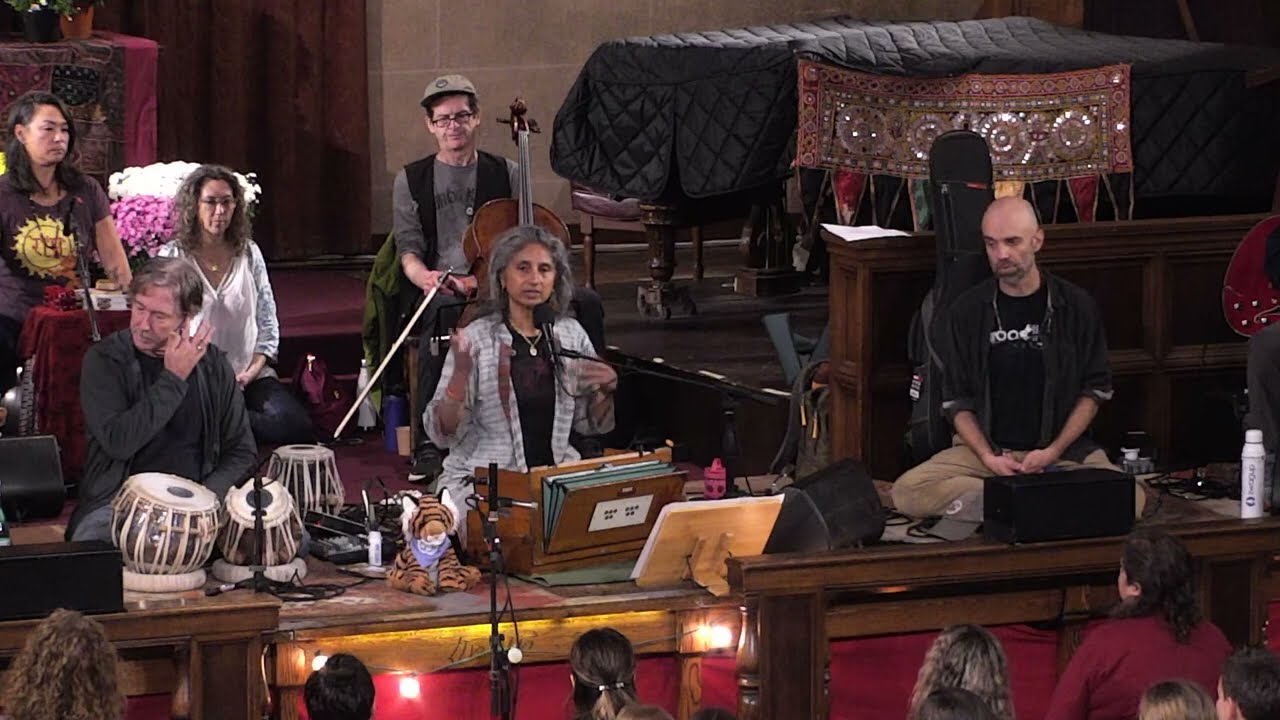
Aad Guray Nameh is one of the most revered mantras in Sikhism, a sacred chant rooted in the teachings of Guru Nanak Dev Ji and the Sikh gurus. This mantra carries deep spiritual significance, functioning as both a protective invocation and a tool for spiritual awakening. When chanted with intention and breath awareness, Aad Guray Nameh works to align consciousness with divine truth, calm the mind, open the heart, and establish a direct connection to the Divine. The practice is grounded in the principle that sacred sound vibrations can shift awareness and support healing across spiritual, mental, and emotional dimensions.
What Does Aad Guray Nameh Mean?
The mantra Aad Guray Nameh translates to "I bow to the Primal Guru." In Sikh philosophy, the Primal Guru refers to the primordial wisdom and divine consciousness that exists at the origin of all creation. The term Aad means "first" or "primal," Guray means "guru" or "teacher," and Nameh means "to bow" or "to honor." To recite this mantra is to acknowledge and submit to the highest wisdom that precedes all individual teachers and teachings.
This mantra appears in Sikh sacred texts and is traditionally used to invoke protection, divine guidance, and spiritual alignment. By bowing mentally and energetically to the Primal Guru, the practitioner releases ego and personal will, opening themselves to receive divine direction. The practice reflects a core Sikh principle: that truth transcends individual identity and connects all human beings to one universal source.
How Does Mantra Chanting Support Spiritual Practice?
In Sikhism and other contemplative traditions, mantras are not merely words to be repeated mechanically. They are vehicles of sacred vibration designed to work through the nervous system, breath, and consciousness. When Aad Guray Nameh is chanted with awareness and breath synchronization, several shifts occur in the mind and body:
- Mental Calm: The rhythmic repetition of the mantra anchors attention in the present moment, quieting the restless mind and reducing mental chatter.
- Spiritual Connection: The vibrational frequency of the mantra is believed to resonate with divine consciousness, deepening the practitioner's sense of connection to something greater than the individual self.
- Emotional Healing: Sacred sound can access and release stored emotional tension, supporting emotional balance and compassion.
- Mental Clarity: By establishing a stable point of focus, mantra practice enhances concentration and decision-making capacity.
- Unity and Compassion: The Sikh teachings underlying this mantra emphasize the equality and interconnection of all human beings, inspiring a broader sense of unity.
The mantra functions as a bridge between the ordinary mind and higher consciousness, allowing practitioners to access dimensions of awareness that are not accessible through thought alone.
The Sikh Spiritual Foundation of Aad Guray Nameh
Sikhism, founded by Guru Nanak Dev Ji in the 15th century, is a path of devotion, equality, and truth. The religion emphasizes direct experience of the Divine without intermediaries, the essential equality of all people regardless of caste, gender, or background, and the power of the divine name to transform consciousness. Sikh mantras, including Aad Guray Nameh, emerge from this framework.
The core teaching "Recognize the entire human race as one" (Guru Gobind Singh Ji) reflects the mantra's deeper purpose: by bowing to the Primal Guru rather than to individual teachers or authorities, the practitioner affirms a universal spiritual foundation shared by all. This principle extends beyond individual spiritual practice into ethics and social consciousness. Guru Nanak Dev Ji also taught, "Truth is high, but higher still is truthful living," indicating that spiritual practice must translate into integrity and right action in the world.
Within this context, Aad Guray Nameh functions as an act of alignment with truth itself. By invoking the Primal Guru, the practitioner commits to living in accordance with divine wisdom rather than personal desire or social conditioning. This is protective in the deepest sense: it protects the soul from straying into falsehood, self-deception, or actions that violate conscience.
What Are the Practical Benefits of Reciting This Mantra?
Practitioners who engage regularly with Aad Guray Nameh report tangible benefits across multiple dimensions of life:
Spiritual Benefits: The mantra deepens the sense of connection to the Divine and supports experiences of grace, guidance, and spiritual insight. Many practitioners describe feeling more aligned with their true purpose and more able to discern authentic guidance from the noise of ego.
Mental and Cognitive Benefits: Regular mantra practice reduces anxiety and rumination, enhances focus, and supports mental clarity. The brain learns to settle into states of coherence and calm through the repetitive, rhythmic practice. This is particularly valuable in modern life, where constant stimulation and information overload create mental fragmentation.
Emotional and Relational Benefits: By opening the heart and releasing stored emotional tension, Aad Guray Nameh practice supports emotional resilience and compassion toward self and others. The underlying philosophy of unity enhances the capacity for forgiveness and empathy. Guru Arjan Dev Ji taught, "Where there is forgiveness, there is God Himself," articulating the spiritual significance of emotional healing and release.
Protection: In Sikh understanding, spiritual protection comes through alignment with divine truth. By invoking the Primal Guru, the practitioner establishes a connection to a wisdom that is not subject to fear, confusion, or manipulation. This provides real psychological and spiritual protection.
How to Practice Aad Guray Nameh
The mantra can be practiced in several ways, depending on the practitioner's inclination and available time. The most important element is consistency and presence. Even a few minutes of daily practice can yield noticeable shifts in awareness and well-being.
Simple Recitation: Sit in a quiet place with an upright spine. Close your eyes or gaze downward. Begin to repeat Aad Guray Nameh slowly, synchronizing the syllables with your breath. Allow the sounds to resonate in your body. Continue for 5, 11, 31, or 40 minutes. The numbers 11, 31, and 40 hold spiritual significance in Sikh tradition.
Chanting with Melody: Many practitioners learn and sing traditional melodies (raags) associated with Aad Guray Nameh. The melodic form deepens emotional engagement and makes the practice feel less monotonous. Recording artists like Snatam Kaur have created devotional versions that can support home practice.
Group Kirtan: In community settings, Sikh devotional music (kirtan) often incorporates Aad Guray Nameh. Chanting in a group amplifies the vibrational effect and creates a collective container for spiritual experience.
Morning Practice: Many practitioners recite Aad Guray Nameh as part of their morning sadhana (spiritual discipline), before meditation or yoga practice. This sets the intention for the day and establishes spiritual alignment from the beginning.
Why Does Mantra Work Through Vibration?
A question often arises: how can repeating words, even sacred words, actually change consciousness or reality? The answer lies in understanding vibration. In Sikh philosophy and modern quantum science, everything is fundamentally vibration—consciousness, matter, energy. Sound is a form of vibration that directly impacts the nervous system and the vibrational frequency of the body and mind.
When you chant a mantra, you are:
- Engaging the vagus nerve, which regulates the parasympathetic nervous system (the "rest and digest" system)
- Creating coherence between breath, voice, and heart rhythm
- Activating neural pathways associated with devotion, gratitude, and connection
- Aligning your personal frequency with the frequency encoded in the sacred sounds
Mantra is not superstition; it is neuroscience and energetic science working through the vehicle of sound. The fact that Aad Guray Nameh has been chanted by millions over centuries does not diminish its efficacy—it amplifies it, creating a collective resonance field that supports individual practice.
Where to Go From Here
If you are called to explore Aad Guray Nameh, begin with listening. Spend time with recordings of the mantra chanted by practitioners like Snatam Kaur. Allow yourself to feel the vibration and the intention behind the words. Then, when you are ready, begin your own practice. Start small—even five minutes daily creates measurable shifts in consciousness over weeks and months.
Deepen your understanding by exploring Sikh philosophy and the teachings of the Gurus. The mantra is most powerful when you understand what you are invoking and why. Study Guru Nanak Dev Ji's emphasis on truth, Guru Arjan Dev Ji's teachings on forgiveness, and Guru Gobind Singh Ji's vision of universal human unity. Let these teachings inform your practice and extend into how you live.
Consider connecting with a Sikh sangat (spiritual community) if one is available to you. Kirtan in community amplifies the benefits and provides guidance from experienced practitioners. Many resources exist online and in local gurdwaras (Sikh temples) for those seeking to deepen their engagement with Sikh devotional practice.