EveryEvent ATL

すべてのEventsを見る

Find every event in Atlanta

events

Concerts & Live Music
Festivals
Sports & Recreation
Food & Drink
Arts & Culture
Community
Family & Kids
Nightlife
Comedy
Theater
人気の目的地
BaliSedonaLos AngelesCosta RicaNew YorkSan FranciscoAustinMiamiJoshua TreeTulum
すべてのカテゴリを見るすべての目的地を見る

すべての機能を探索

イベントを成長させる強力なツール

プラットフォーム機能

スマートダイナミックプライシング
チケットカテゴリ
座席指定
カート放棄リカバリー
訪問者リカバリー
寄付とスライディングスケール
アフィリエイトシステム
チケットスキャナー
クーポンコード
カスタム質問
チケット共有
アップセルとアドオン
分析とレポート
メールシーケンス
ウェイトリスト / 通知 / リマインダー
探索
Discovery HubArtists & PerformersVenuesKnowledge Base
すべての機能を見る私たちについて
料金ブログ
Language
Saved events
すべてのイベントを見る

events

Concerts & Live MusicFestivalsSports & RecreationFood & DrinkArts & CultureCommunityFamily & KidsNightlife

人気の目的地

BaliSedonaLos AngelesCosta RicaNew YorkSan Francisco

探索

Discovery HubArtists & PerformersVenuesKnowledge Base

プラットフォーム機能

スマートダイナミックプライシングチケットカテゴリ座席指定カート放棄リカバリー訪問者リカバリー寄付とスライディングスケールアフィリエイトシステムチケットスキャナークーポンコードカスタム質問チケット共有アップセルとアドオン分析とレポートメールシーケンスウェイトリスト / 通知 / リマインダー
すべての機能を見る私たちについて
料金ブログ
ログイン新規登録イベント主催者
  • Browse All Events
  • Concerts & Live Music
  • Festivals
  • Sports & Recreation
  • Food & Drink
  • Arts & Culture
  • Community
  • Family & Kids
  • Nightlife
  • すべてのカテゴリ →
  • Savannah
  • Athens
  • Blue Ridge
  • Chattanooga
  • Charleston
  • All Destinations →
  • For Promoters
  • For Artists
  • For Venues
  • For Festivals
  • For Event Spaces
  • For Nonprofits
  • For Bloggers
  • For Speakers
  • Brand Ambassador
  • Case Studies
  • 35万人以上のバイヤーネットワーク
  • カート放棄リカバリー
  • スマートダイナミックプライシング
  • チケットカテゴリ
  • 定期イベント
  • 座席指定
  • アフィリエイトシステム
  • ウェイトリスト / 通知
  • チケットスキャナー
  • 埋め込みウィジェット
  • イベント配信
  • メッセージセンター
  • インテグレーション
  • レポート
  • すべての機能 →
  • 概要
  • エコシステム
  • ブログ
  • 用語集
  • インスピレーション
  • ヘルプセンター
  • お問い合わせ
  • APIドキュメント
  • ブランドアセット
  • 採用
  • プレス
  • 利用規約
  • プライバシーポリシー

Events

  • Browse All Events
  • Concerts & Live Music
  • Festivals
  • Sports & Recreation
  • Food & Drink
  • Arts & Culture
  • Community
  • Family & Kids
  • Nightlife
  • すべてのカテゴリ →

Getaways

  • Savannah
  • Athens
  • Blue Ridge
  • Chattanooga
  • Charleston
  • All Destinations →

For Organizers

  • For Promoters
  • For Artists
  • For Venues
  • For Festivals
  • For Event Spaces
  • For Nonprofits
  • For Bloggers
  • For Speakers
  • Brand Ambassador
  • Case Studies

機能

  • 35万人以上のバイヤーネットワーク
  • カート放棄リカバリー
  • スマートダイナミックプライシング
  • チケットカテゴリ
  • 定期イベント
  • 座席指定
  • アフィリエイトシステム
  • ウェイトリスト / 通知
  • チケットスキャナー
  • 埋め込みウィジェット
  • イベント配信
  • メッセージセンター
  • インテグレーション
  • レポート
  • すべての機能 →

会社

  • 概要
  • エコシステム
  • ブログ
  • 用語集
  • インスピレーション
  • ヘルプセンター
  • お問い合わせ
  • APIドキュメント
  • ブランドアセット
  • 採用
  • プレス
  • 利用規約
  • プライバシーポリシー
EveryEvent
© 2026 EveryEvent Atlanta. 全著作権所有.
Inspiration

Lokah Samasta: The UniversalBlessing Mantra Explained

Miten
Miten
Apr 3, 2009
読了 約7分
視聴 · 5

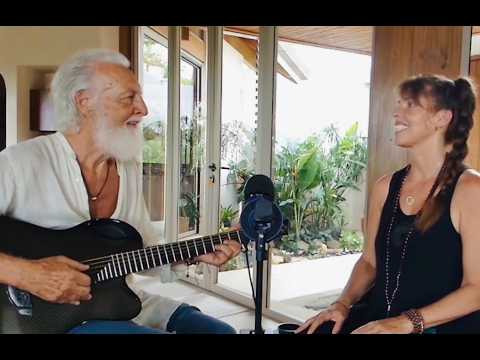
Lokah Samasta is a Sanskrit blessing that translates as "May all beings be happy. May all my thoughts, words and actions contribute in some way to the happiness of all." Deva Premal and Miten perform this sacred mantra live in Ljubljana, Slovenia, weaving it with musical accompaniment by Manose. The mantra embodies a practice of radiating goodwill toward all sentient beings—not as abstract spirituality, but as an actionable intention that connects personal responsibility (thoughts, words, actions) with universal compassion.

読む · 7セクション

What Does Lokah Samasta Mean?

Lokah Samasta is a Sanskrit phrase composed of two parts. "Lokah" refers to the world or all beings; "Samasta" means all or complete. The full invocation—"Lokah Samasta Sukhino Bhavantu"—translates to "May all beings be happy." The blessing is not static; it extends into personal intention: "May all my thoughts, words and actions contribute in some way to the happiness of all." This structure is significant. It does not invoke happiness as something to be granted externally or passively received. Instead, it places responsibility on the speaker's own consciousness and conduct.

The mantra draws from the Sanskrit tradition of Vedic and Yogic philosophy, where such invocations serve as tools for reorienting the mind toward compassion and away from self-centeredness. By vocalizing the intention repeatedly, practitioners aim to internalize the aspiration until it shapes their moment-to-moment choices.

How Does Repetition Shape the Mantra's Effect?

When Deva Premal and Miten chant Lokah Samasta in the Ljubljana performance, they move beyond a single recitation into a rhythmic, melodic repetition. The phrase cycles through the invocation—"Loka samasta sukhino bhavantu"—layered with musical accompaniment. This is not merely singing; it is kirtan, a devotional call-and-response or cyclical chanting tradition in Hindu and yogic contexts.

The repeated vocalization serves several functions. First, it anchors attention. The mind, which habitually wanders toward worry, desire, or distraction, is given a specific object of focus—the words and sounds of the blessing itself. Second, the musicalization creates a container for sustained concentration; the melody and rhythm support the nervous system in remaining present. Third, the communal dimension (even in a recorded performance, listeners are invited to join internally) generates a felt sense of participation in something larger than individual concern.

In yogic and meditative contexts, such repetition is understood not as brainwashing but as training—the same way an athlete trains a muscle through repetition. Each iteration of the mantra is believed to strengthen the neural pathways associated with compassion and goodwill.

What Is the Relationship Between Personal Conduct and Universal Blessing?

A distinctive feature of Lokah Samasta is its acknowledgment that the speaker's own thoughts, words, and actions matter. This is not metaphorical. The mantra holds that if you wish all beings happiness, your personal integrity—how you think, what you say, what you do—is inseparable from that wish. If you harbor resentment in thought, speak unkindly, or act with cruelty, you are, in effect, undermining the blessing you are invocating.

This creates a feedback loop. Chanting the mantra generates an intention; living according to that intention requires that you examine and refine your conduct. Over time, the boundary between the inner (the chanting, the intention) and the outer (the behavior in daily life) becomes porous. The mantra is not a magic spell that works independent of the user; it is more like a mirror or a compass that aligns your actions with your deepest values.

Why Does Deva Premal and Miten Perform Lokah Samasta with Musical Accompaniment?

The Ljubljana performance includes Manose on what appears to be a stringed instrument, weaving melodic and rhythmic elements around the chanted text. Music serves multiple purposes in this context. In Hindu devotional tradition, music and sacred sound are inseparable; raga (the melodic framework in Indian classical music) is understood to have its own psychological and spiritual properties. The specific raag chosen can influence the mood and the meditative state of the listener and performer alike.

For a modern audience, musicalization also makes the mantra more accessible and emotionally resonant. A pure chant, while powerful to those trained in Sanskrit traditions, may feel distant or alien to Western listeners. The addition of instrumental music bridges cultural and linguistic distance; the feeling of blessing, peace, and universal care can be experienced through the music even if the Sanskrit words are not fully understood.

Furthermore, the live performance context—the specific energy of a room, the synchronization of many voices or hearts, the presence of the teachers—amplifies the experience. A recorded performance, like this Ljubljana session, extends that presence across time and space. Listeners decades later can still access the intention and the meditative quality that the original performers infused into the session.

How Can You Practice Lokah Samasta in Daily Life?

Lokah Samasta is not confined to formal chanting sessions. The phrase can be integrated into daily practice in several ways:

  • Morning intention-setting: Begin the day by chanting or silently reciting the mantra, consciously setting your intention that your day will be lived in service of all beings' happiness.
  • Moment of conflict: When you encounter a difficult person or situation, pause and silently invoke the mantra. This interrupts reactive patterns and reconnects you to your deeper values.
  • Bedtime reflection: At the end of the day, review your thoughts, words, and actions in light of the mantra. Did your conduct align? Where did you fall short? This builds self-awareness without judgment.
  • Community chanting: Participate in group kirtan or chanting circles where the mantra is sung with others. The collective resonance deepens the experience and the sense of connection.
  • Silent repetition: During meditation, use Lokah Samasta as a mantra to anchor awareness and cultivate compassion, particularly if you are struggling with anger, fear, or isolation.

The key is consistency. Like any practice, the benefits accumulate over time. A single encounter with the mantra may inspire a moment of peace or goodwill, but regular engagement shapes deeper patterns of thought and behavior.

What Is the Broader Context of This Mantra in Yoga and Vedic Philosophy?

Lokah Samasta belongs to a family of Sanskrit blessings that reflect core yogic and Vedic principles. Yoga itself, often understood in the West as physical postures, is fundamentally a philosophy of union—the integration of individual consciousness with universal consciousness. Mantras like Lokah Samasta are tools for that integration.

In Vedic thought, the universe is not seen as divided into separate, isolated beings. Rather, there is an underlying unity or wholeness from which all forms arise. When you invoke the happiness of all beings, you are, in a sense, invoking your own truest nature—the part of you that recognizes no ultimate boundary between self and other. This is not sentimentality; it is a metaphysical understanding that has been systematized in texts like the Upanishads and elaborated in traditions like Advaita Vedanta.

Deva Premal and Miten, by bringing this mantra to global audiences through their music and teaching, are participating in an ancient transmission. They are not inventing the mantra or repackaging it as a product; they are serving as conduits for a practice that has been refined over centuries.

Where to Go From Here

If Lokah Samasta resonates with you, consider exploring related mantras and chanting practices. The Gayatri Mantra, another widely-used Sanskrit blessing, focuses on illumination and clarity. "Om Shanti Shanti Shanti" (Peace, peace, peace) is a simpler mantra that carries similar intentions of universal peace. You might also explore the broader philosophy of Ahimsa (non-harm) and Metta (loving-kindness) meditation from Buddhist traditions, which share the same underlying ethic of radiating care toward all beings.

Resources like the Gayatri Sangha app (linked to Deva Premal and Miten's website) offer guided chanting and further teaching on mantras and yogic philosophy. If you are drawn to the live, communal experience, many yoga studios, kirtan groups, and meditation centers now offer regular chanting sessions. The combination of study (learning the meaning and philosophy), practice (regular chanting), and community (joining others in the intention) creates a holistic engagement with these sacred sounds and their transformative potential.

Transcript

[0:01] The words may all beings be happy. May

[0:05] all my thoughts, words and actions

[0:09] contribute in some way to the happiness

[0:12] of alls.

[0:15] Loka samasta

[0:19] sukin

[0:20] bavantu.

[0:27] Sukavant

[0:32] [Muusika]

[0:38] [Muusika]

[1:02] Lu

[1:04] samasta

[1:07] suin

[1:11] luka

[1:14] samasta

[1:16] suin

[1:19] [Muusika]

[1:21] lamasta

[1:23] [Muusika]

[1:26] suin

[1:30] luga

[1:32] samasta

[1:35] suom

[1:41] santi shti

[1:44] [Muusika]

[1:52] О,

[1:54] [Muusika]

[2:13] samast

[2:15] su kino

[2:18] vabandu

[2:22] samasta

[2:24] suomant

[2:34] su kino

[2:37] avantu

[2:38] luga

[2:40] samasta

[2:43] su kino

[2:46] [Muusika]

[2:48] Šti

[2:50] [Muusika]

[3:00] omti

[3:05] Sti

[3:19] lugast

[3:21] [Muusika]

[3:23] su kinu

[3:26] vabandu

[3:28] luga

[3:30] samast

[3:33] su kino

[3:36] vandamasta

[3:42] su kinoga

[3:46] [Muusika]

[3:49] samast

[3:51] su kino

[3:54] [Muusika]

[3:57] štian

[3:59] [Muusika]

[4:04] Stišti

[4:06] [Muusika]

[4:13] Štiri

[4:15] [Muusika]

[4:23] [Muusika]

[4:57] Om

[4:59] sant

[5:06] omti

[5:11] Sti

[5:15] [Muusika]

[5:20] [Muusika]

[5:25] looga

[5:27] samasta

[5:29] su kino

[5:32] vabandatu

[5:34] luga

[5:36] samasta

[5:38] su

[5:45] samasta

[5:48] su kinoga

[5:55] samasta

[5:57] su kino

[6:01] [Muusika]

[6:05] Онтин

[6:07] [Muusika]

[6:14] оти

[6:17] [Muusika]

[6:19] Sti

[6:22] [Muusika]

[6:33] luk

[6:35] samast

[6:38] su kino

[6:41] vandu

[6:42] luga

[6:44] samasta

[6:47] [Muusika]

[6:54] samin

[6:57] [Muusika]

[7:01] luga

[7:03] samasta

[7:05] suom

[7:08] [Muusika]

[7:16] Sti

[7:18] Sti

[7:21] [Muusika]

[7:25] Šanti

[7:28] Sti

[7:31] [Muusika]

[7:36] [Muusika]

[7:55] [Muusika]

[8:01] [Muusika]

[8:16] Š

[8:18] [Muusika]

[8:28] [Muusika]

[8:49] [Muusika]

[9:16] Š

[9:20] [Muusika]

[9:38] സുഖം പുഷ്ടിവർ

[9:41] ഉവർമിവനോമിയത

[9:44] [Muusika]

[9:48] ഓം

[9:50] ത്രിയബംജാമഹേസിം

[9:53] പുഷ്വർനവന

[9:55] [Muusika]

[10:03] Om

[10:05] trambardan

[10:08] [Muusika]

[10:17] om

[10:19] santi

[10:21] santi

[10:21] [Muusika]

[10:23] Sti

Miten
著者Miten

British musician who transformed from 1970s rock performer to internationally renowned mantra singer. Born Andy Desmond, he became a disciple of Osho in 1980 and now tours globally…

プロフィールを見るウェブサイト
トピックを見る
Lokah-samastaMantra-chantingKirtanSanskrit-blessingUniversal-compassion

ご質問はありますか?

よくある質問

Lokah Samasta translates to 'May all beings be happy.' The full invocation extends this blessing to include the speaker's own thoughts, words, and actions: 'May all my thoughts, words and actions contribute in some way to the happiness of all.' It combines a wish for universal happiness with personal accountability for conduct.
Lokah Samasta is distinctive because it explicitly connects universal blessing with personal responsibility. Unlike mantras focused solely on inner states (like OM), it acknowledges that your conduct—thoughts, speech, and actions—must align with your intention for all beings' happiness. This makes it both a blessing and an ethical commitment.
Yes. Understanding the translation helps deepen practice, but the sonic vibration and intention matter equally. By learning the phonetic pronunciation and chanting regularly, you activate the mantra's effects without fluency in Sanskrit. Many practitioners use transliterated versions or simply sing along with recordings.
Music anchors the mind, creates emotional resonance, and makes the mantra more accessible to modern ears. The rhythmic and melodic elements support sustained concentration and invoke a meditative state more quickly than chanting alone. Group or recorded kirtan also connects the listener to a lineage of practitioners and amplifies the sense of shared intention.
The mantra itself is not magical—its power lies in the alignment between intention and action. Chanting without effort to change your conduct creates tension that the practice is designed to resolve. Over time, regular engagement with the mantra naturally urges behavioral change, but genuine transformation requires both inner practice and outer integrity.
Lokah Samasta is rooted in Sanskrit, which is central to Hindu and Vedic philosophy. However, the underlying ethic of radiating compassion toward all beings is shared across many spiritual traditions, including Buddhism (through Metta practice) and other contemplative paths. It is a universal blessing framed in Hindu-yogic language.
Some people experience a moment of peace or expanded awareness in a single session. However, lasting shifts in perspective and behavior typically emerge after weeks or months of consistent practice. Like training a muscle, the benefits accumulate through repetition; even 10 minutes of daily chanting can yield noticeable changes over time.
Yes. You can chant it aloud, whisper it, or repeat it silently during meditation. Silent repetition with awareness on the breath and the meaning of the words creates a powerful meditative anchor. Many practitioners use Lokah Samasta to cultivate compassion and counteract anxiety, anger, or isolation during formal meditation practice.

読みつづける

More from Miten

すべて表示
Sanskrit Chanting & Kirtan: South America Tour 2026
Featured

Sanskrit Chanting & Kirtan: South America Tour 2026

Deva Premal and Miten return to South America for their first tour in over a decade, bringing sacred Sanskrit mantras and healing kirtan to …

1 min read
Ide Were Were: Ochun Chant and Sacred Feminine Power
Featured

Ide Were Were: Ochun Chant and Sacred Feminine Power

Deva Premal and Miten's revisited chant honoring Ochun, the Yoruba goddess of fresh water, fertility, and sacred feminine power.…

1 min read
Deva Premal & Miten Australia Tour 2026: Singing Our Prayers
Featured

Deva Premal & Miten Australia Tour 2026: Singing Our Prayers

Deva Premal and Miten announce their return to Australia in October 2026 for three concerts and a Gayatri Gathering Retreat in Byron Shire.…

1 min read
Monthly Satsang Meditation: Mantras, Sound Healing & Presence
Featured

Monthly Satsang Meditation: Mantras, Sound Healing & Presence

A guided meditation satsang exploring the healing power of mantras, sacred sound resonance, and collective spiritual gathering across contin…

1 min read

探索を続ける

旅をつづける

BrightStarのディレクトリから、さらなる智慧と集いを。

もっと記事を読む

教え、インタビュー、ガイドのライブラリ全体をご覧ください。

すべての記事に戻る →

講師とアーティスト

コンシャスな世界の系譜、音楽家、導き手を探しましょう。

アーティストを探す →

イベントを見つける

キルタン、リトリート、サウンドバス、ブレスワーク、フェスティバル — まもなく開かれます。

イベントを見る →