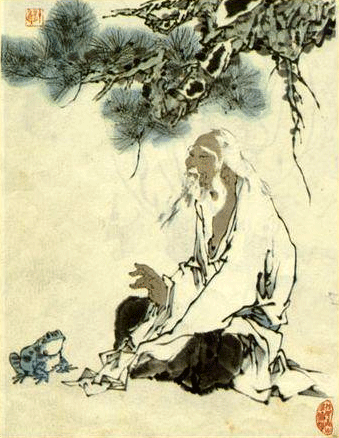
The Paradox of Duality: Embracing the Unseen Path
Chuang Tzu's assertion that "This is called following two courses at once" invites us to explore the intricate dance of duality within our lives. At first glance, this statement may seem contradictory, yet it beckons us to consider the possibility of embracing multiple perspectives simultaneously. In a world often defined by rigid binaries, this teaching encourages a deeper understanding of our experiences, urging us to transcend conventional dichotomies and recognize the fluidity of existence.
Delving into this quote reveals a profound wisdom that resonates with the complexities of human experience. Chuang Tzu, a central figure in Taoism, invites us to reflect on the nature of our choices and the paths we tread. By acknowledging the coexistence of seemingly opposing forces, we are encouraged to cultivate a sense of harmony and balance, allowing us to navigate the intricacies of life with grace and awareness. This exploration of duality is not merely an intellectual exercise; it is a call to embody a more expansive view of reality.
The image / the metaphor
The imagery within Chuang Tzu's quote evokes a sense of movement and fluidity, suggesting that life is not a linear journey but rather a complex tapestry woven from diverse threads. The phrase "following two courses" conjures the image of a traveler navigating a winding path, where each fork represents a choice laden with potential. The verbs chosen—"following" and "courses"—imply an active engagement with life, urging us to embrace the journey rather than merely seeking a destination.
As we delve deeper into the metaphor, we begin to see that these "two courses" symbolize the interplay of opposites: joy and sorrow, success and failure, certainty and doubt. Chuang Tzu's wisdom lies in the recognition that these dualities are not mutually exclusive; rather, they coexist and inform one another. By accepting this paradox, we open ourselves to a richer, more nuanced experience of life, where each moment is infused with the potential for growth and understanding.
In the speaker's tradition
Chuang Tzu's teachings are deeply rooted in the Taoist tradition, which emphasizes the interconnectedness of all things and the importance of aligning oneself with the natural flow of the universe. Concepts such as *wu wei* (non-action) and *yin-yang* illustrate the dynamic balance between opposites, echoing the sentiment expressed in the quote. In Taoism, the idea of following two courses at once aligns with the understanding that life is a continuous interplay of forces, where embracing paradox leads to greater wisdom and insight.
A relevant text that resonates with this theme is the *Zhuangzi*, where Chuang Tzu often employs paradoxical stories to illustrate the limitations of rigid thinking. For instance, the tale of the butterfly dream invites readers to question the nature of reality and identity, suggesting that our perceptions may be more fluid than we realize. In this light, the notion of following two courses becomes a pathway to deeper understanding, urging us to embrace the complexity of existence rather than confining ourselves to simplistic narratives.
Living the teaching
Consider a modern scenario where this teaching finds resonance: a person grappling with a career decision that pits passion against financial security. In this situation, the individual may feel torn between pursuing a dream that ignites their spirit and adhering to societal expectations that prioritize stability. By embracing Chuang Tzu's wisdom, they can recognize that both paths hold value and that it is possible to weave together elements of both passion and practicality, creating a unique path that honors their true self while navigating the demands of the world.
In the realm of relationships, the teaching of following two courses can manifest in the delicate balance between independence and connection. A couple may find themselves navigating the tension between their individual desires and the shared goals of their partnership. By acknowledging the validity of both perspectives, they can foster a deeper understanding of one another, allowing for a relationship that honors both personal growth and mutual support. This approach not only enriches their bond but also cultivates a sense of harmony that transcends the limitations of duality.
A reflection
As we contemplate Chuang Tzu's invitation to follow two courses at once, we are prompted to reflect on our own lives and the dualities we encounter. What areas of your life invite you to embrace paradox rather than choose one path over another? In recognizing the interplay of opposing forces, we can cultivate a deeper sense of acceptance and understanding, allowing us to navigate the complexities of existence with grace and wisdom.



Join the BrightStar Community
Stay connected with daily inspiration, event announcements, and community wisdom