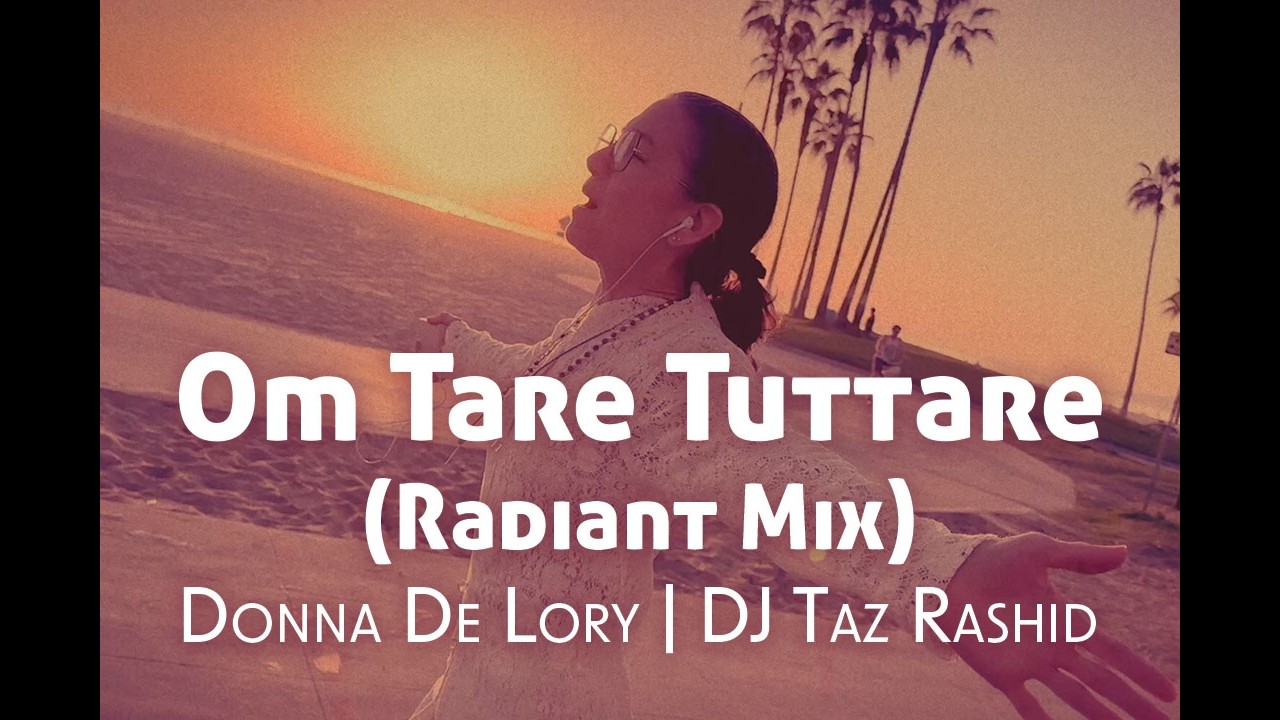
In this 2010 Summer of Love Benefit Concert interview, kirtan artist and mantra vocalist Donna De Lory discusses the intersection of her spiritual path, motherhood, and music-making. She explains how Sanskrit mantras that resonate with her personal practice become the foundation of her songs, how she balances family life with touring, and the power of mantra-based music to heal through rhythm and collective chanting. Her work bridges traditional Vedic sound practice with accessible, danceable arrangements designed to move bodies and settle minds.
What Inspires Donna De Lory's Creative Work?
For Donna De Lory, inspiration flows from multiple sources simultaneously. When asked directly what inspires her, she names the simple fact of being alive, music itself, nature, and her children. This is not sentimental—it is grounded. Her daughter Sophia's poem about ocean conservation, which De Lory recounts, exemplifies why children serve as spiritual teachers: they speak truth directly from their experience, without the filtering that adults develop. De Lory sees in her children's clarity a mirror for her own creative work. She observes: "Seeing these children having these, you know, just speaking the truth and realizing the truth and just coming out of their from their perspective is very inspiring to me" (0:245).
This inspiration extends to her musical practice. De Lory is deeply moved by the spiritual path she walks—her own dharma, her own life experiences—which becomes the raw material for her songwriting. She does not compose from theory or commercial calculation; she creates from lived encounter.
How Do Sanskrit Mantras Become Songs?
De Lory's approach to mantra-based music is neither purely devotional nor purely musical. Instead, she describes a process of discovery and resonance. She encounters Sanskrit mantras through her spiritual path, and when one resonates deeply with her—often because she is working with that mantra's energy in her own practice at that moment—she begins to integrate it into her recordings.
Initially, she explains, "I kind of come across a lot of mantras Sanskrit mantras that really resonate with me and I started putting those into my music and some of my English songs I put those mantras in and then I kind of Switched that around and did more Mantra based music and put the English in" (0:273). This evolution shows a gradual commitment to the mantra form itself. Rather than treating Sanskrit words as exotic flavor to sweeten English pop songs, De Lory inverted the priority: mantras became the primary vehicle, with English supporting or expanding their meaning.
This choice is strategic and intentional. De Lory selects mantras for her records based on their relevance to her immediate spiritual work. "There always something that maybe I'm going through a mantra that's really important to me at the time that's you know those are kind of the ones I choose to put on my records" (0:288). This ensures authenticity—she is not channeling mantras from scholarly distance but from lived engagement.
What Role Does Rhythm and Movement Play in Healing?
Beyond the mantras themselves, De Lory is exploring the physical dimension of mantra practice. She describes new work she is developing for an upcoming album that emphasizes rhythm and dance-friendly arrangements. "I'm really inspired to do more rhythmic music now," she says, and she is "working on some new songs for uh a new album that'll probably come out next year" (0:303).
Importantly, these remixed versions are not dilutions of the sacred practice. Rather, they expand access and embodiment. De Lory explains her philosophy: "There's a lot of like chanting and movement together which I think is is really healing for me and you know I hope it to share that with a lot of people" (0:330). The rhythm and movement are not ornamental; they are part of the healing itself. When bodies move in unison with a mantra, something shifts in the nervous system and the collective field.
This approach recognizes that not all seekers are comfortable sitting still in meditation. Some people heal through rhythm, through being part of a moving community, through letting the body remember its own capacity for peace. De Lory's integration of dance-friendly production with mantra chanting serves these practitioners.
How Does Motherhood Inform Her Artistic Path?
De Lory's life as a mother is not separate from her music—it is woven through it. During the interview, she describes recent travels: a trip to Wonderlust (a yoga festival in Squaw Valley), visits to remote locations, and long drives with a one-and-a-half-year-old and a seven-year-old in tow. These are not the conditions typically associated with professional touring musicians, and yet De Lory manages them with grace and openness to the adventure.
When asked what balances her busy life, she notes the challenge directly: "There's a lot of um different aspects of Our Lives I me being a mother and the family and home and I've got so many things I'm trying to balance" (0:460). Yet she does not present motherhood as an obstacle to overcome. Rather, it grounds her artistry in the real world. Her children are her teachers; her family commitments keep her honest; the texture of family life feeds her creativity.
What Is the Connection Between Personal Practice and Public Music?
De Lory's artistic method depends on congruence between her inner work and her outer offering. The mantras she sings publicly are mantras she practices privately. The rhythm and movement she promotes in her music are practices she engages in herself. This is not performance in the sense of acting—it is transmission. She shares what she knows, what she lives, what transforms her.
When fans approach her and express that her music has touched them, De Lory speaks of deep gratitude. She recognizes that sound can travel across the distance between strangers and create recognition. "It's so beautiful to touch someone who you've never met and you don't know how they could have possibly possibly gotten your music and how it's affected them" (0:472). This mystery—that her practice somehow meets another person's need, across time and circumstance—is what sustains her commitment to the work.
Where to Go from Here
For those drawn to De Lory's approach, several threads invite exploration. If you are interested in Sanskrit mantra practice, begin by finding a teacher or tradition where mantras are offered with explanation and context—not as technique alone, but as spiritual technology. Notice which mantras resonate with your current life situation or challenge, just as De Lory does. This resonance is not arbitrary; it often signals that a particular mantra's vibration can meet an unresolved question in your body and being.
If you work with rhythm and movement as a spiritual practice—kirtan, ecstatic dance, rhythmic meditation—consider how these modalities might deepen personal practice while also creating access for others. De Lory's evolution toward danceable, rhythmic mantra music shows that accessibility and authenticity are not in conflict; they can enhance each other.
Finally, if you are a parent or creative person managing the multiplicity of family life and artistic calling, De Lory's example suggests that these roles need not split you in half. The spiritual work of presence, attention, and integrity that parenting demands is the same work that makes music (or any art) alive and true. Your children, your home, your daily adventures—these are not interruptions to your practice; they are your practice.