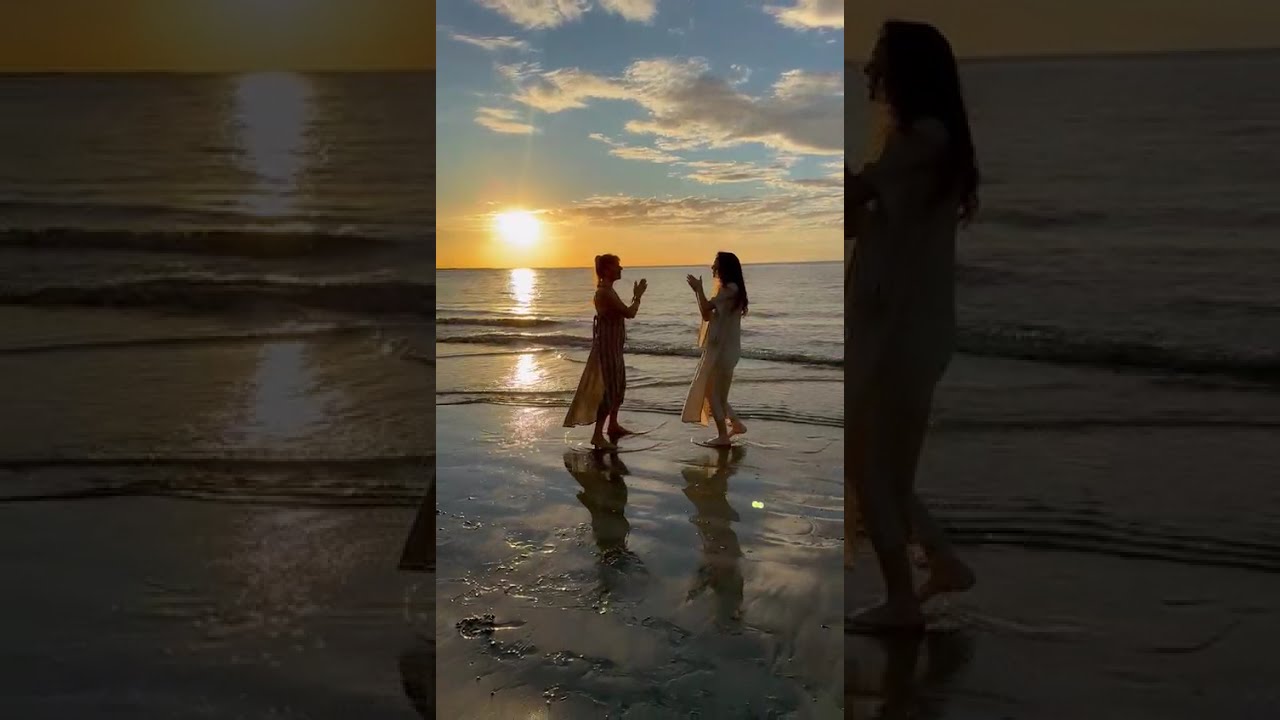
"Ocean's Lullaby" is a kirtan composition that uses the ocean as a metaphorical and sonic anchor for meditation and healing. Through devotional music, the piece invites listeners into a space of fluidity, surrender, and rhythmic connection—drawing on water's natural capacity to soothe and transform consciousness. The work exemplifies how kirtan bridges the sacred and the natural world, using musical form to access states of inner stillness and spiritual attunement.
What Is the Role of Nature in Kirtan and Devotional Music?
Kirtan is a Sanskrit chanting practice rooted in Hindu and yogic traditions, often accompanied by call-and-response singing, instruments, and community participation. "Ocean's Lullaby" extends this tradition by grounding devotional practice in the natural world. Rather than existing purely in the abstract realm of mantra, the composition uses the ocean—one of nature's most powerful and rhythmic forces—as both subject and sonic metaphor.
The ocean has long held spiritual significance across cultures: it represents vastness, mystery, and the cyclical nature of existence. In meditation traditions, water is associated with fluidity, adaptability, and the flow of prana (life force energy). By titling this work "Ocean's Lullaby," the artist invokes these qualities, suggesting that the music itself functions as a container for the listener's own journey toward fluidity and rest.
How Does Sound Create Healing Space in Devotional Music?
Kirtan and chant-based music operate on several levels simultaneously. The repetitive structure of mantras and devotional phrases creates a neurological settling effect—the brain's default mode network, responsible for self-referential thinking and worry, naturally quiets in response to rhythmic, melodic input. This is not merely psychological; it is a direct effect of how the nervous system processes sound.
"Ocean's Lullaby" likely employs this principle through:
- Rhythmic repetition: Echoing the cyclical motion of tides and waves, establishing a predictable sonic environment the body can relax into
- Sustained tones: Extended vowel sounds (typical of kirtan) that allow the listener to settle into a single frequency and resonate with it
- Call-and-response structure: Creating a sense of dialogue and connection, whether experienced alone or in community
- Natural instrument timbre: Using instruments that complement rather than override the voice, maintaining an organic, earth-rooted quality
In this way, devotional music functions not as entertainment but as a healing modality—a sonic medicine that works through the body's own capacity to synchronize with rhythm and frequency.
What Is the Spiritual Significance of Water in Eastern Traditions?
Water appears across Hindu, Buddhist, and Taoist cosmologies as a symbol of consciousness itself. In Vedantic philosophy, consciousness is sometimes described as sat-chit-ananda—being, awareness, and bliss—characteristics also attributed to water: it exists, it reflects, and it flows without resistance. Water adapts to its container without losing its essential nature; it moves toward the lowest point without struggle; it nourishes all life.
The ocean, specifically, represents the infinite and undifferentiated source from which all individual forms arise and to which they return. In kirtan practice, meditating on or singing about the ocean can facilitate an experience of dissolution of the separate self into something vaster—a temporary ego-death that paradoxically feels restful and whole.
How Does Kirtan Invite Surrender and Letting Go?
A lullaby, by definition, is a song designed to soothe and guide toward sleep. The term "lullaby" applied to an ocean composition suggests movement toward rest, surrender, and the allowing of natural processes. Kirtan, at its root, is an invitation to release individual will and align with a larger current—whether understood as divine will, natural law, or the intelligence of the cosmos.
The lullaby structure invites the listener to stop efforting, to trust the music and the moment, and to drift—much as one might float on the ocean's surface, held by a force larger than oneself. This surrender is not passive or void; rather, it is an active letting-go of resistance, opening the possibility for deeper states of presence and peace.
What Makes This Music Suitable for Meditation and Inner Work?
The formal elements of devotional music—repetition, modal harmonic structures (often based on ragas in Indian classical tradition), and the use of the human voice as primary instrument—create conditions favorable for meditation. Unlike music designed to stimulate or excite the mind, kirtan and devotional compositions are engineered to quiet the thinking mind and activate deeper layers of awareness.
"Ocean's Lullaby," by its title and context (recorded on the album Indigo Sea, produced by Siobhán Moore and released in 2018), appears designed for personal practice: yoga sessions, sleep preparation, or simply creating a container for one's own inner listening. The ocean metaphor provides the listener with a mental anchor—something to rest attention upon that is neither confusing nor demanding.
Where to Go from Here
If you're drawn to "Ocean's Lullaby," consider exploring the broader tradition of kirtan and devotional music as a spiritual practice. Seek out live kirtan circles in your area or engage with recordings that invite participation (call-and-response). Experiment with chanting simple mantras related to water, healing, or surrender—such as "Om Namah Shivaya" (I bow to the divine in myself) or "So Hum" (I am that). Notice how your nervous system responds to sustained tones and rhythmic repetition, and allow yourself the permission to simply rest and float, held by something larger than your individual effort.