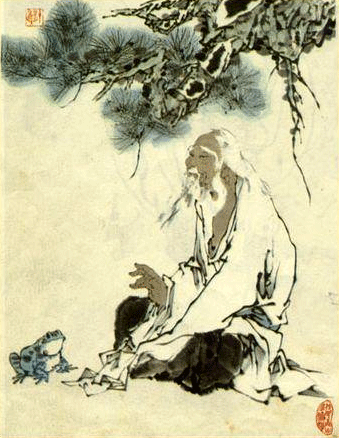
The Endurance of Stillness: Embracing Our Place
Chuang Tzu's assertion, "He who stays where he is endures," invites us to reflect on the profound nature of endurance and the significance of remaining present in our circumstances. In a world that often glorifies movement and change, this quote challenges us to consider the strength found in stillness and acceptance. The essence of this teaching lies in recognizing that true resilience is not merely about physical endurance but also about the mental and spiritual fortitude to remain grounded in our current reality.
As we delve deeper into this wisdom, we uncover layers of meaning that resonate with the human experience. Staying where we are does not imply stagnation; rather, it suggests a conscious choice to embrace our present situation, however challenging it may be. This perspective shifts our understanding of endurance from a passive state of survival to an active engagement with life, encouraging us to cultivate patience and awareness as we navigate our personal journeys.
The image / the metaphor
The imagery in Chuang Tzu's quote evokes a sense of rootedness, suggesting that endurance is akin to a tree firmly planted in the ground. The verbs "stays" and "endures" imply a steadfastness that transcends mere physical presence; they speak to an inner strength that allows one to weather the storms of life. This metaphor of being grounded invites us to consider the importance of our surroundings and the relationships we cultivate, as they play a crucial role in our ability to endure.
Diving deeper into the metaphor, we can see that staying where we are also implies a surrender to the present moment. In Taoist philosophy, this surrender is not a sign of weakness but rather an acknowledgment of the natural flow of life. Just as a river flows around obstacles, we too can learn to navigate our circumstances with grace and resilience, finding strength in our ability to remain present and engaged, even when faced with adversity.
In the speaker's tradition
Chuang Tzu's teachings are deeply rooted in the Taoist tradition, which emphasizes harmony with the Tao, or the natural way of the universe. Concepts such as wu wei, or effortless action, and sunyata, the emptiness that allows for potential, resonate with the idea of endurance through stillness. In this context, endurance is not about clinging to a particular outcome but rather about aligning oneself with the flow of existence, allowing life to unfold as it will.
In the text of the Zhuangzi, we find numerous anecdotes illustrating the value of remaining true to oneself and embracing the present moment. One such story involves a man who, despite facing ridicule for his unconventional ways, remains steadfast in his beliefs. This narrative serves as a powerful reminder that true endurance often requires us to stand firm in our convictions, even when the world around us may seem chaotic or unwelcoming.
Living the teaching
Consider a modern scenario where this teaching resonates: a person facing a challenging job situation. Instead of hastily seeking a new position or becoming consumed by frustration, they choose to stay put, focusing on their current responsibilities and relationships. This decision allows them to cultivate patience, develop new skills, and ultimately find a deeper sense of fulfillment in their work, demonstrating that endurance can lead to growth and transformation.
In the realm of relationships, the idea of staying where we are can manifest in the commitment to navigate difficult conversations with a partner. Rather than avoiding conflict or seeking an easy exit, one might choose to remain present, engaging in open dialogue and vulnerability. This willingness to stay, to endure the discomfort of honest communication, can strengthen the bond between partners, fostering a deeper understanding and connection that transcends momentary challenges.
A reflection
As we contemplate Chuang Tzu's wisdom, we are invited to consider the nature of our own endurance. In what areas of our lives are we tempted to flee rather than stay? How might embracing our current circumstances, with all their complexities, lead us to a deeper understanding of ourselves and our place in the world? Reflecting on these questions can illuminate the path toward a more profound engagement with life, encouraging us to find strength in stillness and resilience in presence.



Join the BrightStar Community
Stay connected with daily inspiration, event announcements, and community wisdom