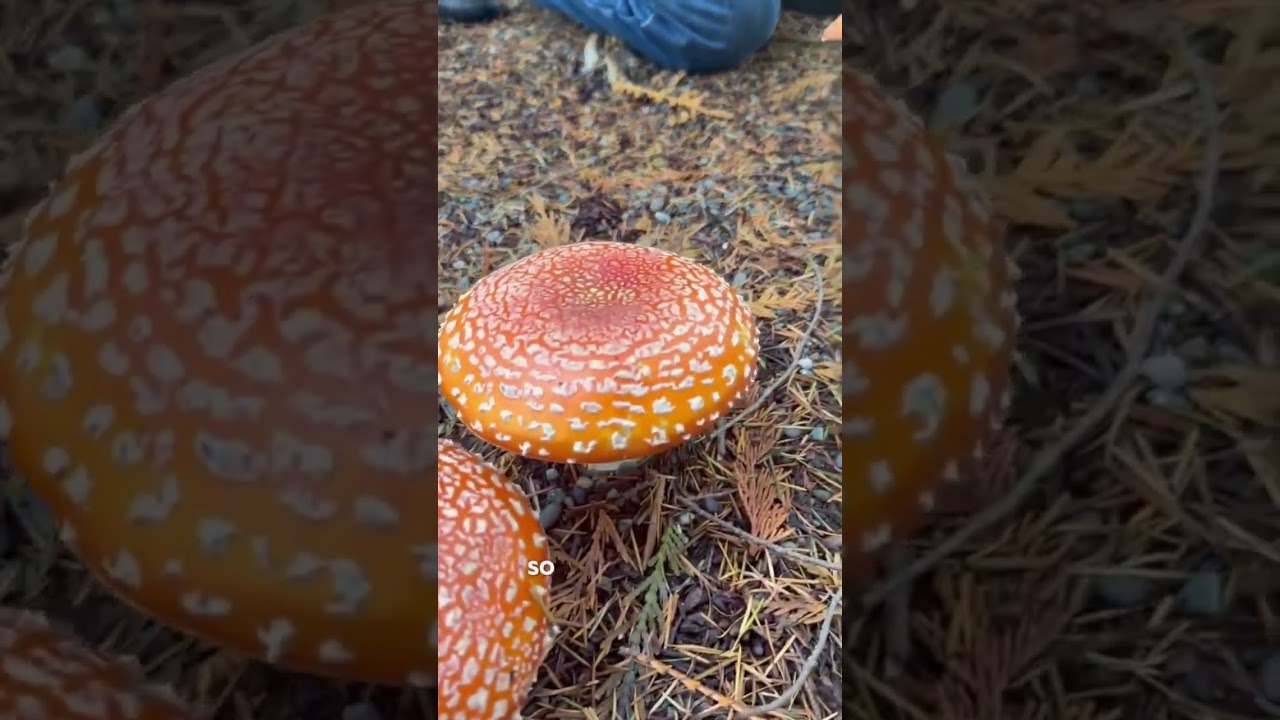
Why Mistake Parasol Mushrooms for Amanita?
Parasol mushrooms and Amanita species share enough superficial resemblance that misidentification poses a serious safety risk. Both have white spores and a similar overall structure, which is precisely why Stamets repeatedly emphasizes the need for careful identification. The parasol mushroom (Lepiota procera, also called Chlorophyllum procera) is edible and choice—considered a delicacy by many foragers—but Amanita species include some of the deadliest mushrooms on Earth. Understanding the specific characteristics that distinguish them is essential for anyone harvesting wild mushrooms. Stamets's warning reflects a core principle of mycology: never harvest without absolute certainty of identity.
How Did One Bag of Spawn Become Hundreds of Fruiting Bodies?
In 2003, Stamets planted a single bag of sawdust spawn (mycelium-colonized substrate) into an ant mound on his property. Twenty years later, the result is a sprawling network of parasol mushroom colonies. This extraordinary expansion demonstrates the resilience and dispersal capability of fungal mycelium. The ants themselves became vectors for fungal spread, moving the mycelium and spores as they expanded their colonies. By September each year—specifically, around the third week of the month—new fruiting bodies erupt. During the video, Stamets reports six established satellite colonies across his property and two dozen "spikes" (early fruiting formations) emerging simultaneously, with literally hundreds of mushrooms fruiting in total over the two-decade period. This is not accident but rather evidence of how well-adapted the parasol mycelium became to the ecological conditions of the property.
Why Do Leaf Cutter Ants Farm Parasol Mushrooms?
Leaf cutter ants (Atta species) became fungus farmers approximately 30 million years ago, making fungal cultivation a core part of their biology and survival strategy. When ants encounter parasol mycelium, they don't simply ignore it—they actively cultivate and protect it. The reason is functional: the parasol mycelium produces bacteria that prevent infection by parasitic fungi such as Escovopsis, which would otherwise devastate the ant colony's food supply. In essence, the ants have evolved the ability to recognize and preserve a fungus that enhances their immune defense. Adult ants feed the fungal fruiting bodies (or cultivated mycelium) to larvae, improving their nutritional intake and bolstering the colony's overall immunity to pathogenic attack. This represents a sophisticated symbiotic relationship—the ants provide habitat, humidity, and protection for the mycelium, while the mycelium provides food and disease resistance for the ants. Neither party would thrive as well without the other.
What Makes This a Natural Cultivation Success?
Stamets emphasizes that "never underestimate the resiliency of mushrooms." Once the initial spawn bag was planted into the ant mound, the mycelium did most of the work. The ants' natural tendency to expand their nest, move substrate, and manage the fungal garden meant that the parasol mycelium spread without further human intervention. This is not controlled laboratory cultivation but rather an observation of how fungi thrive when given suitable ecological conditions. The mycelium migrated across the property over two decades, establishing new satellite colonies wherever conditions—moisture, organic matter, temperature—aligned. The annual September fruiting shows that the mycelium has integrated deeply into the soil and microclimate of the property, returning predictably each fall. This reliability is the hallmark of true naturalization: the organism has become part of the local ecology, not dependent on annual replanting or intensive management.
How Can Gardeners Grow Parasol Mushrooms at Home?
For home growers, Stamets directs readers to his book Mycelium Running: How Mushrooms Can Help Save the World, which includes specific protocols for cultivating parasol mushrooms. A key technique involves using "stem butts"—the base of mushroom stems—as spawn material to inoculate sawdust or other substrates. This method is less expensive than purchasing commercial spawn and allows home growers to build successive generations from their own harvest. The initial step mirrors what Stamets did in 2003: inoculate a bag of substrate and place it in a location with ants (if you have them) or simply in a moist, shaded area of your property. The mycelium will colonize the substrate over weeks to months, and fruiting can begin the following season. Unlike some specialty mushrooms, parasol mycelium is relatively robust and forgiving, making it suitable for beginners. The video's evidence—hundreds of mushrooms from a single 2003 planting—suggests that parasol mushrooms are particularly well-suited to outdoor cultivation and naturalization.
What Is the Ecological Role of Parasol Mushrooms?
Parasol mushrooms are decomposers and nutrient recyclers. Their mycelium breaks down dead plant matter, leaves, and other organic debris, converting it into forms that enrich soil and make nutrients available to plants. In the context of an ant colony, they serve a secondary but crucial role: they feed the ants and their larvae while simultaneously defending the colony against pathogenic fungi. In a broader ecological sense, they are part of the fungal network that sustains forest and garden health. Stamets's final reflection—"They are guardians of the underground"—captures this view: fungi, and parasol mushrooms in particular, maintain the integrity of soil ecosystems and prevent disease. The fact that they also provide humans with edible fruiting bodies is a bonus, not the primary function of their existence.
Why Does This September Fruiting Pattern Occur?
Stamets notes that the parasol mushrooms fruit reliably around the third week of September. This timing is related to environmental cues: late summer rains, cooling temperatures, and shorter day length all trigger fruiting in many temperate mushroom species. By late September, the mycelium has also accumulated sufficient stored energy from the season's growth, allowing it to invest in fruiting bodies. The consistency of this pattern across twenty years suggests that the mycelium has become deeply synchronized with the seasonal rhythms of the Pacific Northwest (where Stamets's property is located). Growers in other regions may observe different fruiting windows depending on their local climate, but the principle remains: mushroom mycelium responds to environmental signals, not human timekeeping.
What Is "Mycelium Running" and Why Does It Matter?
Mycelium running refers to the expansive growth of fungal networks through soil and organic matter. Rather than fruiting immediately, mycelium extends underground, colonizing new territory and building the nutrient-absorbing network that sustains the organism. In Stamets's example, the mycelium from a single 2003 spawn bag ran through the ant mound and across the property, eventually fruiting in multiple locations. This running phase is crucial: it is during this period that the mycelium performs most of its ecological work—breaking down organic matter, forming relationships with plants and other organisms, and building soil health. Only after the mycelium has sufficiently colonized an area does it invest energy in fruiting. Understanding this life cycle helps growers appreciate why patience is essential: the first year or two may show no fruiting, but the mycelium is working underground. Stamets's book explores strategies to encourage and direct this mycelial running, allowing cultivators to extend fungal networks across larger areas and create exactly the kind of multi-colony success evident in his parasol mushroom project.
Where to go from here
For readers interested in cultivating parasol mushrooms, start with Stamets's Mycelium Running: How Mushrooms Can Help Save the World, which provides practical protocols for inoculating substrates and managing outdoor cultivation. Visit Stamets's YouTube channel (youtube.com/paulstamets) to view additional videos documenting the parasol mushroom project over multiple decades, offering visual documentation of naturalization in action. If you have ants on your property, consider whether introducing parasol spawn might integrate with your local ecosystem—but always verify identification and ensure the species is appropriate for your climate. Study the distinguishing features of parasol mushrooms and Amanita species before harvesting any wild mushrooms; confusion between these species has serious health consequences. For broader context on fungal ecology and the symbiosis between fungi and insects, explore Fantastic Fungi and other resources that document the role of mycology in nature.
]]>