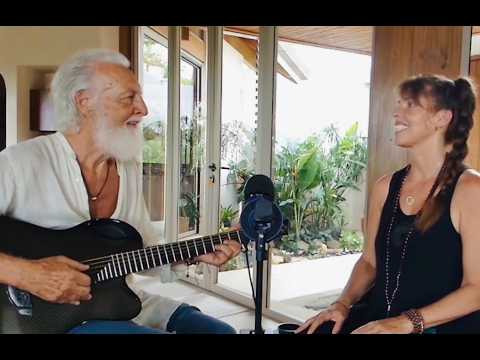
Miten presents the Teyata Om Bekanze mantra, one of Buddhism's most significant healing prayers. This invocation addresses Medicine Buddha as the Supreme Healer and requests liberation from illness on three levels: physical disease, psychological suffering, and the ultimate illness of dualistic ignorance. The mantra functions both as a daily healing practice and as a sacred recitation for those approaching death, bridging worldly wellness and spiritual liberation.
What is the Medicine Buddha Mantra?
The Teyata Om Bekanze mantra, as presented in this live recording from Budapest, is structured as a direct appeal to Medicine Buddha, known in Sanskrit as Bhaiṣajyaguru. The mantra unfolds in layers of meaning. The opening syllables Teyata Om establish the sacred invocation, while the core repetition—Bekanze, Bekanze, Maha Bekanze—calls upon the Buddha's healing power three times with increasing intensity: first for the healing power itself, second for its amplification, and third (Maha, meaning "great") for ultimate liberation.
The phrase Radza Samudgate Soha concludes the mantra, translating roughly to "the King who has crossed the ocean of suffering, so be it." This ending grounds the prayer in the Buddha's own transcendence of dukkha (suffering), making the healer's enlightenment itself the medicine.
How does this mantra address different levels of illness?
According to the teaching embedded in the YouTube description, the mantra operates on three distinct but interconnected levels. First, it addresses physical illness—the obvious domain of sickness, pain, and bodily disease. A practitioner reciting this mantra in the context of personal or collective illness is asking for relief from tangible medical conditions.
Second, the mantra targets what might be called psychological or emotional illness: the suffering born of attachment, aversion, grief, and mental turbulence. In Buddhist terms, these subtle forms of dis-ease arise from the mind's habitual reactions rather than from the body's pathology alone.
Third, and most profoundly, the mantra addresses "the great Illness"—which the teaching identifies as the illusion of duality itself. This is the fundamental confusion that separates subject from object, self from other, healer from healed. By invoking Medicine Buddha as the Supreme Healer, practitioners are not merely asking for symptom relief; they are asking to be freed from the root ignorance that generates all suffering in the first place.
Why is this mantra used in the dying process?
The fact that this mantra is also employed for those approaching death reveals a sophisticated understanding of healing beyond the hospital model. In Buddhist practice, the dying process is understood as a crucial transition where the mind's clarity directly influences the next rebirth or final liberation. Rather than exclusive focus on physical recovery, the mantra for the dying serves as a gateway to spiritual clarity.
Reciting or hearing this mantra at the end of life helps reorient the dying person's consciousness away from fear and clinging toward Medicine Buddha's presence and the promise of healing that transcends death. It transforms the final moments into an opportunity for spiritual deepening. The healer invoked is not bound by death; Medicine Buddha's cure works whether the body survives or not, because the ultimate medicine is wisdom—the recognition of non-duality.
What does the mantra text actually mean?
Breaking down the English translation provided in the description:
"It is like this. Medicine Buddha, you are the King, the Supreme Healer. Please remove illness, illness and the great Illness. Now I offer this prayer."
The opening phrase "It is like this" (often "Om" in Sanskrit contexts) signals entry into sacred space and invites the practitioner to recognize reality as it is, without conceptual overlay. "Medicine Buddha, you are the King" establishes hierarchy and authority—this healing power is supreme, not subordinate to doubt or skepticism. "The Supreme Healer" underscores that this is not one healer among many, but the ultimate source of remedy.
The triple reference to illness—"illness, illness and the great Illness"—echoes the three-level structure noted above. The first two instances address the manifest forms of suffering (bodily and mental), while "the great Illness" points to the root condition of ignorance. The final phrase, "Now I offer this prayer," shifts the mantra from recitation to offering, transforming the speaker into an active participant in the healing gesture.
How is this mantra used in contemporary practice?
Miten and Deva Premal have made this mantra accessible through live performance and recording, as evidenced by this 2015 world tour recording. When chanted or sung together in a group setting—as they do in Budapest—the mantra creates a collective field of healing intention. The musical setting (produced and edited by Rishi) adds another layer: melody and rhythm bypass the analytical mind and lodge directly in the nervous system and heart.
Contemporary practitioners use this mantra in several contexts: as part of a formal meditation or prayer practice, often daily; in response to specific illnesses in oneself or loved ones; in hospice and end-of-life care; and increasingly in secular wellness contexts where its stress-reducing and focus-deepening properties are valued without requiring Buddhist belief. The mantra's potency seems to rest not on dogmatic acceptance of Medicine Buddha as a literal deity, but on the psychological and neurological effects of sustained repetition combined with healing intention.
What makes this mantra one of Buddhism's most important healing prayers?
The identification in the video description that this is "one of the most important mantras for healing" reflects its place in Mahayana Buddhism, particularly in East Asian and Tibetan traditions. Medicine Buddha (Bhaiṣajyaguru) has an entire sutra and iconography dedicated to him, and his mantra appears in temples, healing rituals, and monastic liturgies worldwide. The mantra's staying power derives from several factors:
- Structural clarity: The threefold invocation (Bekanze, Bekanze, Maha Bekanze) follows a time-tested pattern that aids memorization and deepens concentration.
- Comprehensiveness: By addressing illness at physical, emotional, and metaphysical levels, the mantra speaks to the full spectrum of human suffering.
- Applicability: The mantra works for the well and the sick, the living and the dying, believers and skeptics. Its universality is built into its design.
- Theological depth: Medicine Buddha's status as a healing Buddha distinct from other Buddhas gives practitioners a focal point for aspiration and refuge.
Where to go from here
If you resonate with this mantra, you might explore it through several entry points. Listen to recordings by Deva Premal & Miten or other contemporary practitioners to familiarize your ear with the melody and rhythm. If you are interested in deeper study, consult the Medicine Buddha sutra in English translation—many editions exist, with commentaries from Tibetan and East Asian teachers. Consider attending a live kirtan or mantra session to experience the mantra's communal potency. If you are facing illness or know someone who is, investigate whether reciting this mantra brings ease, clarity, or a sense of spiritual support. And if you are contemplating death—your own or another's—remember that this mantra has served practitioners at that threshold for over a thousand years, not because it magically cures death, but because it reminds us that the deepest healing was always available, beyond fear.