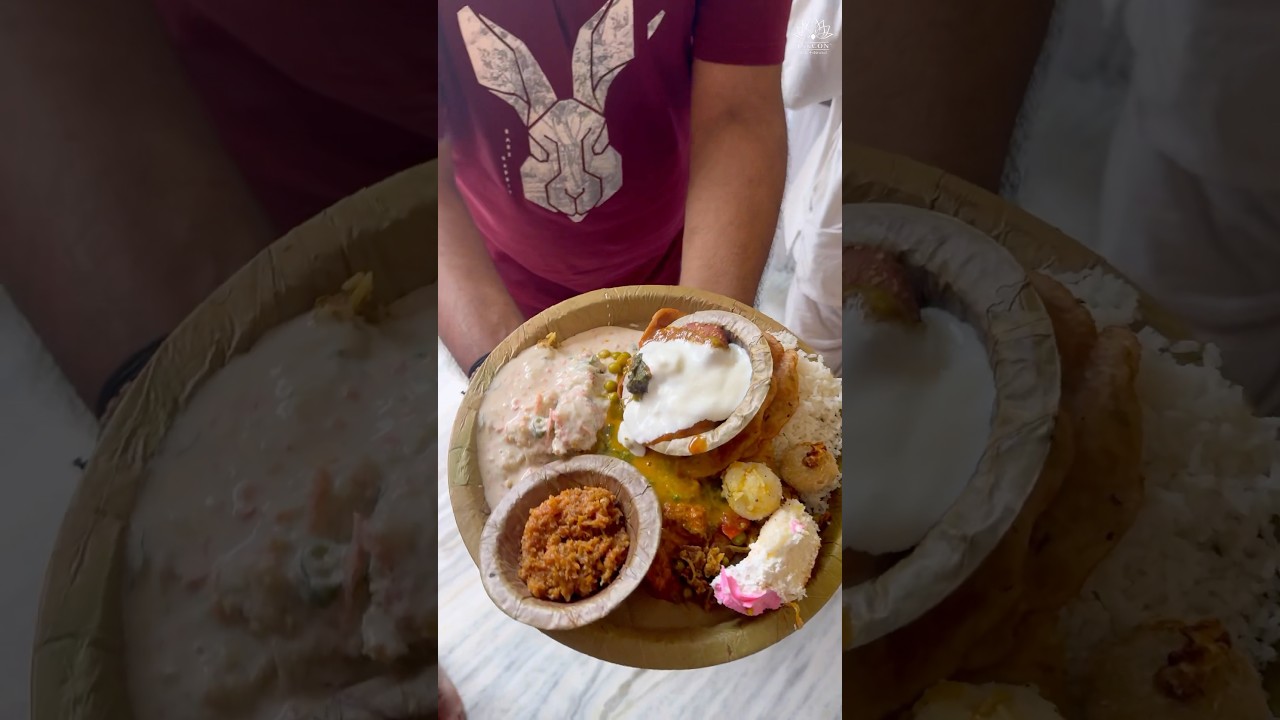
TLDR: Vyasa Puja is a sacred observance in the Gaudiya Vaishnava tradition that celebrates the spiritual teacher (guru) and honors the unbroken lineage of wisdom stretching back through parampara—the succession of realized masters. The mahaprasadam (spiritually sanctified food) distributed at such celebrations, as evidenced by this ISKCON Hyderabad gathering, embodies the bhakti principle of grace flowing through community worship and the formal recognition of one's spiritual guide.
What is Vyasa Puja?
Vyasa Puja is an annual observance dedicated to Vyasadeva, the legendary sage who codified the Vedas and composed the Bhagavata Purana. In contemporary Gaudiya Vaishnava practice, particularly within ISKCON (the International Society for Krishna Consciousness), Vyasa Puja has become the primary occasion for celebrating one's spiritual teacher—honoring both the individual guru and the entire parampara or succession of gurus extending back through centuries of spiritual transmission.
The word "Vyasa" refers to the compiler of sacred knowledge, and "Puja" means worship or honor. Combined, Vyasa Puja acknowledges that all authentic spiritual teachings flow through a lineage of realized souls. This is not idol worship in the conventional sense, but rather a recognition that the guru is the transparent conduit through whom eternal dharma is revealed to each generation.
Why is Mahaprasadam Central to the Celebration?
Mahaprasadam—food that has been offered to the Divine and then distributed as a blessing—holds profound significance in bhakti traditions. During Vyasa Puja ceremonies, the preparation and distribution of mahaprasadam serves multiple functions simultaneously. First, it represents the guru's compassion: the spiritual teacher nourishes followers not only with wisdom but with material sustenance. Second, the prasadam itself is considered non-different from the guru's blessings; consuming food blessed by the guru is understood as internalization of his grace.
The distribution of mahaprasadam at an ISKCON event like the Hyderabad Abids gathering creates a tangible point of connection between the abstract principle of parampara and lived experience. Rather than remaining a theoretical concept, the spiritual lineage becomes manifest in shared food, shared devotion, and collective acknowledgment of the guru's role as guide.
What Does Parampara Mean in Spiritual Practice?
Parampara is the Sanskrit term for an unbroken chain of spiritual succession. In Gaudiya Vaishnava theology, knowledge of God cannot be manufactured through intellectual speculation alone—it must come through direct transmission from a guru who has received it from their guru, extending backward through time to Krishna himself. This lineage is considered the guarantor of authentic spiritual knowledge.
The significance of parampara is that it acknowledges interdependence: no individual practitioner stands alone. Each person's spiritual progress depends on receiving guidance from someone further along the path, and that guide in turn received wisdom from their guide. Vyasa Puja celebrations make this invisible chain visible and tangible, gathering a community around the affirmation that "we are part of something larger than ourselves—a succession of seekers and realized souls stretching across generations."
How Do Communities Practice Vyasa Puja?
At ISKCON temples like the Hyderabad Abids location, Vyasa Puja typically involves:
- Recitation of prayers and mantras honoring the guru and the parampara
- Singing of devotional songs (kirtans) dedicated to the spiritual teacher
- Offerings of flowers, incense, and other symbolic items at the guru's seat
- Collective meal (prasadam) distributed to all participants, reinforcing the principle of unity and shared blessing
- Spiritual discourses or teachings reflecting on the guru's example and instruction
The mahaprasadam distribution—whether elaborate feasting or simple sanctified food—remains the ceremonial apex where philosophical principles become embodied practice. Every participant consuming the blessed offering affirms their connection to the guru, to one another, and to the eternal lineage.
What is the Role of the Guru in Gaudiya Vaishnava Tradition?
In this tradition, the guru is not understood as an infallible deity, but as a realized teacher whose life exemplifies the spiritual path they teach. The guru's primary function is to connect the student with God (Krishna, in Vaishnavite theology) and to help remove obstacles in that relationship. Vyasa Puja is the formal occasion when this relationship is publicly acknowledged and celebrated.
The guru is considered one of the three most important relationships in spiritual life (along with Krishna and other devotees). Honor toward the guru is not sectarian flattery but recognition of the vital role a sincere teacher plays in awakening dormant spiritual consciousness. Many Hindu and Vaishnava texts assert that approaching a qualified guru is the beginning of liberation—the first step without which no genuine progress is possible.
How Does Vyasa Puja Connect to Broader Vedic Cosmology?
Vyasadeva occupies a unique place in Hindu cosmology. According to Vedic texts, Vyasa appears in each age of creation (each "Dvapara Yuga") to compile the Vedas anew in a form suited to that era's conditions. The current Vyasadeva is credited with composing not only the four Vedas but also the 108 Upanishads, the Vedanta Sutras, and the Bhagavata Purana—essentially the entire corpus of Vedic knowledge.
By celebrating Vyasa Puja, devotees honor not only their immediate spiritual teacher but also the principle that knowledge is eternally preserved and transmissible through qualified representatives. The celebration asserts that truth is not invented or lost; it is recovered and re-presented through the parampara in each generation.
What is the Broader Purpose of Community Gatherings at Temples?
ISKCON temple events like the Vyasa Puja mahaprasadam distribution at Hyderabad Abids serve practical and spiritual functions simultaneously. They create regular occasions for community gathering, strengthen bonds between practitioners, provide entry points for newcomers, and reinforce core philosophical commitments through ritual and celebration. The distribution of mahaprasadam ensures that these teachings are not merely intellectual but are received through multiple sensory channels—taste, sight, sound, touch—making the spiritual principle accessible to different types of minds.
In modern contexts, where traditional spiritual transmission has become fragmented, such community celebrations become especially significant. They counter isolation and create visible, organized spaces where the "invisible lineage" of parampara is made tangible through shared practice.
Where to go from here
If this exploration of Vyasa Puja resonates with you, consider: What role do lineage and tradition play in your own spiritual search? How might connecting with a teacher or community change your understanding of spiritual growth? Vyasa Puja invites broader reflection on whether knowledge and wisdom are truly transmissible—whether they move from person to person, generation to generation—or whether each person must discover everything fresh. If you're interested in exploring Gaudiya Vaishnavism further, visiting a local ISKCON temple or investigating the teachings of the Bhagavad Gita and Bhagavata Purana provides direct engagement with the texts that structure these celebrations. The mahaprasadam itself—sanctified food offered with intention—is a humble but profound entry point into understanding how the sacred and material are understood as interpenetrating, rather than separate, in this tradition.