EveryEvent ATL

Alle Events durchsuchen

Find every event in Atlanta

events

Concerts & Live Music
Festivals
Sports & Recreation
Food & Drink
Arts & Culture
Community
Family & Kids
Nightlife
Comedy
Theater
Beliebte Reiseziele
BaliSedonaLos AngelesCosta RicaNew YorkSan FranciscoAustinMiamiJoshua TreeTulum
Alle Kategorien anzeigenAlle Reiseziele anzeigen

Alle Funktionen entdecken

Leistungsstarke Tools für Ihre Veranstaltungen

Plattform-Funktionen

Intelligente dynamische Preisgestaltung
Ticket-Kategorien
Sitzplatzreservierung
Warenkorbabbruch-Wiederherstellung
Besucher-Wiedergewinnung
Spenden & Staffelpreise
Affiliate-System
Ticket-Scanner
Rabattcodes
Individuelle Fragen
Ticket-Teilen
Upsells & Extras
Analysen & Berichte
E-Mail-Sequenzen
Warteliste / Benachrichtigen / Erinnern
Entdecken
Discovery HubArtists & PerformersVenuesKnowledge Base
Alle Funktionen anzeigenÜber uns
PreiseBlog
Language
Saved events
Alle Veranstaltungen durchsuchen

events

Concerts & Live MusicFestivalsSports & RecreationFood & DrinkArts & CultureCommunityFamily & KidsNightlife

Beliebte Reiseziele

BaliSedonaLos AngelesCosta RicaNew YorkSan Francisco

Entdecken

Discovery HubArtists & PerformersVenuesKnowledge Base

Plattform-Funktionen

Intelligente dynamische PreisgestaltungTicket-KategorienSitzplatzreservierungWarenkorbabbruch-WiederherstellungBesucher-WiedergewinnungSpenden & StaffelpreiseAffiliate-SystemTicket-ScannerRabattcodesIndividuelle FragenTicket-TeilenUpsells & ExtrasAnalysen & BerichteE-Mail-SequenzenWarteliste / Benachrichtigen / Erinnern
Alle Funktionen anzeigenÜber uns
PreiseBlog
AnmeldenRegistrierenVeranstalter
  • Browse All Events
  • Concerts & Live Music
  • Festivals
  • Sports & Recreation
  • Food & Drink
  • Arts & Culture
  • Community
  • Family & Kids
  • Nightlife
  • Alle Kategorien →
  • Savannah
  • Athens
  • Blue Ridge
  • Chattanooga
  • Charleston
  • All Destinations →
  • For Promoters
  • For Artists
  • For Venues
  • For Festivals
  • For Event Spaces
  • For Nonprofits
  • For Bloggers
  • For Speakers
  • Brand Ambassador
  • Case Studies
  • 350.000+ Käufernetzwerk
  • Warenkorbabbruch-Wiederherstellung
  • Intelligente dynamische Preisgestaltung
  • Ticket-Kategorien
  • Wiederkehrende Veranstaltungen
  • Sitzplatzreservierung
  • Affiliate-System
  • Warteliste / Benachrichtigen
  • Ticket-Scanner
  • Einbettungs-Widget
  • Event-Syndication
  • Nachrichten
  • Integrationen
  • Berichte
  • Alle Funktionen →
  • Über uns
  • Das Ökosystem
  • Blog
  • Glossar
  • Inspiration
  • Hilfe-Center
  • Kontakt
  • API-Dokumentation
  • Marken-Assets
  • Karriere
  • Presse
  • Nutzungsbedingungen
  • Datenschutzrichtlinie

Events

  • Browse All Events
  • Concerts & Live Music
  • Festivals
  • Sports & Recreation
  • Food & Drink
  • Arts & Culture
  • Community
  • Family & Kids
  • Nightlife
  • Alle Kategorien →

Getaways

  • Savannah
  • Athens
  • Blue Ridge
  • Chattanooga
  • Charleston
  • All Destinations →

For Organizers

  • For Promoters
  • For Artists
  • For Venues
  • For Festivals
  • For Event Spaces
  • For Nonprofits
  • For Bloggers
  • For Speakers
  • Brand Ambassador
  • Case Studies

Funktionen

  • 350.000+ Käufernetzwerk
  • Warenkorbabbruch-Wiederherstellung
  • Intelligente dynamische Preisgestaltung
  • Ticket-Kategorien
  • Wiederkehrende Veranstaltungen
  • Sitzplatzreservierung
  • Affiliate-System
  • Warteliste / Benachrichtigen
  • Ticket-Scanner
  • Einbettungs-Widget
  • Event-Syndication
  • Nachrichten
  • Integrationen
  • Berichte
  • Alle Funktionen →

Unternehmen

  • Über uns
  • Das Ökosystem
  • Blog
  • Glossar
  • Inspiration
  • Hilfe-Center
  • Kontakt
  • API-Dokumentation
  • Marken-Assets
  • Karriere
  • Presse
  • Nutzungsbedingungen
  • Datenschutzrichtlinie
EveryEvent
© 2026 EveryEvent Atlanta. Alle Rechte vorbehalten.
Inspiration

Staying Conscious in Adversity:The Foundation Within

Eckhart Tolle
Eckhart Tolle
Mar 21, 2020
10 Min. Lesezeit

In this teaching, a contemporary spiritual teacher uses Jesus's parable of the house built on rock versus sand to explain how adversity reveals whether we are grounded in deep consciousness or trapped in surface-level mind. The core insight: you are the house, and adversity is an invitation to dig deeper into the timeless present moment—the only place where fear cannot exist. By cultivating presence and moving beyond conceptual thinking, you access an unshakable foundation of awareness that allows you to meet life's challenges with clarity and resilience rather than anxiety and suffering.

Lesen · 9 Abschnitte

What Does the Parable of the House Really Mean?

The teaching opens with a direct reading from the New Testament: the parable of a man who builds his house upon rock versus a fool who builds upon sand. When floods, rain, and wind come—the house on rock remains solid; the house on sand collapses entirely. On the surface, this is about preparedness. But the teacher explains a much deeper meaning relevant to how we face adversity today.

The house in the parable is not a physical structure—it is you. The person listening to the teaching, the one reading these words, is the house being constructed. The floods, rain, and wind represent the inevitable adversities that arise in life: personal loss, illness, collective crises like pandemics, financial collapse, war, or any form of suffering you encounter. The parable asks a fundamental question: when adversity strikes, will you collapse into despair and anxiety, or will you remain grounded?

The difference lies not in what happens to you externally, but in what you have built your sense of self upon. If your identity and sense of safety rest only on external circumstances—comfort, security, good news, pleasant experiences—then you are building on sand. That foundation is inherently unstable because the external world is constantly changing. But if you have gone deeper and found something more fundamental within yourself, you have built on rock.

What Is Fear, and Why Does It Arise?

The teacher offers a precise definition of fear that cuts through confusion. Fear is not a response to what is actually happening right now. Fear is a collection of thought forms—mental projections into a future moment over which you have no control. "If you were present," the teaching states, "you would realize that in this moment there's nothing to fear."

This is not denial or positive thinking. It is a direct observation of how fear operates. When you are fully present in this moment—aware of your breath, your body, the immediate sensations and perceptions available now—there is no fear because fear requires you to leave the present and imagine something that hasn't happened yet. Fear creates an emotion by first creating a thought form: What if I contract the illness? What if I die? What if I lose everything? These are not present-moment realities; they are mental narratives.

Millions of humans, the teacher notes, are in a state of fear and anxiety during collective crises. But this suffering is not proportional to what is actually occurring in each individual moment. Most people are not ill or in immediate danger in any given moment. The suffering comes from living in their mind's projection of the future, not from what is actually present. This is the house built on sand—a structure that depends entirely on certainty about a future that cannot be controlled.

What Does It Mean to Dig Deep and Find the Rock?

The teaching then introduces a guided meditation to help you experience directly what "digging deep" means. The rock—the foundation that cannot be shaken—is not a belief, an idea, or even a feeling. It is a dimension of consciousness that exists independent of thinking.

The teacher invites you to become aware of your breathing and, through that, aware of yourself as "conscious presence, a field of conscious presence." Importantly, this awareness is not the same as thinking about yourself. When you think about yourself, you are engaging your conceptual mind, your personal history, your imagined future. All of that is the surface. But beneath thinking, there is a dimension of awareness itself—the capacity to be conscious, to be awake and present.

What makes this dimension so stable? It is because your essence identity, what the teacher sometimes calls your "essence identity," is inseparable from the present moment. It is "the timeless, eternal present." The present moment—not as an idea, but as direct experience—has no past and no future. It cannot be threatened by something that hasn't happened. You can be "completely awake and present and yet with very little mind activity." This state is the beginning of realizing your deep identity, the dimension of consciousness beneath the thinking mind that remains unchanged by circumstances.

Why Is Adversity a Catalyst for Awakening?

The teaching offers a paradoxical insight: adversity is a wonderful opportunity. Why? Because adversity forces you to go deeper. When life is comfortable, most people have no motivation to explore consciousness beyond the surface. You're in your comfort zone—looking forward to your next vacation, enjoying a meal, secure in your routines. The teacher notes that he has never heard of anyone awakening in their comfort zone. Not because comfort is wrong—comfort can be enjoyed—but because comfort removes the pressure that forces you to question whether your foundation is solid.

But adversity, by contrast, makes life almost unbearable when you are living only on the surface. That is when the invitation becomes unavoidable: go deeper, or suffer. The teacher distinguishes between different forms of adversity. Some are minor—small setbacks and losses that everyone encounters. Others are major: confrontation with mortality, great loss, serious illness, or collective adversity like pandemic, war, or financial collapse that affects millions simultaneously.

Collective adversity, in particular, serves as a kind of forced retreat. When people are suddenly confined to their homes, unable to pursue their normal activities and distractions, they have an opportunity they would not normally create for themselves. The external world has removed the escape routes. What will you do when you can't run to the next pleasant experience? That is when the real work begins.

What Is the Difference Between Mind-Identified and Presence-Based Consciousness?

The teaching emphasizes that your state of consciousness is more important than the external situation. This is not spiritual bypassing or ignoring real challenges. Rather, it is recognizing that you can take reasonable precautions, help others, do what you can about the external situation—and simultaneously work on your own consciousness. There is not very much you can control about the external situation. But your state of consciousness—that is something you can do something about.

Mind-identified consciousness is characterized by continuous projection into the future over which you have no control. It is never present. It is the house built on sand because it depends entirely on the outcome of events you cannot guarantee. In mind-identified consciousness, you are lost in thought forms, in narratives, in "what ifs."

By contrast, presence-based consciousness is rooted in the direct experience of this moment, independent of thinking. It does not ignore the future or pretend you have no concerns, but it does not live there. The teaching offers a practical instruction: "Be aware of the inner energy field in your body." This is not imagination or visualization. It is simple awareness of the aliveness that is present in your body right now, beneath and independent of thought.

How Should We Interpret the Collapse and Suffering Described in the Parable?

The teacher clarifies an important point about suffering. In the parable, when the house built on sand collapses, it represents devastation. But the teaching notes that in actual life, even if adversity doesn't physically devastate you, the psychological and emotional consequences can be severe if you are not grounded. "Even if you do not fall ill or contract the virus, the fear will consume you," the teacher states. The collapse is not always literal; it is the state of extreme anxiety, the sense of being overwhelmed, the loss of clarity and inner peace.

This is significant because it means that suffering is not inevitable even in the face of genuine hardship. What determines whether you suffer is not whether adversity comes—it will—but whether you have found the rock. The teacher notes that not everybody awakens when taken out of their comfort zone. Some people suffer unnecessarily because they have not used the opportunity to go deeper. But the opportunity is always there.

What Looks Like an Obstacle May Be an Opportunity

Perhaps the most paradoxical statement in the teaching is this: something that looks very negative on the surface and appears to be an obstacle to human well-being might actually be an opportunity to awaken to a deeper dimension of consciousness. Yes, on a purely physical level, a pandemic is temporarily an obstacle. But from the perspective of human awakening, it strips away the distractions that keep most people from asking the essential questions about who they are and what they are fundamentally built upon.

Humans awaken when they are taken out of their comfort zone. This is not the same as saying comfort is bad or that suffering is good. Rather, it is observing that the pressure of necessity, the encounter with limits and mortality, the stripping away of false securities—these are what motivate genuine inner work. A person in perfect comfort might never question the foundation they are standing on. But that same person, faced with uncertainty and loss, has the opportunity to discover something that doesn't change when circumstances do.

How Do We Avoid Losing Ourselves in the Mind During Crisis?

The teaching includes a warning: "Don't lose yourself in the mind." This is the single most important practice during adversity. It means that when fear and anxiety arise—and they will—you notice the thought forms and emotional reactions without identifying with them as truth. You observe them, but you don't become lost in the narrative they create.

The antidote is returning to presence. The teaching offers concrete instruction: become aware of your breathing, aware of the energy field in your body, aware of the aliveness that is present beneath and independent of thought. When you do this, you interrupt the mind's spiral of projection and fear. You ground yourself in something real and immediate.

This does not mean pretending fear doesn't exist or suppressing it. It means not feeding it by acting as though the mind's projections are facts about the present moment. The mind can ask "Am I going to die?" and imagine worst-case scenarios, and all of that feels real. But the teaching points out that you are imagining it. You are lost in the mind. The alternative is to be aware of the present moment—your breath, your body, the aliveness that is here now—and in that awareness, to be present to what is actually occurring, not what the mind fears might occur.

Where to Go From Here

This teaching is offered as an invitation, not a command. The point is not to achieve a permanent state of bliss or perfect equanimity. Rather, it is to recognize that you have a choice in each moment about where your consciousness is located: in the mind's projections or in the present moment. Adversity, paradoxically, is the time when that choice matters most and when the motivation to choose presence is strongest.

If you are currently facing adversity—whether personal loss, illness, uncertainty about the future, or collective crisis—the teaching suggests using this time to go deeper. Don't waste it by remaining on the surface, lost in fear and anxiety. Use the pressure of necessity as a catalyst. Dig deep within yourself and find the foundation that is not dependent on external circumstances. That foundation is not something you have to create; it is something you have to discover. It is already present in you, accessible in any moment when you turn your attention from the mind's projections to the presence that is here now.

Transcript

[0:07] - I'd like to share with you a short passage

[0:13] from the Bible.

[0:17] It doesn't happen very often that I read from the Bible

[0:22] as part of a teaching.

[0:26] This is from the New Testament, and it is a parable

[0:34] that Jesus tells that is very profound

[0:39] and absolutely relevant to the present time.

[0:47] So, here we go.

[0:52] Everyone who listens to these words of mine and does them

[0:58] Will be like a man building a house who dug deep

[1:03] and laid the foundation on the rock.

[1:07] The rain fell, the floods came, and the wind blew

[1:12] and beat against the house,

[1:15] but it did not collapse.

[1:18] It had been set solidly on rock,

[1:23] and everyone who listens to these words of mine

[1:25] but does not do them will be like a fool

[1:30] who built his house on sand.

[1:34] The rain fell, the floods came, and the wind blew

[1:40] and beat against the house.

[1:46] And it collapsed and was completely ruined.

[1:56] So, let's understand the deeper meaning of this.

[2:00] Everyone who listens to these words and does them,

[2:03] means obviously anybody who listens to the teaching

[2:09] and practices the teaching.

[2:11] And of course Jesus' teaching is find the Kingdom of Heaven

[2:15] that is within you, not anywhere else in space or time.

[2:19] Find the transcendent dimension, the Kingdom of Heaven

[2:23] that is within you, which is a deeper dimension

[2:25] or higher dimension of consciousness,

[2:29] accessible to everyone.

[2:34] And the man that's building the house is you.

[2:38] The house is you.

[2:43] The floods come, the rain comes beating against the house,

[2:49] obviously means some form of adversity you encounter

[2:55] as you you inevitably will in your life.

[3:00] Some form of fairly extreme adversity,

[3:03] whether it's at a personal level

[3:05] or as we're experiencing now, on a collective level.

[3:12] Now if you haven't gone deep enough,

[3:14] because remember you are the house.

[3:19] If you haven't gone deep enough, you have not found

[3:24] anything beyond the conceptual thinking mind.

[3:29] Then the floods, the rain, the wind, the adversity,

[3:35] whatever it may be in this case, we know what it is,

[3:40] will devastate you.

[3:41] And even if you do not fall ill or contract the virus,

[3:49] the fear will consume you as it's consuming

[3:54] millions of humans at the present time.

[3:58] And why do you fear, what is fear?

[4:03] Fear are certain thought forms you project yourself

[4:07] into some future moment.

[4:11] And you're not present.

[4:13] Because if you were present, you would realize

[4:17] that in this moment there's nothing to fear.

[4:22] Only when you leave this moment,

[4:25] fear arises as a thought form,

[4:31] which then creates an emotion.

[4:38] So what does it mean then

[4:48] to dig deep and to find the foundation on the rock?

[4:54] What is that rock?

[4:56] The foundation for the house that you are,

[4:58] you are that house.

[5:06] And I'd like you to take into a little meditation now

[5:11] in order to illustrate and to enable you

[5:18] to experience it firsthand what it means to dig deep.

[5:32] For a moment, just become aware that you're breathing.

[5:49] Become aware of yourself.

[5:56] Not the conceptual self,

[5:59] not become aware of your personal history

[6:03] or become aware of some imagined future moment,

[6:07] but become aware of yourself as the conscious presence,

[6:14] a field of conscious presence.

[6:21] And thinking does not help you there,

[6:24] thinking is an obstacle.

[6:29] So you go deeper than thinking, and you can be

[6:34] completely awake and present

[6:39] and yet with very little mind activity.

[6:48] And that is the beginning of the realization

[6:52] of your deep identity.

[6:54] What I sometimes call your essence identity.

[7:01] And your essence identity is inseparable

[7:04] from the present moment.

[7:06] It is the timeless, eternal present.

[7:11] It is a deeper dimension of consciousness

[7:15] than the one that you ordinarily identify with.

[7:29] And that is the meaning of digging deep and finding

[7:37] that unshakable foundation

[7:45] that is deep within you, within everyone.

[7:51] Adversity is a wonderful opportunity

[7:57] because adversity forces you to go deeper.

[8:06] Adversity forces you to awaken to the deeper dimension

[8:12] of who you are.

[8:13] Why does adversity force you?

[8:18] Because life becomes almost unbearable

[8:28] when you live only on the surface,

[8:31] the surface of sense perceptions and your conceptual mind.

[8:35] And then you listen to the newscasts,

[8:38] and you read all kinds of things.

[8:41] And everybody's in state of fear.

[8:44] That is the house built on the sand,

[8:48] that when the floods come, the wind comes,

[8:51] the storms come, the house collapses.

[8:56] Meaning, since you are the house in this parable,

[9:01] you are devastated, in a state of extreme anxiety,

[9:11] extreme suffering, although nothing actually

[9:15] has happened yet unless you contract a disease,

[9:19] and this is something we'll talk about next time, right?

[9:29] Is the house, your house, the house that you are,

[9:33] are you living on the surface?

[9:38] Is your house built on sand?

[9:42] Or are you able to dig

[9:47] and find the foundation within yourself

[9:55] that frees you from fear?

[10:05] Now, when things are going well,

[10:08] it's unlikely that, most humans can't be bothered

[10:13] with going deeper, what for?

[10:15] If these things out going okay,

[10:18] I'm looking forward to my next vacation,

[10:20] weekend is coming up and whatever it is,

[10:25] a nice meal is waiting for me.

[10:28] Everything, comfort zone, you're in your comfort zone.

[10:34] I've never heard of anybody who awakens

[10:36] in their comfort zone.

[10:38] There's nothing wrong with comfort.

[10:40] Enjoy them when they are there, they last for a while,

[10:44] and then some form of adversity arises,

[10:48] either on a personal level or on a collective level.

[10:52] Minor forms of adversity and occasionally huge forms

[11:00] of adversity, potential calamities.

[11:06] Whether it's you're suddenly confronted

[11:09] with the fact of mortality, some great loss,

[11:14] serious illness on a personal level

[11:18] or on a collective level.

[11:20] War, civil strife, civil war, financial collapse,

[11:29] invasion of your country, all kinds of things can happen.

[11:36] And at the present time, we are experiencing

[11:38] the so-called pandemic.

[11:42] Collective adversity, not affecting just one person,

[11:45] but now affecting millions at the same time.

[11:58] And this is an invitation to go deeper

[12:03] because if you don't, you suffer unnecessarily.

[12:17] Millions are in a state of fear and anxiety.

[12:27] But use this as an opportunity to either awaken

[12:31] out of the mind identified state of consciousness,

[12:35] that continuously projects itself into the future,

[12:40] that you have no control over.

[12:43] It is never present, this mind identified

[12:46] state of consciousness.

[12:47] It's the house built on the sand.

[12:53] It's an opportunity to come to this realization

[13:00] that you are much deeper than you had known before.

[13:08] You're forced to go deeper because you can't stand

[13:10] the suffering anymore, the unhappiness,

[13:14] or whatever you want to call it, the anxiety.

[13:28] And so the most vital thing in any situation

[13:33] is the state of consciousness with which

[13:37] you meet the situation.

[13:45] And you should pay more attention to that

[13:51] than to the newscasts and whatever it is

[13:55] that you listen to and watch.

[13:58] Yes, you can do that also.

[14:04] But what is your state of consciousness?

[14:09] That's something you can do something about.

[14:12] There's not very much that you can do

[14:14] about the external situation.

[14:16] You can take precautions, you can help other people,

[14:20] to the extent which it is possible.

[14:23] All that's good.

[14:24] You do all the things that you need to do.

[14:29] And perhaps many people are now forced to stay at home,

[14:35] and they have to, you have to be suddenly

[14:40] on a private retreat at home.

[14:44] Now that's an opportunity too.

[14:52] So use this precious time that is here because it is part

[15:01] of the awakening consciousness of humanity.

[15:06] It seems almost paradoxical to say that something

[15:10] that on the surface looks very negative

[15:15] and looks like an obstacle to the well-being of humanity.

[15:22] And, yes, it's an obstacle to the well-being of humanity

[15:25] on a purely physical level, perhaps temporarily, yes.

[15:29] But something that looks like an obstacle

[15:35] from a conventional point of view

[15:38] is actually an opportunity for you

[15:48] to awaken to a deeper, or we could say higher

[15:51] level of consciousness.

[16:00] Humans don't awaken when they're in their comfort zone.

[16:04] They awaken when they are taken out of their comfort zone.

[16:13] Not everybody does, it's an opportunity.

[16:16] If you do not awaken when you're no longer

[16:19] in your comfort zone, you suffer.

[16:27] You're unhappy, you're anxious, you're fearful.

[16:37] You haven't found the rock.

[16:42] Now, the difference between this parable

[16:45] and actual life is in this parable,

[16:50] the man had already dug deep, and he had already

[16:54] built his house on the rock, and then the floods came

[16:56] and so on, and the house was unshakable.

[17:02] In real life, often it is the case that the wind,

[17:08] the floods, the rains, all beating against the house,

[17:17] which means adversity arising in your life.

[17:23] The adversity forces you, if you haven't already

[17:27] gone deeper, it forces you to go deeper.

[17:34] And so it's not too late to start digging now

[17:38] in the face of adversity.

[17:41] Many of you already in the process of awakening,

[17:51] probably most of you listening to this.

[17:56] And what's happening to us now is a wonderful opportunity

[18:02] for you to go deeper, a deepening of that,

[18:06] an acceleration of the awakening.

[18:31] So, as much as possible, especially whenever

[18:35] you feel yourself drifting off into a fearful

[18:39] state of consciousness and a fearful emotional state.

[18:44] Whenever you realize that, realize that in this

[18:48] present moment, there's nothing to fear.

[18:52] And you have to verify this for yourself,

[18:56] whether this is true or not.

[19:00] When you fear something,

[19:01] it's of some imagined future moment.

[19:05] Am I going to catch this disease?

[19:08] Am I going to die?

[19:10] Is a loved one going to catch it?

[19:13] Is a loved one, my child, my parent,

[19:17] are they going to die?

[19:19] You imagine it, it could happen,

[19:22] but right now, it's not happening.

[19:28] So whenever you feel yourself drifting off into fear,

[19:32] realize, okay, I have lost the present moment.

[19:39] And I lost myself in my mind, in the thinking mind.

[19:50] And then the emotion reflects that mind activity.

[19:57] So the moment you notice it,

[19:59] okay, I've lost the present moment.

[20:01] I am lost in the mind.

[20:05] Come back into the present moment.

[20:11] A few little things that are helpful:

[20:14] Be aware of your breathing.

[20:18] Be aware of the inner energy field in your body.

[20:22] The body is alive, and this energy, this life energy

[20:29] that pervades the body, feel that.

[20:34] You're breathing, you feel the aliveness in the body,

[20:37] you're aware of sense perceptions.

[20:39] You look around, yeah, present.

[20:43] And then you become aware of that presence

[20:47] that is inseparable from who you are,

[20:49] that presence that is inseparable from who you are.

[20:54] That's an amazing realization.

[20:55] There's more to you than the person.

[20:57] That presence is deeper than the person.

[21:01] And you needed the adversity either to find it

[21:05] or to deepen that which you had already found it,

[21:09] but it was not yet a deep realization.

[21:23] So this is a time of great opportunity.

[21:40] Use it, don't waste it.

[21:46] There's a saying that goes:

[21:50] When the ego weeps for what it has lost,

[21:54] the spirit rejoices for what it has found.

[22:00] So what looks bad on the surface

[22:06] has an essential function.

[22:18] I will speak to you again soon.

[22:24] In the meantime, be here, be present.

[22:33] Don't lose yourself in the mind.

[22:37] Don't lose yourself in fear.

[22:45] Find and be rooted in this rock

[22:53] that is your essence identity.

[23:08] Thank you.

Eckhart Tolle
AutorEckhart Tolle

German-born spiritual teacher whose 1997 book The Power of Now became one of the most widely read spiritual works of the 21st century. After a profound transformation at 29 — movin…

Profil ansehenWebsite
Themen erkunden
PresenceAdversityConsciousnessFear-anxietyInner-foundation

Hast du Fragen?

Häufig gestellte Fragen

In this teaching, the house represents you, and the rock or sand is the foundation of your consciousness. If you build your identity on external circumstances and surface-level comfort, you're on sand—unstable when adversity comes. If you go deeper and find your essence identity in the timeless present moment, you're on rock—unshakable regardless of external conditions.
Fear is not a response to what is happening right now; it is a thought form projecting you into an imagined future. In the present moment, there is nothing to fear. By returning attention to your breath, your body, and direct sensory experience rather than mental projections, you interrupt the fear spiral and ground yourself in what is actually occurring.
Digging deep means moving awareness beyond your thinking mind, personal history, and imagined future. Your essence identity is a dimension of consciousness—the capacity to be aware—that is inseparable from the present moment and independent of circumstances. You access it through direct presence to your breath and body, not through thinking about it.
Adversity removes the comfort that normally keeps people from questioning their foundation. It forces the choice to either remain on the surface and suffer, or to go deeper into consciousness. People don't typically awaken when everything is fine; they awaken when comfort is stripped away and they have no choice but to look within.
Yes. The teaching distinguishes between taking reasonable precautions and helping others (which is appropriate) versus losing yourself in the mind's spiral of worry and projection about the future. You can assess the actual situation and respond practically while maintaining awareness in the present moment rather than being consumed by anxiety about what might happen.
The core practice is noticing when you've gotten lost in thinking about the future, then returning attention to direct experience: your breath, your body, the sensations present right now. When anxiety arises, pause and ask yourself if the feared thing is actually happening in this moment, or if you're imagining it. Then ground yourself in present experience.
The teaching emphasizes that this dimension is not something you create—it is something you discover. It is already present. The barrier is usually the belief that you need to think your way to it, when in fact thinking is the obstacle. Simply becoming aware of your breathing and the aliveness in your body, without analyzing or expecting anything, begins to reveal it.

Weiterlesen

More from Eckhart

Alle anzeigen
How Sitting Still Proves You're Already Awakening
Featured

How Sitting Still Proves You're Already Awakening

Most people can't sit quietly without discomfort, but if you can, you're already further along spiritually than you realize. Eckhart Tolle e…

1 min read
The Missing Piece: How Real Thinking Creates Real Results
Featured

The Missing Piece: How Real Thinking Creates Real Results

Most vision boards fail because people skip the actual thinking. Eckhart Tolle reveals the rhythm that unlocks insight and the two distinct …

1 min read
Stop Self-Judgment: Building Inner Compassion
Featured

Stop Self-Judgment: Building Inner Compassion

Discover why your inner critic feels relentless and learn grounded practices to replace self-judgment with genuine compassion and acceptance…

1 min read
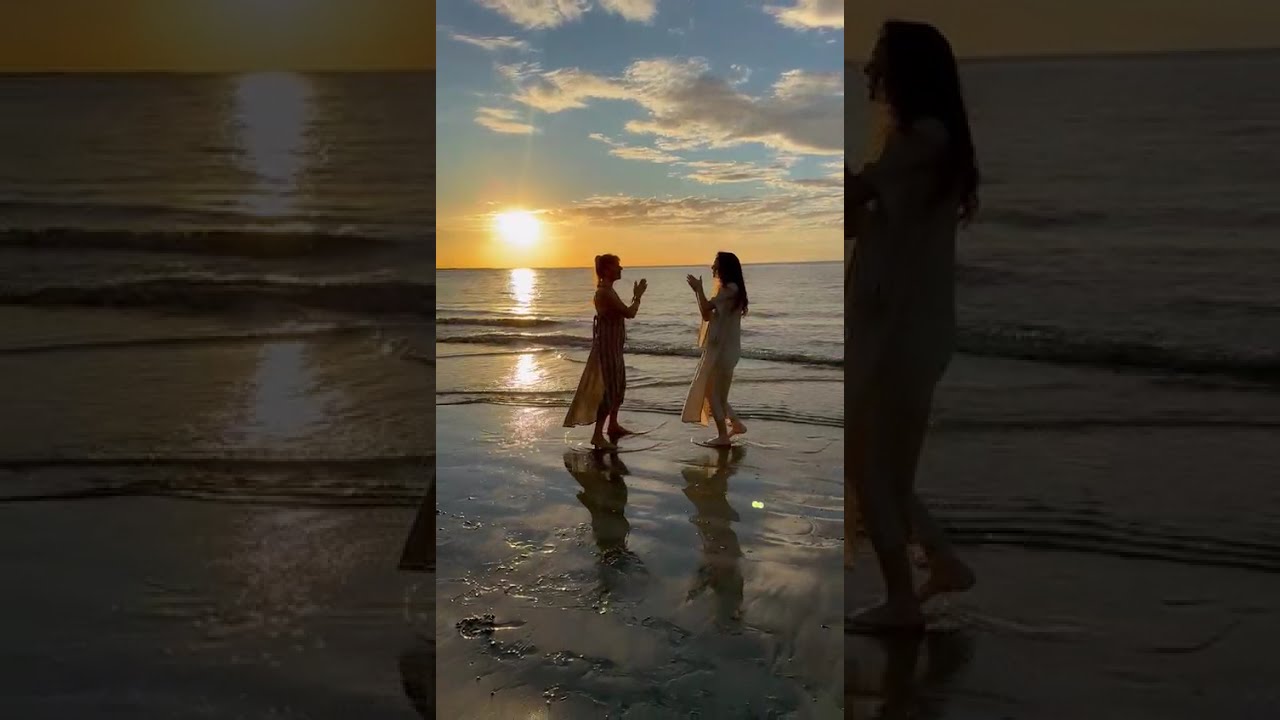
Yemaya Reimagined: Ocean Goddess Chant Unites Voices
Featured

Yemaya Reimagined: Ocean Goddess Chant Unites Voices

A new duet celebrating the Yoruba ocean goddess brings together two voices in a healing chant born from serendipitous meeting in Costa Rica.…

1 min read

Weiter erkunden

Setze deinen Weg fort

Mehr Weisheit und Zusammenkünfte aus dem BrightStar-Verzeichnis.

Mehr Artikel

Durchstöbere die ganze Bibliothek an Lehren, Interviews und Leitfäden.

Zu allen Artikeln →

Lehrer & Künstler

Entdecke die Linien, Musiker und Wegbegleiter der bewussten Welt.

Künstler erkunden →

Event finden

Kirtan, Retreats, Klangbäder, Atemarbeit, Festivals — bald in deiner Nähe.

Events ansehen →