EveryEvent ATL

Alle Events durchsuchen

Find every event in Atlanta

events

Concerts & Live Music
Festivals
Sports & Recreation
Food & Drink
Arts & Culture
Community
Family & Kids
Nightlife
Comedy
Theater
Beliebte Reiseziele
BaliSedonaLos AngelesCosta RicaNew YorkSan FranciscoAustinMiamiJoshua TreeTulum
Alle Kategorien anzeigenAlle Reiseziele anzeigen

Alle Funktionen entdecken

Leistungsstarke Tools für Ihre Veranstaltungen

Plattform-Funktionen

Intelligente dynamische Preisgestaltung
Ticket-Kategorien
Sitzplatzreservierung
Warenkorbabbruch-Wiederherstellung
Besucher-Wiedergewinnung
Spenden & Staffelpreise
Affiliate-System
Ticket-Scanner
Rabattcodes
Individuelle Fragen
Ticket-Teilen
Upsells & Extras
Analysen & Berichte
E-Mail-Sequenzen
Warteliste / Benachrichtigen / Erinnern
Entdecken
Discovery HubArtists & PerformersVenuesKnowledge Base
Alle Funktionen anzeigenÜber uns
PreiseBlog
Language
Saved events
Alle Veranstaltungen durchsuchen

events

Concerts & Live MusicFestivalsSports & RecreationFood & DrinkArts & CultureCommunityFamily & KidsNightlife

Beliebte Reiseziele

BaliSedonaLos AngelesCosta RicaNew YorkSan Francisco

Entdecken

Discovery HubArtists & PerformersVenuesKnowledge Base

Plattform-Funktionen

Intelligente dynamische PreisgestaltungTicket-KategorienSitzplatzreservierungWarenkorbabbruch-WiederherstellungBesucher-WiedergewinnungSpenden & StaffelpreiseAffiliate-SystemTicket-ScannerRabattcodesIndividuelle FragenTicket-TeilenUpsells & ExtrasAnalysen & BerichteE-Mail-SequenzenWarteliste / Benachrichtigen / Erinnern
Alle Funktionen anzeigenÜber uns
PreiseBlog
AnmeldenRegistrierenVeranstalter
  • Browse All Events
  • Concerts & Live Music
  • Festivals
  • Sports & Recreation
  • Food & Drink
  • Arts & Culture
  • Community
  • Family & Kids
  • Nightlife
  • Alle Kategorien →
  • Savannah
  • Athens
  • Blue Ridge
  • Chattanooga
  • Charleston
  • All Destinations →
  • For Promoters
  • For Artists
  • For Venues
  • For Festivals
  • For Event Spaces
  • For Nonprofits
  • For Bloggers
  • For Speakers
  • Brand Ambassador
  • Case Studies
  • 350.000+ Käufernetzwerk
  • Warenkorbabbruch-Wiederherstellung
  • Intelligente dynamische Preisgestaltung
  • Ticket-Kategorien
  • Wiederkehrende Veranstaltungen
  • Sitzplatzreservierung
  • Affiliate-System
  • Warteliste / Benachrichtigen
  • Ticket-Scanner
  • Einbettungs-Widget
  • Event-Syndication
  • Nachrichten
  • Integrationen
  • Berichte
  • Alle Funktionen →
  • Über uns
  • Das Ökosystem
  • Blog
  • Glossar
  • Inspiration
  • Hilfe-Center
  • Kontakt
  • API-Dokumentation
  • Marken-Assets
  • Karriere
  • Presse
  • Nutzungsbedingungen
  • Datenschutzrichtlinie

Events

  • Browse All Events
  • Concerts & Live Music
  • Festivals
  • Sports & Recreation
  • Food & Drink
  • Arts & Culture
  • Community
  • Family & Kids
  • Nightlife
  • Alle Kategorien →

Getaways

  • Savannah
  • Athens
  • Blue Ridge
  • Chattanooga
  • Charleston
  • All Destinations →

For Organizers

  • For Promoters
  • For Artists
  • For Venues
  • For Festivals
  • For Event Spaces
  • For Nonprofits
  • For Bloggers
  • For Speakers
  • Brand Ambassador
  • Case Studies

Funktionen

  • 350.000+ Käufernetzwerk
  • Warenkorbabbruch-Wiederherstellung
  • Intelligente dynamische Preisgestaltung
  • Ticket-Kategorien
  • Wiederkehrende Veranstaltungen
  • Sitzplatzreservierung
  • Affiliate-System
  • Warteliste / Benachrichtigen
  • Ticket-Scanner
  • Einbettungs-Widget
  • Event-Syndication
  • Nachrichten
  • Integrationen
  • Berichte
  • Alle Funktionen →

Unternehmen

  • Über uns
  • Das Ökosystem
  • Blog
  • Glossar
  • Inspiration
  • Hilfe-Center
  • Kontakt
  • API-Dokumentation
  • Marken-Assets
  • Karriere
  • Presse
  • Nutzungsbedingungen
  • Datenschutzrichtlinie
EveryEvent
© 2026 EveryEvent Atlanta. Alle Rechte vorbehalten.
Inspiration

Holy Madman: Honoring theEcstatic Divine Tradition

Jai Uttal
Jai Uttal
Mar 18, 2022
7 Min. Lesezeit
Ansehen · 6

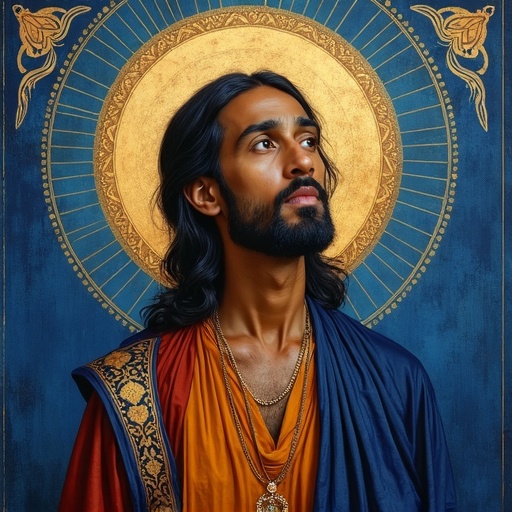
Jai Uttal's single "Holy Madman" honors the ancient Indian spiritual tradition of revering individuals filled with divine ecstasy—those who live and express transcendental joy through spontaneous song, dance, and poetry. The song is a personal love letter to Shyamdas (1953–2013), a holy madman and dear friend whose life embodied this tradition. Rather than explaining the concept intellectually, the track itself becomes a living example of the tradition it celebrates, weaving together kirtan chanting, fretless banjo, accordion, and trombone in a jubilant musical offering.

Lesen · 6 Abschnitte

What Is a Holy Madman in Indian Spiritual Tradition?

The concept of the "holy madman" occupies a unique and honored place in Indian spirituality, distinct from Western notions of eccentricity or mental illness. These are individuals who have become so saturated with the direct experience of divine presence that their behavior appears erratic, unpredictable, or "crazy" by conventional social standards. Rather than being marginalized, they are revered as living treasures—spiritual masters who have transcended the limitations of ordinary consciousness.

The hallmark of a holy madman is spontaneity rooted in spiritual realization. They sing without preparation, recite poetry that emerges from nowhere, and dance as though moved by an invisible force. This is not performance or affected behavior; it is the natural overflow of a consciousness that has been fundamentally transformed by contact with the divine. Where ordinary people filter their expression through social conditioning and intellectual calculation, the holy madman responds directly to the presence of the sacred, moment by moment.

What mainstream society might dismiss as irrationality or instability, those "with eyes that can see past the surface" recognize as a kind of enlightened spontaneity. The holy madman has surrendered the ego's need to appear coherent, stable, or respectable. In that surrender lies a freedom that allows divine energy to flow unobstructed through speech, movement, and sound.

Who Was Shyamdas and What Made Him a Holy Madman?

Shyamdas (1953–2013) was a contemporary embodiment of this ancient archetype. He lived as a bridge between traditional Indian bhakti spirituality and the modern Western world, serving as a teacher, translator, and devotional guide to thousands of students. Unlike some holy madmen who withdrew into caves or isolated ashrams, Shyamdas remained engaged with seekers, offering transmission through direct relationship and spontaneous acts of grace.

For those who knew him, Shyamdas exemplified the holy madman's defining characteristic: his presence and words carried the unmistakable stamp of unmediated divine contact. His teaching emerged fresh and alive in each moment, unburdened by doctrine or repetition. His laughter was contagious; his tears were real; his devotion was not a practice but a lived reality. He moved through the world with a kind of sacred madness that dissolved barriers between self and other, past and present, the human and the divine.

Jai Uttal describes him as "an inspiration to all and a brother to me." This combination—being both a revered spiritual figure and a genuine friend—captures something essential about how holy madmen function in their communities. They are not distant authorities perched on pedestals but warm, accessible presences whose love feels personal and unconditional.

How Does Music Express the Holy Madman Tradition?

The single "Holy Madman" itself becomes the teaching, rather than explaining the concept in words. Kirtan—the call-and-response chanting of divine names—is one of the primary vehicles through which holy madmen transmit their state. By chanting names like "Krishna," "Hare," and "Ram," the singer and listener alike enter a field of vibrational resonance that can catalyze altered states of consciousness and direct contact with the sacred.

Jai Uttal's arrangement weaves together multiple sonic threads: his fretless banjo (an unusual instrument in this context, bringing a Western bridge to an ancient Eastern tradition), Sunniva Brynnel's accordion, and Jeff Cressman's trombone. These instruments create a jubilant, ecstatic sound-world that mirrors the exuberance of the holy madman's inner state. The music does not present a solemn or austere spiritual experience but rather one overflowing with joy, lightness, and spontaneous celebration.

The spontaneity audible in the recording—the laughter, the playful vocal embellishments, the way the musicians seem to be dancing with the melody—mirrors the essence of what the song honors. This is not a polished, controlled performance meant to impress listeners but rather a genuine offering of devotion, complete with its messiness, humor, and unguarded humanity.

Why Is the Holy Madman Tradition Disappearing?

In the modern world, particularly in the West, the holy madman tradition faces erasure from multiple directions. Mainstream spirituality has become professionalized, packaged into courses, certifications, and carefully branded teachings. The unpredictability and boundary-dissolving nature of the true holy madman does not fit neatly into contemporary structures of authority and credibility.

Additionally, psychiatric and medical frameworks now pathologize many of the behaviors that would have been recognized as signs of enlightenment in earlier eras. Someone who speaks in metaphors, laughs at inappropriate moments, or acts without regard for social convention is more likely to be diagnosed with a mental health disorder than recognized as spiritually advanced. The cultural capacity to distinguish between pathology and realized consciousness has been significantly diminished.

Shyamdas himself navigated these tensions. He brought Indian bhakti traditions to Western students at a time when few non-Indian teachers held legitimate authority in these lineages. His presence—warm, accessible, uncompromisingly authentic—helped Western seekers recognize that the sacred could manifest in forms outside their cultural experience. His death in 2013 marked the loss of a particular kind of living transmission that cannot simply be recorded or archived.

What Does It Mean to Honor a Holy Madman?

Jai Uttal's act of dedicating a musical composition to Shyamdas is itself a sacred act, rooted in the devotional traditions of bhakti. When a student honors their teacher through music, art, or spontaneous expression, they participate in the same field of love and grace that the teacher embodied. The song becomes a vehicle for continuing the transmission, allowing the listener to contact something of Shyamdas's presence through sound.

The title "Holy Madman" is not metaphorical tribute but accurate description. By naming Shyamdas directly as a holy madman, Jai affirms that his friend's apparent eccentricity was in fact evidence of his enlightenment. This is an act of spiritual vision—seeing through the surface of things to recognize what is truly sacred. In a world that tends to dismiss or pathologize such figures, this simple naming becomes an act of resistance and remembrance.

The song is described as "a love letter" to Shyamdas. Love letters speak across time and separation; they are offerings that acknowledge that relationship transcends the physical presence of the beloved. By releasing this composition to the world, Jai invites others to join in honoring Shyamdas and, by extension, to recognize and cherish the holy madmen still living among us.

Where to Go From Here

Listen to "Holy Madman" not as background music but as a spiritual practice. The kirtan mantras embedded in the composition—the chanting of divine names—carry centuries of devotional power. Allow the music to move you; if spontaneous tears, laughter, or silence arise, let them be. This is the holy madman inviting you to join in the dance of divine presence.

Consider seeking out teachers or lineages that honor the spontaneous, unmediated transmission of sacred knowledge. The tradition of holy madness is not dead; it persists in practitioners and teachers around the world who value lived realization over institutional credentials. If you feel drawn to the energy Shyamdas embodied, investigate what it might mean to live with that same openness to grace.

Finally, reflect on the places in your own life where you suppress spontaneity in service of social acceptability. The holy madman teaches that liberation includes freedom from the exhausting project of managing your image. In moments of genuine connection, genuine joy, and genuine sorrow, allow yourself to be a bit mad—a bit broken open to the divine.

Transcript

[0:02] [Muzică]

[0:09] [Muzică]

[0:24] pfai reușim null

[0:29] pare

[0:30] sna Krishna Krishna hare hare hare

[0:38] RAM

[0:40] asta mă

[0:42] hrăni Era rămas ramana maharshi ramesh

[0:48] are

[0:51] Harap și Național

[0:57] horrorshow Krishna Krishna

[1:00] [Muzică]

[1:04] pfai rehana mă

[1:07] ha ha

[1:09] rău mă

[1:12] Tamara mă ha ha ha h a

[1:18] ha retușul la rev

[1:29] [Muzică]

[1:43] [Muzică]

[1:56] [Muzică]

[2:05] Hramul Mănăstirii

[2:10] [Muzică]

[2:26] hlincea

[2:29] FR

[2:35] [Muzică]

[2:39] Mihalea că nu sunt na

[2:44] har

[2:45] ăsta Krishna Krishna hare hare

[2:52] hare

[2:55] rămas hramul

[3:00] frunza maramă hare hare hare

[3:05] hare

[3:08] căpșunar

[3:09] [Muzică]

[3:11] parlament sna nut nut hare hare

[3:19] hare RAM

[3:22] asta mă

[3:24] doare hahaha

[3:27] ramana Maha

[3:31] [Muzică]

[3:45] [Muzică]

[3:58] [Muzică]

[4:12] [Muzică]

[4:27] pshs60

[4:30] exceptional

[4:33] hdnational

[4:35] TV

[4:39] [Muzică]

[4:46] 3 ha ha ha ha ha ha ha ha ha ha

[4:55] răcășan

[4:57] am Harghita

[5:00] CFR și așa că șnec mathare HR

[5:07] mare

[5:10] ramasa ma

[5:20] [Muzică]

[5:32] [Muzică]

[5:47] [Muzică]

Jai Uttal
AutorJai Uttal

American kirtan singer, multi-instrumentalist, and pioneer of devotional sound in the West — one of the central figures, alongside Krishna Das, Snatam Kaur, and Deva Premal, in the…

Profil ansehenWebsite
Themen erkunden
Holy-madmanBhakti-devotionKirtan-chantingSpiritual-musicShyamdas

Hast du Fragen?

Häufig gestellte Fragen

A holy madman is an individual filled with divine ecstasy who expresses their realization through spontaneous song, dance, and poetry. Rather than being considered mentally ill, they are revered as spiritual treasures whose apparent "craziness" reflects transcendental consciousness and freedom from social conditioning.
Shyamdas (1953–2013) was a bhakti teacher and holy madman who brought Indian devotional traditions to Western students. He was known for his warmth, spontaneous wisdom, and unmediated transmission of divine presence through direct relationship and teaching.
Love letters express relationship across separation and time. By dedicating this musical composition to Shyamdas after his death, Jai honors their friendship and continues the transmission of grace through sound, allowing listeners to contact something of Shyamdas's presence.
Kirtan—the chanting of divine names—is a primary vehicle through which holy madmen transmit their states of consciousness. The repetition of sacred mantras like "Krishna" and "Hare" creates vibrational resonance that can catalyze direct contact with the divine.
Modern spirituality has become professionalized and institutional, leaving little room for unpredictable figures who transcend social boundaries. Additionally, psychiatric frameworks now pathologize behaviors that would historically have been recognized as signs of enlightenment, reducing cultural capacity to recognize realized consciousness.
The track features Jai Uttal on fretless banjo and harmonium, Sunniva Brynnel on accordion, and Jeff Cressman on trombone. This combination creates a joyful, ecstatic sound that mirrors the celebration inherent in the holy madman tradition.
Listen to "Holy Madman" as an active spiritual practice rather than background music. The embedded kirtan mantras carry devotional power; allow the chanting to move you, and let any spontaneous emotions or responses arise naturally as part of your engagement with the transmission.

Weiterlesen

More from Jai

Alle anzeigen
How the Bauls of Bengal Broke My Sky: A Musician's Search
Featured

How the Bauls of Bengal Broke My Sky: A Musician's Search

A chance encounter on a dirt path in West Bengal led to a musical awakening. Jai Uttal traces how the outcasts of Bengali culture transforme…

1 min read
Hanuman Chalisa for World Peace: Ancient Chant for Modern Times
Featured

Hanuman Chalisa for World Peace: Ancient Chant for Modern Times

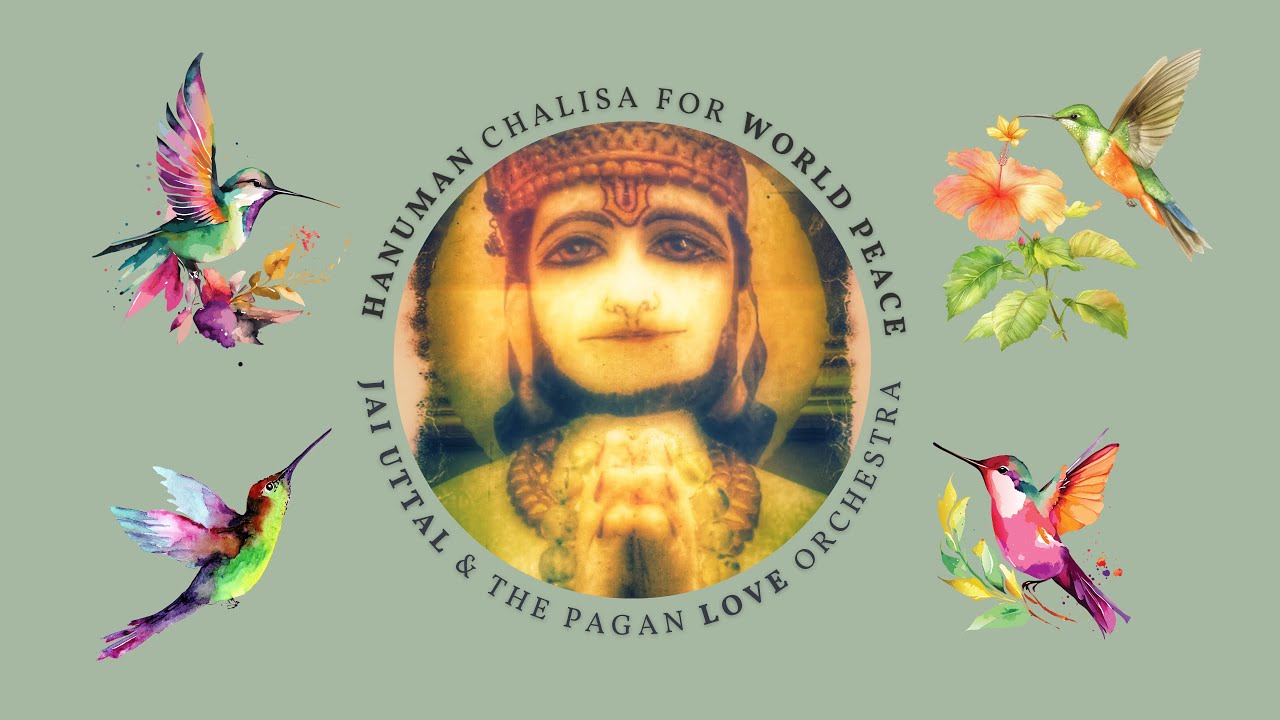
Jai Uttal leads a devotional rendering of the Hanuman Chalisa, a 40-verse Sanskrit hymn invoking strength, clarity, and peace through kirtan…

1 min read
Chanting Together: The Sacred Practice of Kirtan
Featured

Chanting Together: The Sacred Practice of Kirtan

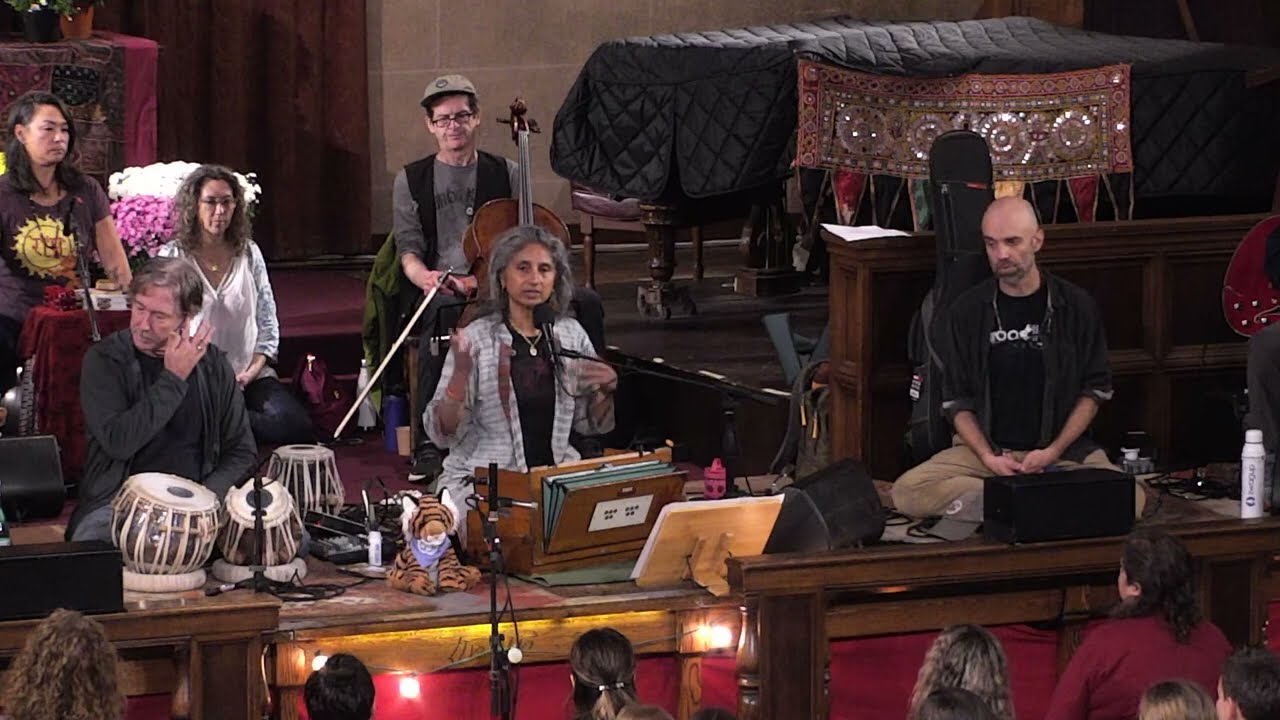
A Thursday night satsang showcases the transformative power of collective chanting, weaving Sanskrit invocations with musical ensemble and d…

1 min read
Long Time Sun: Kirtan and Blessing in Live Song
Featured

Long Time Sun: Kirtan and Blessing in Live Song

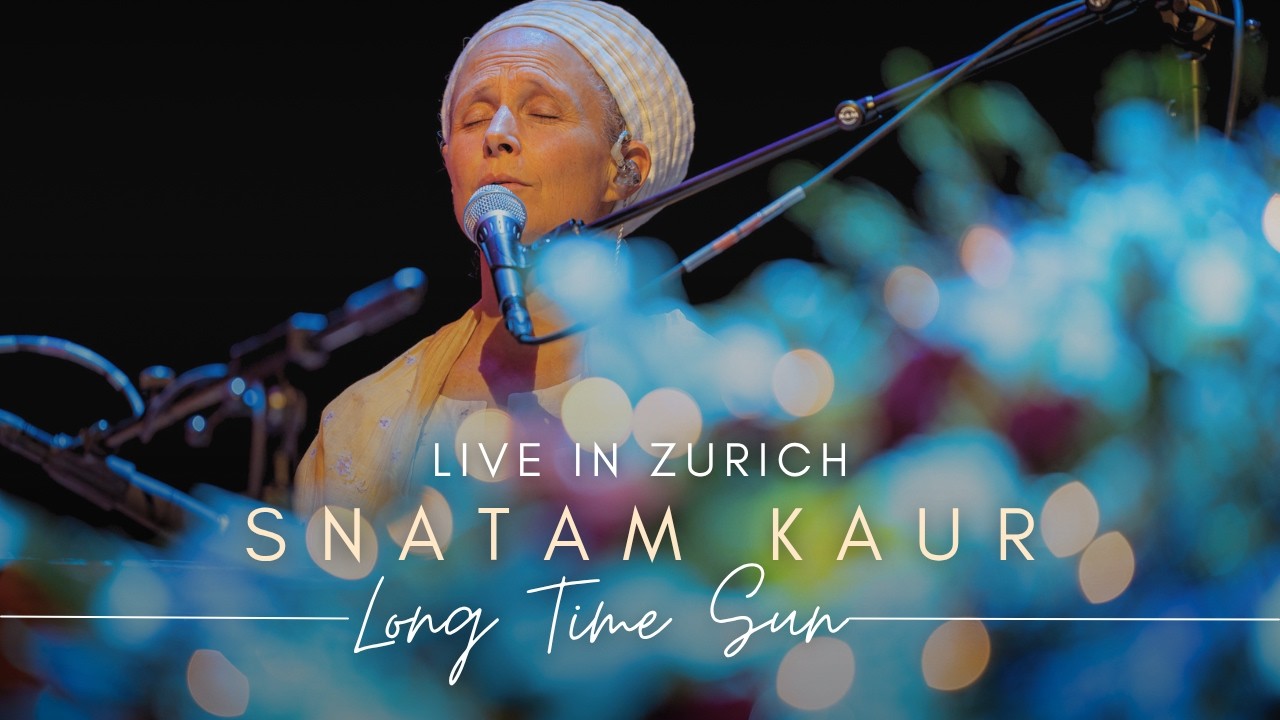
A live performance of the devotional blessing "Long Time Sun" recorded in Zurich featuring clarinet, three-part harmonies, and tabla.…

1 min read

Weiter erkunden

Setze deinen Weg fort

Mehr Weisheit und Zusammenkünfte aus dem BrightStar-Verzeichnis.

Mehr Artikel

Durchstöbere die ganze Bibliothek an Lehren, Interviews und Leitfäden.

Zu allen Artikeln →

Lehrer & Künstler

Entdecke die Linien, Musiker und Wegbegleiter der bewussten Welt.

Künstler erkunden →

Event finden

Kirtan, Retreats, Klangbäder, Atemarbeit, Festivals — bald in deiner Nähe.

Events ansehen →