EveryEvent ATL

Alle Events durchsuchen

Find every event in Atlanta

events

Concerts & Live Music
Festivals
Sports & Recreation
Food & Drink
Arts & Culture
Community
Family & Kids
Nightlife
Comedy
Theater
Beliebte Reiseziele
BaliSedonaLos AngelesCosta RicaNew YorkSan FranciscoAustinMiamiJoshua TreeTulum
Alle Kategorien anzeigenAlle Reiseziele anzeigen

Alle Funktionen entdecken

Leistungsstarke Tools für Ihre Veranstaltungen

Plattform-Funktionen

Intelligente dynamische Preisgestaltung
Ticket-Kategorien
Sitzplatzreservierung
Warenkorbabbruch-Wiederherstellung
Besucher-Wiedergewinnung
Spenden & Staffelpreise
Affiliate-System
Ticket-Scanner
Rabattcodes
Individuelle Fragen
Ticket-Teilen
Upsells & Extras
Analysen & Berichte
E-Mail-Sequenzen
Warteliste / Benachrichtigen / Erinnern
Entdecken
Discovery HubArtists & PerformersVenuesKnowledge Base
Alle Funktionen anzeigenÜber uns
PreiseBlog
Language
Saved events
Alle Veranstaltungen durchsuchen

events

Concerts & Live MusicFestivalsSports & RecreationFood & DrinkArts & CultureCommunityFamily & KidsNightlife

Beliebte Reiseziele

BaliSedonaLos AngelesCosta RicaNew YorkSan Francisco

Entdecken

Discovery HubArtists & PerformersVenuesKnowledge Base

Plattform-Funktionen

Intelligente dynamische PreisgestaltungTicket-KategorienSitzplatzreservierungWarenkorbabbruch-WiederherstellungBesucher-WiedergewinnungSpenden & StaffelpreiseAffiliate-SystemTicket-ScannerRabattcodesIndividuelle FragenTicket-TeilenUpsells & ExtrasAnalysen & BerichteE-Mail-SequenzenWarteliste / Benachrichtigen / Erinnern
Alle Funktionen anzeigenÜber uns
PreiseBlog
AnmeldenRegistrierenVeranstalter
  • Browse All Events
  • Concerts & Live Music
  • Festivals
  • Sports & Recreation
  • Food & Drink
  • Arts & Culture
  • Community
  • Family & Kids
  • Nightlife
  • Alle Kategorien →
  • Savannah
  • Athens
  • Blue Ridge
  • Chattanooga
  • Charleston
  • All Destinations →
  • For Promoters
  • For Artists
  • For Venues
  • For Festivals
  • For Event Spaces
  • For Nonprofits
  • For Bloggers
  • For Speakers
  • Brand Ambassador
  • Case Studies
  • 350.000+ Käufernetzwerk
  • Warenkorbabbruch-Wiederherstellung
  • Intelligente dynamische Preisgestaltung
  • Ticket-Kategorien
  • Wiederkehrende Veranstaltungen
  • Sitzplatzreservierung
  • Affiliate-System
  • Warteliste / Benachrichtigen
  • Ticket-Scanner
  • Einbettungs-Widget
  • Event-Syndication
  • Nachrichten
  • Integrationen
  • Berichte
  • Alle Funktionen →
  • Über uns
  • Das Ökosystem
  • Blog
  • Glossar
  • Inspiration
  • Hilfe-Center
  • Kontakt
  • API-Dokumentation
  • Marken-Assets
  • Karriere
  • Presse
  • Nutzungsbedingungen
  • Datenschutzrichtlinie

Events

  • Browse All Events
  • Concerts & Live Music
  • Festivals
  • Sports & Recreation
  • Food & Drink
  • Arts & Culture
  • Community
  • Family & Kids
  • Nightlife
  • Alle Kategorien →

Getaways

  • Savannah
  • Athens
  • Blue Ridge
  • Chattanooga
  • Charleston
  • All Destinations →

For Organizers

  • For Promoters
  • For Artists
  • For Venues
  • For Festivals
  • For Event Spaces
  • For Nonprofits
  • For Bloggers
  • For Speakers
  • Brand Ambassador
  • Case Studies

Funktionen

  • 350.000+ Käufernetzwerk
  • Warenkorbabbruch-Wiederherstellung
  • Intelligente dynamische Preisgestaltung
  • Ticket-Kategorien
  • Wiederkehrende Veranstaltungen
  • Sitzplatzreservierung
  • Affiliate-System
  • Warteliste / Benachrichtigen
  • Ticket-Scanner
  • Einbettungs-Widget
  • Event-Syndication
  • Nachrichten
  • Integrationen
  • Berichte
  • Alle Funktionen →

Unternehmen

  • Über uns
  • Das Ökosystem
  • Blog
  • Glossar
  • Inspiration
  • Hilfe-Center
  • Kontakt
  • API-Dokumentation
  • Marken-Assets
  • Karriere
  • Presse
  • Nutzungsbedingungen
  • Datenschutzrichtlinie
EveryEvent
© 2026 EveryEvent Atlanta. Alle Rechte vorbehalten.
Inspiration

Growing Mycelium Raftsfor Backyard Cultivation

Paul Stamets
Paul Stamets
Dec 18, 2021
7 Min. Lesezeit
Ansehen · 6

Paul Stamets demonstrates how to create "mycelial rafts"—inoculated logs colonized by mycelium—that serve as mother patches for expanding mushroom cultures in backyard settings. By using a 5% inoculation rate (mycelium-colonized grain mixed with wood chips) and layering logs, cultivators establish resilient fungal networks that naturalize to local microbiomes, build immune function, and can be propagated to friends and family as living gifts.

Lesen · 9 Abschnitte

What Is a Mycelial Raft?

A mycelial raft is a strategically arranged set of logs that have been colonized by mycelium to serve as an expandable growing platform. Stamets describes the concept as an interpolation from his decades of field observation—a method that bridges laboratory technique with outdoor naturalization. The "raft" is a physical structure: logs are laid down after mycelium has been transferred to the surrounding substrate, creating a nexus of dense fungal growth that can then be leveraged to colonize additional wood and expand satellite colonies.

The term "raft" captures the idea of buoyancy and mobility. Just as a raft floats and can carry cargo across water, a mycelial raft sits embedded in a "sea of mycelium," ready to be moved, expanded, or gifted. This is not a static growing bed but a launching point for further colonization.

Why Use Different Wood Sizes?

Stamets employs a deliberate strategy of mixing wood chips and logs based on their decomposition rates. Wood chips are "fast fuel"—they break down quickly, much like kindling in a wood stove. Logs, by contrast, decompose slowly, akin to larger logs in a fireplace. This difference in burn rate (or in mycological terms, decomposition rate) is fundamental to the method.

Mycelium grows through wood chips very rapidly because the substrate is fragmented and offers high surface area. However, since wood chips decompose quickly, they are consumed. Logs, being denser and larger, break down much more slowly, providing a stable, long-term anchor for mycelial expansion. By layering logs within a bed of mycelium-colonized wood chips, Stamets creates a two-tier system: the fast fuel of wood chips feeds the mycelium quickly, while the logs provide structural stability and a "leaping off point" for further growth.

How Do You Inoculate a Mycelial Raft?

The inoculation method Stamets describes follows a specific progression: mycelium is first grown on grain in a laboratory or indoor setting, then mixed into wood chips at a 5% rate (roughly one bucket of inoculated grain to twenty buckets of wood chips). This diluted mycelium-grain mixture is then spread around and under the logs, colonizing the bed from all sides.

The 5% rate is intentional. It is not a minimum threshold but an optimized ratio that allows the mycelium to expand methodically through the wood chips without overwhelming the substrate. The mycelium then grows into the logs themselves, attaching firmly and establishing itself throughout the entire structure. When you pull back layers of the colonized bed, you see thick, white mycelial networks running through and binding the wood.

This staged approach—grain inoculation → wood chip colonization → log attachment—mirrors how mycelium operates in nature: it first establishes on smaller, nutrient-rich materials, then extends into larger woody substrates.

What Does a Mature Mycelial Raft Look Like?

In Stamets's demonstration, a mature mycelial raft is visibly impressive. The mycelium forms thick, dense mats—"gorgeous" in his estimation—that are white and clearly vigorous. The fungal network is not merely surface-level but penetrates the logs, binding them together. When fully colonized, the raft has a cohesive, almost leather-like appearance, with the mycelium creating a physical structure that can be handled and moved without disintegration.

This visible density is crucial. It indicates that the mycelium has built sufficient biomass and established a stable relationship with the wood substrate. A raft that has achieved this level of colonization is ready to be expanded further or transferred.

How Does a Mycelial Raft Expand?

Once a raft is established, it becomes a "mother patch"—a source colony that can launch satellite colonies. Expansion occurs by transferring the colonized logs into fresh beds of wood chips. The logs, now densely colonized, serve as inoculation points. The mycelium radiates outward from the logs into the new substrate, repeating the colonization process but now starting from a much stronger inoculum source than the original 5% grain-based inoculation.

Because logs decompose slowly, they remain viable as inoculation sources for months or even years. This longevity makes the raft an efficient propagation tool. Instead of restarting from laboratory-grown grain each cycle, the cultivator uses the previous generation's fully colonized logs to drive the next.

Why Is Outdoor Acclimatization Important?

Stamets emphasizes that mycelium grown outdoors in this manner does something laboratory cultures cannot do as readily: it "acclimates and builds up its own immune system." When mycelium colonizes wood and soil outdoors, it encounters diverse microbial communities—bacteria, other fungi, protozoa, and microarthropods. Rather than being killed off, the mycelium establishes relationships with these microorganisms.

The mycelium generates "immunized" colonies—networks that have naturalized to the local microbiome. This means the fungal network is not sterile or isolated but integrated into the ecological web. It is more resilient to local conditions, pests, and disease because it has already evolved defenses through real-world exposure. Stamets refers to this as the mycelium setting off "resonant microflora to be helpful" and fulfilling "its life cycle."

This outdoor acclimatization is a form of evolutionary adaptation in real time. The mycelium does not just survive outdoors; it becomes native to that specific place.

What Role Does the Microbiome Play?

Stamets notes that the "great partnerships" between mycelium and the surrounding microbiome are "very elaborate, very complex, and we barely know anything about them." Yet he presents this not as a limitation but as an endorsement. The complexity itself is the point. When mycelium grows in actual soil and wood, it engages with countless microbial partners whose roles are still largely unknown.

These partnerships likely include nutrient exchange, protection from pathogens, communication through chemical signaling, and possibly metabolic cooperation. The mycelium does not function as a solitary organism but as a network embedded in a larger community. By allowing outdoor acclimatization, the cultivator is not fighting against the microbiome but leveraging it as part of the mushroom's natural developmental process.

How Do You Use a Mycelial Raft as a Gift?

Stamets frames the mycelial raft explicitly as a gift—"whatever greater gift than the gift of mycelium." A fully colonized log or raft can be transferred to a friend or family member, who can then plant it in their own yard and expand it further. This is not a one-time gift but a living inheritance.

Because the mycelium is already acclimatized and established, the recipient does not need laboratory equipment, grain spawn, or advanced mycological knowledge. They simply place the logs in a suitable location, add wood chips if desired, maintain moisture, and wait. The mycelium will fruit, produce mushrooms, and potentially establish itself as a resident colony in their yard for years to come.

This model of propagation is both practical and philosophical. It democratizes mushroom cultivation, moving it out of the laboratory and into the hands of ordinary people. It also embodies a gift economy—the original cultivator gives living mycelium that continues to produce value indefinitely for the recipient.

Where to Go From Here

If you are interested in implementing this method, Stamets recommends two books: Mycelium Running: How Mushrooms Can Help Save the World and Growing Gourmet & Medicinal Mushrooms, both by Stamets. These texts provide detailed protocols, species recommendations, and ecological context for backyard mycology.

The basic steps are: obtain mycelium-colonized grain from a reputable supplier, inoculate wood chips at approximately 5% by weight, layer logs within the colonized chips, monitor for full colonization, then transfer raft pieces to new substrate to expand. Choose species suited to your climate and goals—Stamets emphasizes saprophytic (decomposer) species that are less likely to cause harm and more likely to become established fixtures in your yard.

Most importantly, observe. Stamets opens his talk by noting that "nature has been a great teacher." Watching mycelium colonize wood, noting which areas colonize fastest, adjusting moisture and shade, and monitoring fruiting patterns are all forms of direct learning. The mycelial raft method is not a rigid protocol but a framework for developing an intimate, ongoing relationship with fungi in your own space.
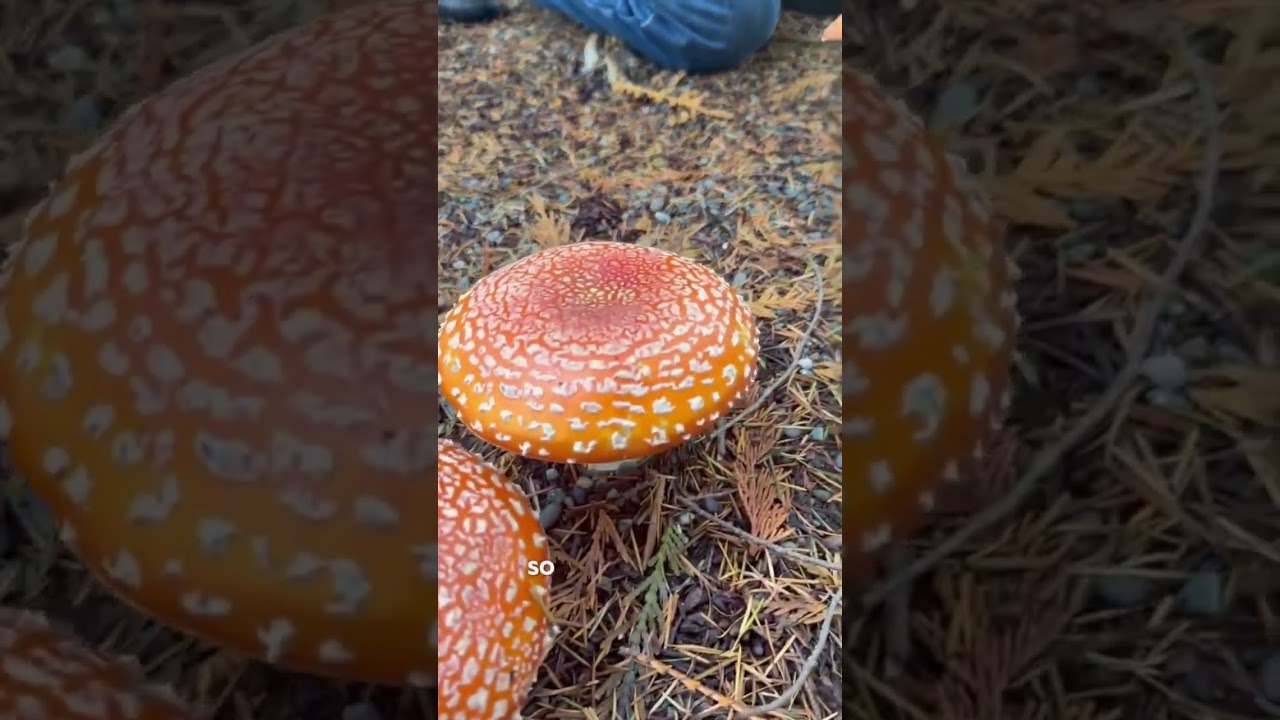
Transcript

[0:03] hi folks um paul stamets here and

[0:07] nature has been a great teacher and

[0:09] hopefully i've been a good student but i

[0:11] want to show you something that

[0:12] i sort of interpolated from my

[0:14] experiences in watching myself grow

[0:17] right here is a massive lens of the

[0:20] mycelium

[0:23] of a very interesting mushroom that's

[0:25] currently used in medical clinical

[0:28] studies

[0:29] but underneath these logs here and you

[0:31] can think of wood chips as being a fast

[0:33] fuel it's like you throw wood chips into

[0:35] a wood stove they burn really quickly uh

[0:38] bigger

[0:38] chunks of wood like logs burn more

[0:40] slowly so in the same sense that we're

[0:44] these logs and wood chips are fuel

[0:46] for the mushroom mycelium so the

[0:49] mycelium will grow through wood chips

[0:50] very quickly but they decompose quickly

[0:52] but the logs don't so

[0:54] check this out

[0:56] so this is a massive lens of mycelium

[0:59] it's kind of a mother patch

[1:00] and this patch can be expanded now it

[1:03] may look fairly

[1:04] non-descript and interesting but

[1:07] come closer

[1:08] these logs were laid down

[1:10] after mycelium was transferred

[1:13] and about a five percent inoculation

[1:15] rate one bucket to 20 buckets of wood

[1:16] chips mycelium grown on grain then put

[1:19] into wood chips and then expanded so but

[1:22] here are the logs and

[1:26] here's a massive amount

[1:29] of mycelium

[1:31] now when you pull this back

[1:33] the mycelium

[1:35] is now attached to these logs that's

[1:37] growing into the logs now it's not stuck

[1:39] just not these two

[1:40] it should be in all of these now and so

[1:43] yep

[1:45] and so you basically look at this one oh

[1:47] this is a nice one here

[1:50] so

[1:51] we're creating a mycelial raft of logs

[1:55] so these rafts are in the sea of

[1:56] mycelium here you can transfer these you

[1:59] can put them down into more wood chips

[2:00] now it's got a leaping off point

[2:03] because the wood this size will take

[2:04] longer to decompose it's a good

[2:07] nexus point for expansion of the

[2:09] mycelium

[2:10] look in here look at this look how thick

[2:12] this is

[2:14] this is really

[2:16] gorgeous mycelium

[2:18] so

[2:19] the art and the science

[2:22] of mushroom culture

[2:23] converges from a laboratory into being

[2:25] able to

[2:26] generate mycelium outside that

[2:28] acclimates and it it builds up its own

[2:30] immune system

[2:32] and then it sets off the microbiome so

[2:34] the other resonant microflora to be

[2:37] helpful and is fulfillment of its life

[2:39] cycle so the great partnerships are

[2:41] going on very elaborate very complex and

[2:43] we barely know anything about them but

[2:46] this is a great mycelial raft log to

[2:48] then transfer to your friends

[2:50] hey pam you want this log

[2:53] or to whomever anyhow it's whatever

[2:56] greater gift than the gift of mycelium

[2:59] so happy holidays to you all

[3:01] and may your mycelium run

[3:03] with glee pleasure and be bountiful on

[3:06] his fruitings

Paul Stamets
AutorPaul Stamets

Mycologist and advocate who has dedicated his life to studying mushrooms and their transformative potential to heal people and restore the planet through medicine, agriculture, and…

Profil ansehenWebsite
Themen erkunden
Mycelium-cultivationMushroom-growingBackyard-mycologyFungal-ecologyInoculation-technique

Hast du Fragen?

Häufig gestellte Fragen

A 5% inoculation rate means mixing one part mycelium-colonized grain with twenty parts wood chips by volume. Stamets uses this ratio to allow mycelium to expand methodically through the substrate without overwhelming it. It's calibrated to promote steady colonization while conserving inoculum material for multiple applications.
A mycelial raft uses logs as structural anchors within a larger colonized substrate, creating a mother patch that can be moved and expanded indefinitely. The logs decompose slowly, providing long-term inoculation sources for satellite colonies, whereas bag or box systems are typically single-use containers.
Yes. A fully colonized log can be gifted and placed in a friend's yard, where the established mycelium will continue to fruit and potentially naturalize to that location for years. The mycelium's outdoor acclimatization makes it resilient enough to thrive with minimal intervention from the new owner.
Outdoor mycelium encounters diverse microbial communities—bacteria, fungi, protozoa, and insects—that challenge it to develop defenses and form beneficial partnerships. Laboratory cultures in sterile conditions don't face these pressures, so they remain dependent on controlled conditions rather than self-reliant.
Wood chips decompose quickly and allow rapid mycelium colonization due to high surface area. Logs decompose slowly, providing stable, long-term structures. Stamets uses both: fast-burning wood chips for initial mycelium expansion, and slow-burning logs as anchor points for sustained growth and propagation.
Stamets describes it as "a very interesting mushroom currently used in medical clinical studies" but does not name the specific species in this video. He notes it is a saprophytic (decomposer) species suitable for backyard cultivation, and recommends consulting his books for species recommendations matched to your climate and goals.
The transcript does not specify an exact timeline, but Stamets notes that logs decompose slowly compared to wood chips, and the demonstration shows thick, mature colonization after logs have been in place within the inoculated bed. The process typically takes weeks to a few months depending on temperature, moisture, and wood type.

Weiterlesen

More from Paul

Alle anzeigen
Amanita Muscaria: History, Identification & Safety of Fly Agaric
Featured

Amanita Muscaria: History, Identification & Safety of Fly Agaric

Amanita muscaria, the fly agaric, has ancient roots in pest control and cultural mythology. Despite its striking beauty, this mushroom poses…

1 min read
Lactarius Deliciosus: Identifying & Foraging the Saffron Cap
Featured

Lactarius Deliciosus: Identifying & Foraging the Saffron Cap

The saffron milk cap (Lactarius deliciosus) is an easy-to-identify edible mushroom with striking green staining and orange milk. Learn how t…

1 min read
How Sitting Still Proves You're Already Awakening
Featured

How Sitting Still Proves You're Already Awakening

Most people can't sit quietly without discomfort, but if you can, you're already further along spiritually than you realize. Eckhart Tolle e…

1 min read
The Missing Piece: How Real Thinking Creates Real Results
Featured

The Missing Piece: How Real Thinking Creates Real Results

Most vision boards fail because people skip the actual thinking. Eckhart Tolle reveals the rhythm that unlocks insight and the two distinct …

1 min read

Weiter erkunden

Setze deinen Weg fort

Mehr Weisheit und Zusammenkünfte aus dem BrightStar-Verzeichnis.

Mehr Artikel

Durchstöbere die ganze Bibliothek an Lehren, Interviews und Leitfäden.

Zu allen Artikeln →

Lehrer & Künstler

Entdecke die Linien, Musiker und Wegbegleiter der bewussten Welt.

Künstler erkunden →

Event finden

Kirtan, Retreats, Klangbäder, Atemarbeit, Festivals — bald in deiner Nähe.

Events ansehen →