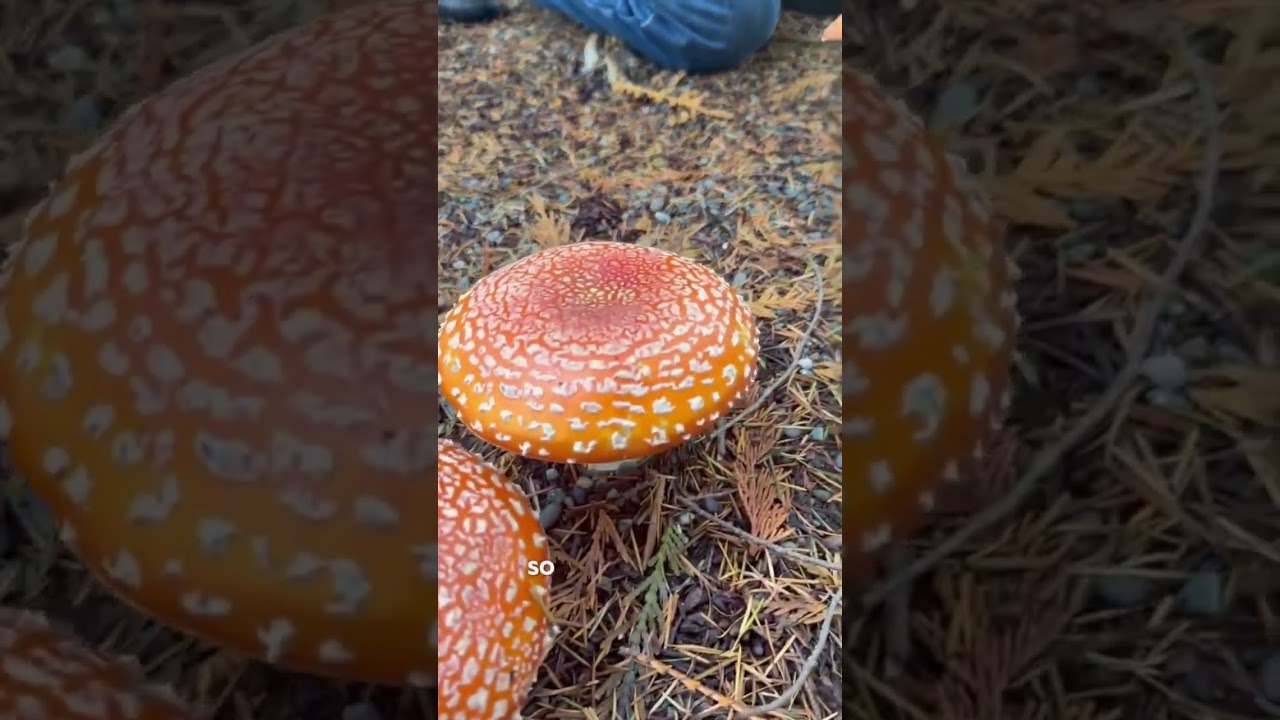
The Garden Giant mushroom (Stropharia rugoso-annulata), also called the Wine Cap or King Stropharia, is a hardy perennial edible species that naturalizes in garden beds after a single inoculation. Once established with annual wood-chip mulching, it returns for years without intervention. It produces thick rhizomorphs (root-like mycelial structures), reaches 4–5 pounds per fruiting body, and offers ecological benefits: its specialized spore structures called acanthocytes pierce and consume soil nematodes that threaten root crops; it removes E. coli; it concentrates slugs and fly larvae away from vegetables; and it establishes a protective guild of soil microorganisms. The mushroom has a mild, cashew-like flavor best enjoyed young and should not be eaten more than three consecutive days due to digestibility constraints. It regrows from stem butts and can be cultivated through spore prints and rhizomorph propagation.
What Is the Garden Giant Mushroom?
The Garden Giant is the common name for Stropharia rugoso-annulata, a species whose scientific name describes its physical structure. Stropharia means "sword belt," referring to the prominent membranous ring (annulus) that encircles the stem. The "rugoso-annulata" part refers to secondary ridges that appear on the upper edge of this ring—ridges that carry obsidian (dark) spores, giving them their distinctive appearance. Stamets notes these ridges are so visually distinctive that he imagines a song coming on when he sees them.
The mushroom is also called the Wine Cap because of its deep burgundy coloring. A living specimen appears almost like a red brick—so convincingly solid that Stamets mentions friends have mistaken them for stones and been surprised by their cold, fungal feel when touching them.
Why Is the Garden Giant Plant-Friendly?
Unlike many mushroom species that require careful timing and controlled substrates, the Garden Giant becomes a permanent resident once inoculated into a garden bed with annual wood-chip mulch. Stamets describes it as a "wandering species"—you inoculate mycelium in one spot, and it fruits in another, spreading naturally across the garden over seasons. This happens because the mycelium produces thick, aggressive rhizomorphs: the cord-like filaments that actively explore and colonize new territory in the soil.
The key to this persistence is what happens in the soil. When the mycelium directly contacts the garden's microorganism community, it develops an immune system by producing antibodies in response to environmental challenges. This immune-strengthened mycelium then selects out a "guild" of beneficial soil organisms—microbes that are conducive to forest and garden growth and that competitively inhibit pathogenic bacteria and fungi. In essence, the mushroom's presence improves soil health, making it easier for subsequent flushes to establish and fruit.
How Do Garden Giants Control Soil Pests?
One of the most remarkable features of the Garden Giant is its production of acanthocytes—specialized, spiny cell structures that function as microscopic spears. These structures penetrate and consume parasitic nematodes, the microscopic worms that attack the roots of vegetables and other plants. Research published in Applied and Environmental Microbiology (April 2006) documented this nematode-attacking mechanism.
Stamets notes that oyster mushrooms share this trait, but the Garden Giant's ease of cultivation makes it more accessible for home gardeners seeking biological nematode control. By growing Garden Giants in a vegetable garden, you reduce root-knot nematode populations naturally without chemical intervention.
Beyond nematodes, the species has been shown to remove E. coli from soil and water systems. The mushroom also acts as a "pest magnet" for above-ground problems: it concentrates slugs and fly larvae that would otherwise attack vegetables, essentially drawing pest pressure away from your crops. Stamets discovered this indirectly when raising coho salmon fingerlings; the fish would aggressively strike at maggot-infested mushrooms to dislodge and consume the larvae—suggesting the species could become a sustainable protein source for aquaculture systems like salmon and tilapia farms.
How Do You Grow Garden Giants in Your Garden?
Establishment is straightforward. Inoculate wood chips or a garden bed with Garden Giant spawn (mycelium). The following season and every season after, if you continue to apply wood chips as mulch (a common garden practice), the mycelium will re-fruit from the resident spawn network. Stamets emphasizes that once established, this species requires minimal maintenance—it is "the least amount of work and the most amount of fun for the long term."
The mushrooms fruit prolifically and unpredictably, often appearing where moisture concentrates around the base of plants like herbs. This wandering behavior is both advantage and quirk: you inoculate one area but find fruiting occurring elsewhere in the garden. Stamets has cultivated patches that remain productive for years with no additional inoculation.
The stem butts can be regrown: after harvesting a mushroom, you can take the base, propagate it through rhizomorphs in fresh wood chips, and generate naturalized spawn with its own immune system intact. For those interested in more detailed propagation methods, Stamets directs readers to his book Mycelium Running: How Mushrooms Can Help Save the World.
What Is the Best Time to Harvest Garden Giants?
Timing matters for both texture and flavor. The ideal harvest point is when the membranous veil connecting the cap to the stem is still intact and the cap retains its burgundy wine-cap color. At this stage, the cap is thick and firm—maximum flesh density for culinary use. Stamets emphasizes that flavor is "best with the younger mushrooms and it definitely fades as the mushrooms mature."
Once the veil breaks and the cap flattens, the mushroom expands its surface area and begins releasing spores. As it ages, the thick cap tissue transforms into gills, which then become purely spore-bearing structures. This progression means older specimens lose most of their edible flesh and take on a watery, less flavorful texture. The mushrooms can quadruple in size over two days, so regular checking prevents missing the optimal window.
What Does Garden Giant Taste Like?
The flavor is mild and slightly herbaceous, with a cashew-like undertone. Stamets pairs this naturally with nuts in the kitchen. The mushrooms are approximately 90% water, so they release substantial liquid when sliced and cooked, which means they soften and release flavor into whatever liquid surrounds them during cooking.
One important caveat: the species should not be eaten more than three days in a row. This comes from both direct experience and European culinary tradition. The mushroom is difficult to digest if consumed daily over multiple days, so moderation and spacing between meals is recommended.
How Do You Cook Garden Giant Mushrooms?
Stamets demonstrates a simple preparation: heat high-temperature avocado oil until very hot, then add walnut oil for depth. Toast cashews in the nut oils briefly, then add diced onions and caramelize them together with the nuts. Add salt to taste. Slice the young, veil-intact Garden Giant mushrooms and add them to the pan. The mushrooms will release water; cover the pan to allow the mushrooms to soften and absorb the nut flavors.
Once the mushrooms are tender, Stamets adds 100 milliliters of homemade red wine—a pairing that is essential to the dish and fitting given the mushroom's Wine Cap name. The acidity and tannins of red wine complement the cashew-like flavor and the wine's color matches the mushroom's burgundy hue. The dish benefits from gentle heat and time rather than aggressive cooking, allowing flavors to meld.
What Is a Spore Print and How Do You Make One?
The day after cooking and consuming mushrooms, Stamets demonstrates another practice: creating a spore print. Cut the mushroom cap horizontally and place it gill-side down on white paper. To minimize air currents, cover the cap with a bowl. Leave it undisturbed overnight. The next day, the spores released from the mushroom's gills will have created a detailed replica of the gill structure on the paper—a burgundy-colored print that is both scientifically useful and visually striking as an art form.
Spore prints serve multiple purposes. They can be used to generate mycelial cultures for further propagation, allowing you to create new spawn from wild-collected or home-grown specimens. They are also, Stamets notes, "great as a form of mushroom art"—a simple, beautiful way to document and celebrate the geometry of fungal reproduction.
Where to Go From Here
If you have a garden bed, annual access to wood chips, and interest in both edible mushrooms and soil ecology, the Garden Giant is an ideal starter species. It combines ease of cultivation with genuine ecological and culinary returns. For detailed step-by-step cultivation instructions, consult Mycelium Running: How Mushrooms Can Help Save the World. Stamets has also published on the species' capacity to remove E. coli and produced a companion video on MycoTotes, a low-tech fermentation method for mass-producing mycelium. For deeper exploration of nematode control and microbial guilds, the peer-reviewed literature cited in his bio at paustamets.com provides scientific grounding. Start small: inoculate one patch, observe its spread over seasons, harvest when veils are intact, and enjoy both the abundance and the garden's transformed ecology.