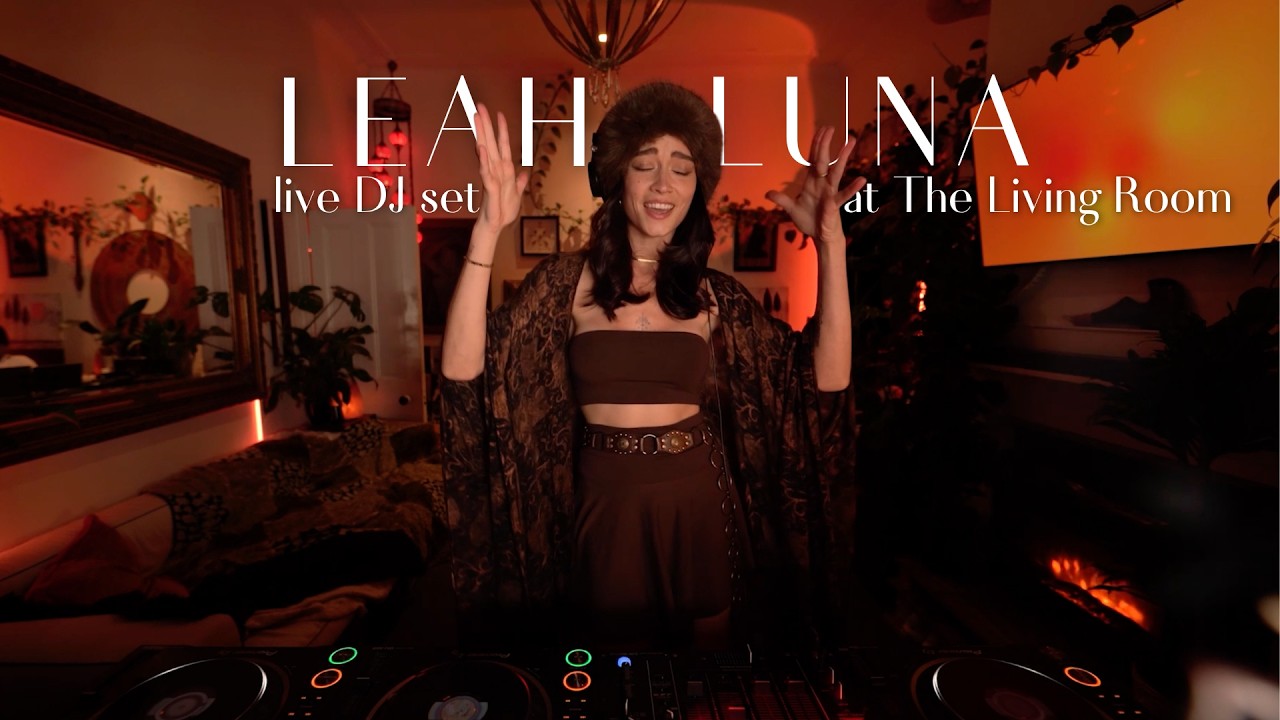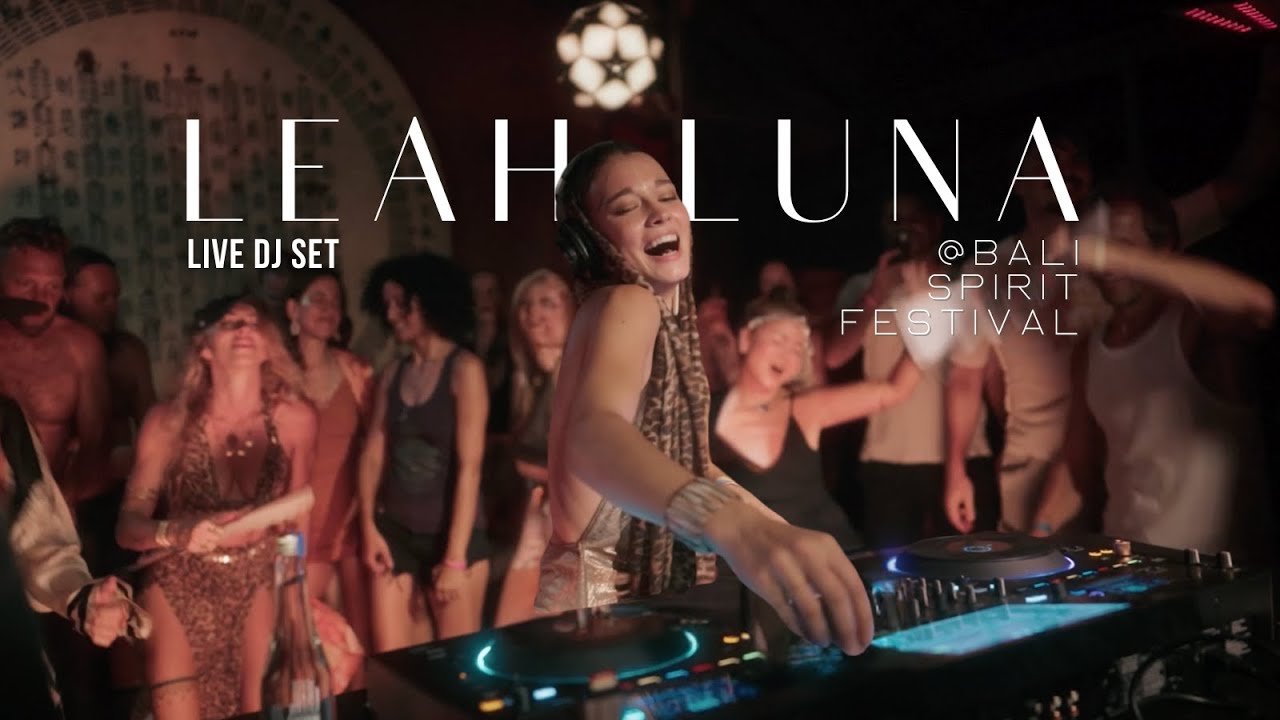
TLDR: Leah Luna performs a 42-minute live DJ set at Resolution Festival in Auckland, New Zealand, demonstrating a genre-fluid approach to dance music that weaves together tribal, oriental, afro house, bass house, trance, techno, and electronica. The set is structured as a carefully curated sonic journey designed to transport listeners across musical and geographical boundaries, emphasizing connection, reflection, and movement as core experiences. Rather than anchoring to a single sound, Luna uses her track selection to create an evolving narrative that respects both electronic production and world music traditions.
What defines a genre-fluid DJ approach?
Leah Luna's set demonstrates a distinct philosophy of DJing that moves beyond traditional genre boundaries. Rather than committing exclusively to one sound—say, pure techno or straight-ahead house—Luna's methodology involves selecting tracks that share sonic or emotional qualities, regardless of categorical labels. This approach requires deep knowledge of production styles, energy curves, and how different cultural influences manifest in electronic music. The tracks spanning her set (from "Consciousness" by Chris Avantgarde and Anyma to "Guddi Riddim" featuring the Nooran Sisters) show intentional mixing of Eastern, African, and European electronic traditions. Genre-fluid DJing demands curators who understand not just how to beatmatch, but how to create coherent arcs across disparate sonic territories—a skill that separates DJs who play records from those who construct experiences.
How does world music integrate into electronic dance music?
The core of Luna's set involves fusing explicit world music elements—traditional instruments, vocal traditions, regional rhythmic patterns—into contemporary electronic frameworks. Tracks like "Trompeta" (San Pacho), "Bani Bihar" (James Mac and VALL), and "Macarena" (Lenny Pearce) bring real or sampled instrumentation into house and techno contexts. The inclusion of the Nooran Sisters on "Guddi Riddim" (alongside DJ Snake and Wade) exemplifies how Punjabi vocal and musical traditions can sit alongside bass-driven electronic production without feeling incongruous. This integration works because modern producers and DJs approach world music not as exotic decoration but as genuine source material—extracting rhythmic logic, melodic sensibilities, and cultural nuance from these traditions and reimagining them within electronic frameworks. Luna's curation suggests that the boundaries between "world music" and "electronic dance music" are increasingly porous, with the latter providing distribution and accessibility while the former provides depth and cultural specificity.
What role does energy progression play in a long-form DJ set?
A 42-minute set is long enough to require strategic energy management. Luna's opening track ("Consciousness" in the Eric Prydz Extended Remix) establishes a contemplative, textured entry point—appropriate for a festival set where audiences are arriving and settling into the space. The progression through "Move Your Body," "Trompeta," and into the bass-driven middle section shows how DJs use tempo, intensity, and harmonic density to guide collective attention. Tracks are selected not only for their intrinsic quality but for their relationship to what came before and what follows. By the midpoint, the set has built enough momentum that tracks like "Losing Control" (Odd Mob and OMNOM in Extended Mix) can land with maximum impact, while the closer "Guddi Riddim" provides a climactic moment that synthesizes the set's themes—it's energetic, rhythmically complex, vocally present, and genre-spanning. This arc requires DJs to think like composers or choreographers, not just track selectors; the entire set becomes a single work with development, climax, and resolution.
What makes sampling and remixing integral to modern DJing?
Luna's tracklist includes original mixes, extended mixes, and interpretations of existing works. The Eric Prydz Extended Remix of "Consciousness" and the BENNETT Extended Techno Mix of "Vois sur ton chemin" both represent how established tracks are recontextualized for DJ sets. Extended mixes add breakdowns, build sections, and extended instrumental passages that work better in a live setting than radio-edit versions. Remixing—the practice of reconstructing a song—allows DJs and producers to honor original compositions while adapting them to new dancefloor contexts. When Luna includes "Macarena" (the 1990s Latin pop earworm) remixed by Lenny Pearce, she's participating in a decades-old tradition of taking culturally significant music and reimagining it through electronic production. This approach acknowledges that music is not static; a song can live multiple lives. For audiences unfamiliar with remixing culture, these extended and reinterpreted versions might be their first exposure to how contemporary producers engage with musical history.
How do regional festivals shape musical identity?
Resolution Festival's identity as an Auckland-based event likely influences both Luna's set design and the expectations of her audience. New Zealand's electronic music scene has historically valued forward-thinking producers and a multicultural sensibility. A festival booking in Auckland suggests an audience with exposure to global sounds and openness to genre-crossing. Luna's inclusion of tracks from producers across Europe, Africa, Asia, and the Indian subcontinent reflects both the cosmopolitan nature of contemporary electronic music and the specific cultural composition of Oceania. DJs often adapt their sets to regional context—playing differently in Berlin than in Bangkok, in London than in Auckland. The tracklist suggests Luna designed this particular set with an understanding that her Auckland audience would appreciate world music integration, genre fluidity, and high production values, rather than a more regionally narrow or commercially calculated approach.
Where to go from here
If you're interested in exploring the artists and sounds Luna featured, the tracklist provides direct entry points: discover Chris Avantgarde and Anyma's production aesthetic, follow James Mac and VALL's approach to global percussion in house music, and listen to how DJ Snake and the Nooran Sisters approached "Guddi Riddim." Listen to full-length sets by genre-fluid DJs to understand how sonic coherence emerges across seemingly disparate tracks. Explore the production techniques behind extended mixes—why they work for dancefloor environments and how they differ from radio edits. Finally, if you attend electronic music events, pay attention to the arc of the set: notice how DJs manage energy, introduce new sonic elements, and build toward climactic moments. This awareness transforms passive listening into active understanding of curation as an art form.