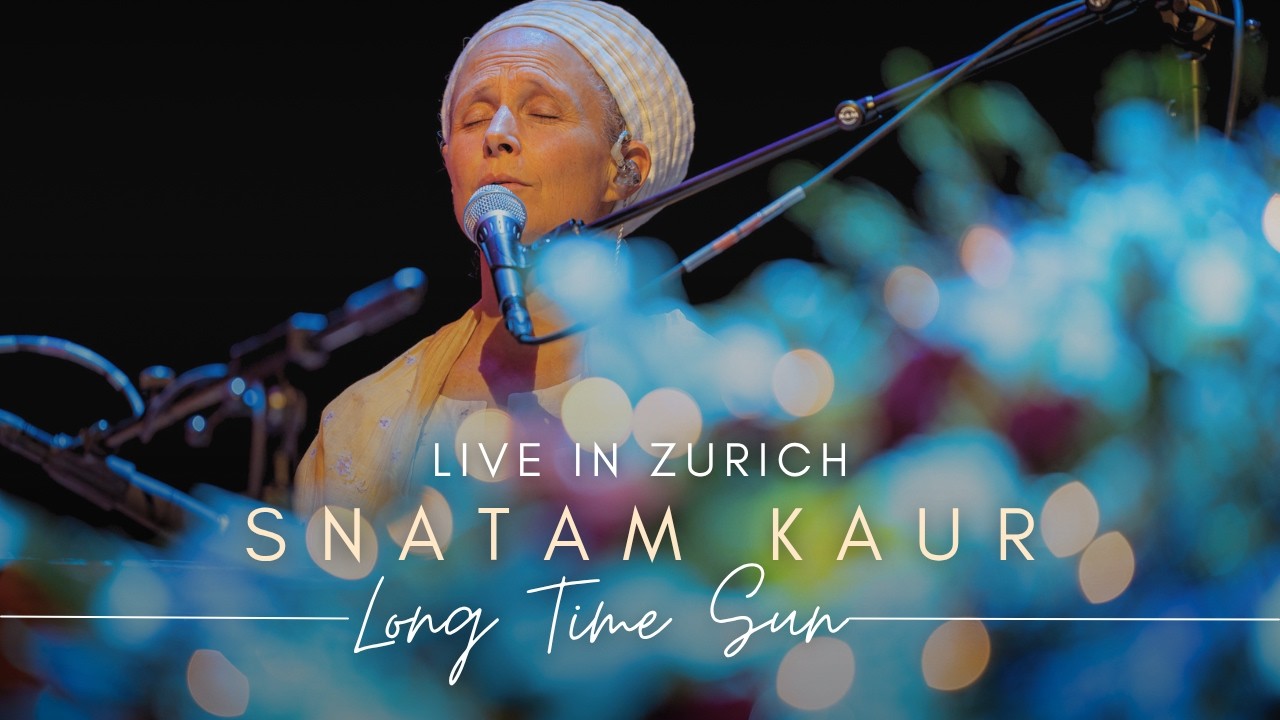
Snatam Kaur's "Ekongkaar - Heartflow" is a visual meditation on the transformational power of mantra chanting when facing life's empty, isolating moments. Through the metaphor of a dry lake bed, the video traces a journey from panic and mental restlessness toward discovering an eternal inner well of peace and connection—what Kaur calls "Heartflow"—accessed through steady repetition of the Ekongkaar mantra with each breath and step.
What Is the Heartflow Experience?
Heartflow, as Kaur describes it, is not a new state to be achieved but rather an eternal dimension of consciousness that has always existed within, waiting to be discovered. Like a lost lover encountered for the first time, Heartflow takes you into its embrace once you surrender the resistance and distraction of the searching mind. It is fundamentally a space of resonance—where the mantra anchors awareness in the heart itself, providing stability and nourishment even when external circumstances appear desolate.
In her artist statement accompanying the video, Kaur explains that this Heartflow space "has been with me and will be with me for eternity," yet the journey toward recognizing it mirrors a rediscovery rather than creation. The mantra becomes the vehicle for this recognition, the steady thread that connects breath, body, earth, and the infinite.
The Dry Lake Bed as Metaphor for Mental Panic
The video opens with a stark image: a parched, cracked lake bed under an expansive sky. Kaur's internal narrative describes the initial reaction: panic, a sense of desolation and isolation, and the mind's frantic questioning about how to find anything of value in such barrenness. This is not merely an external landscape but a mirror of the inner state when the mind is disconnected from its source.
Kaur identifies the mind itself as the tumbling weed—restless, reactive, driven by wind without anchor. The mind's chatter is relentless in its search for nourishment and center, yet its searching is precisely what prevents it from finding rest. She notes that "it is only through the steady repetition of mantra with each and every breath and step" that the mind discovers its peace. The repetition becomes the counterforce to the mind's tumbling—a grounding rhythm that tethers attention to the present and to the sacred.
How Does Mantra Repetition Transform Isolation Into Connection?
As Kaur begins her meditative walk across the dry lake bed—chanting the Ekongkaar mantra—the quality of her perception shifts. What seemed lifeless and isolating reveals itself as alive with presence. The wind, the sky, and the earth become friends rather than threats. This is not a cognitive reframing imposed from outside but a direct shift in perception that arises through the practice itself.
The mantra is described as the anchor—the stable reference point that the mind, through repetition, learns to return to. With each breath and each step synchronized to the chant, the boundary between inner and outer dissolves. Writing God's Name on the earth with footsteps becomes identical to writing it within the heart. The distinction between personal seeking and universal presence collapses.
Kaur captures a crucial turning point: "The very wind that tumbled me like a lost weed just moments ago is showing me how to dance." The same force that appeared chaotic becomes, once aligned with mantra and breath, the teacher of rhythm and movement. This suggests that transformation is not about replacing difficulty with ease, but about a shift in consciousness that allows the same circumstances to reveal beauty and presence.
The Role of Ekongkaar in Restoring the Heart-Mind Connection
The Ekongkaar mantra (understood in Sikhism as "There is One") is not treated in this work as a belief system to be adopted but as a sonic and vibrational practice that aligns the practitioner with unity consciousness. By chanting it with each breath, the separation between self and Source begins to dissolve. The mantra is not something the mind grasps intellectually but something the body and heart learn to resonate with.
In the video's narrative arc, it is at the moment of deepest exaltation and dance—when joy and the mantra are fully integrated—that Kaur is "shown deeper into my heart." The descent is not a regression but an invitation to discover that the mantra has been resonating within all along. It becomes the anchor not through effort but through recognition. The heart, revealed as the deepest source of nourishment, is where the mantra has always lived.
What Is the Relationship Between Mind, Body, and Mantra?
Kaur's narrative reveals a three-stage relationship. First, the mind is lost—tumbling like a weed, searching frantically without grounding. Second, through the practice of chanting mantra with each breath and step, the mind becomes witnesses to itself; it learns to observe its own motion without being entirely captured by it. Third, the mind (or more accurately, individual consciousness) dissolves into the larger rhythm of the mantra, the breath, the body, and the earth.
This is not suppression of the mind but a retraining of attention. The repetition of mantra provides the mind with a singular point of focus—not to force it into submission, but to offer it a pathway Home. As the mind's energy, which was scattered in panic and seeking, is gathered into the repetition, peace naturally emerges. Kaur calls this witnessing "powerful," suggesting that conscious observation of the mind's patterns is itself a liberation.
Where to Go From Here
For those drawn to this teaching, the practice is direct and accessible: choose a mantra (Ekongkaar is one; others include Sat Nam, Shabad, or any sacred phrase that resonates), and commit to repetition with the breath. Begin with your walking—synchronize each step with a syllable or phrase. Over time, the distinction between practice and living dissolves. The dry lake bed of life—moments of isolation, difficulty, apparent emptiness—become invitations to turn inward and discover the eternal well already present within.
Kaur's collaboration with video artist Ron Hamad creates a visual mirror of this inner journey. The imagery of the body moving across barren earth, the dance that emerges, the light breaking across the sky, and the return to the heart—all reinforce that this is not metaphorical philosophy but lived embodied experience. The Heartflow space awaits not as a distant destination but as an ever-present dimension of consciousness, waiting to embrace you as soon as you stop searching and start chanting.